

Introduction
Imagine your perfect lawn: vibrant, lush, and green. It’s a space that truly enhances your home and invites you outdoors. Many homeowners dream of this, but often face patchy, weed-filled, or struggling grass. We understand the frustration of a lawn that just won’t thrive.
A healthy lawn offers more than just beauty. It significantly boosts your property’s value and your family’s outdoor enjoyment. When your grass looks thin, tired, or diseased, it often needs more than basic care. This is where professional lawn renovation services become essential.
Unlike simple upkeep, renovation takes a deep dive. It’s a comprehensive process that breathes new life into your yard. It addresses problems from the soil up, leading to lasting health and beauty.
This extensive guide aims to empower you. We will cover everything needed to transform your outdoor space. From spotting signs your lawn needs help to understanding the full renovation process, we have you covered. Our goal is to help you confidently select the right lawn renovation company near you. Let’s make your green dreams a reality by September 2026.
Understanding Lawn Renovation vs. Standard Maintenance
Many homeowners confuse routine lawn maintenance with the more intensive process of lawn renovation. While both are crucial for a healthy yard, they serve distinct purposes. Standard lawn care typically involves regular mowing, watering, and occasional fertilization to maintain an existing, relatively healthy lawn. Overseeding, often seen as a maintenance task, is usually a lighter application of new seed over an already established lawn to fill in minor thin spots.
Lawn renovation, however, is a comprehensive overhaul designed to address significant issues and revitalize a struggling lawn. It’s a multi-step process that goes far beyond surface-level treatments. Think of it as a deep restorative treatment for your turf, focusing on improving the underlying soil health and grass density.
A typical professional lawn renovation often begins with dethatching, which involves removing the layer of dead grass, roots, and debris that accumulates between the soil surface and the green grass blades. Too much thatch can prevent water, nutrients, and air from reaching the soil, suffocating the grass roots. Following this, core aeration is performed. This process uses a machine to pull small plugs of soil from the lawn, creating channels that allow essential elements to penetrate deeper into the root zone. This significantly alleviates soil compaction, a common problem that hinders root growth and water absorption.
After aeration, topdressing is often applied. This involves spreading a thin layer of organic matter, compost, or enriched soil over the lawn. Topdressing improves soil structure, enhances microbial activity, and provides a nutrient boost. It’s particularly effective when combined with overseeding, where new grass seed is generously applied across the entire lawn. This introduces new, vigorous grass varieties, increasing the overall turf density and helping to crowd out weeds. In fact, studies show that aeration and overseeding can increase turf density by up to 50% when performed in the optimal fall season, leading to a much thicker, healthier lawn.
Finally, soil amendment is a critical component of renovation. This step involves adjusting the soil’s pH balance and nutrient profile based on a professional soil test. Whether it’s adding lime to raise pH or sulfur to lower it, or incorporating specific nutrients, amending the soil creates the ideal environment for grass to thrive. Proper lawn renovation, including topdressing and soil amendment, can also significantly reduce water usage by improving moisture retention in clay or sandy soils, making your lawn more resilient and environmentally friendly.
While regular lawn care maintains, lawn renovation transforms. It’s an investment in the long-term health and vitality of your outdoor space, addressing root causes rather than just symptoms.
Critical Signs Your Property Needs Lawnscapes High-Quality Lawn Renovation
Recognizing when your lawn needs more than just routine care is the first step toward a vibrant yard. Several tell-tale signs indicate that your property could benefit from a full renovation. Ignoring these signals can lead to further deterioration and more costly problems down the line.
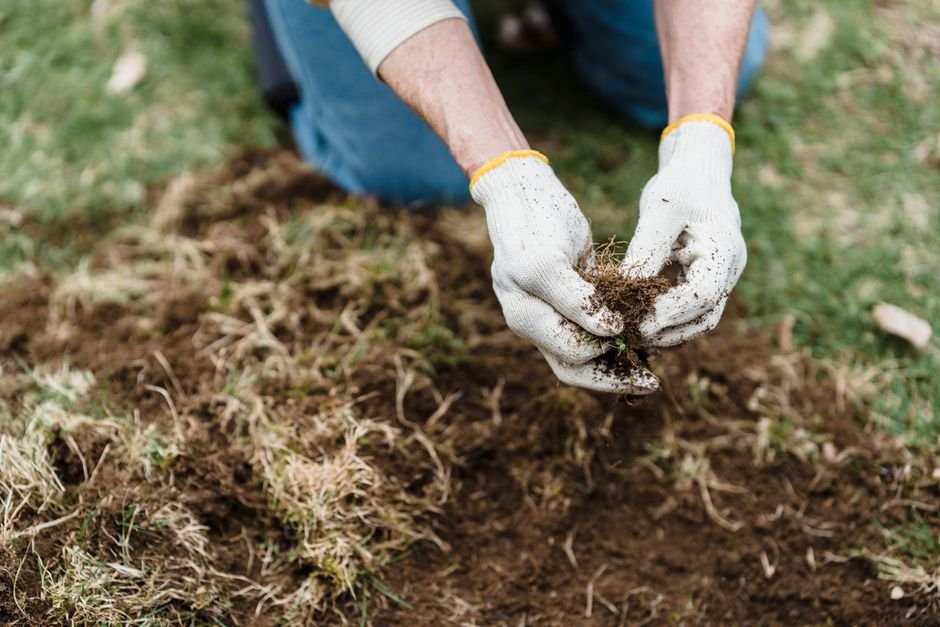
One of the most common indicators is severe soil compaction. If your lawn feels hard and impenetrable, or if water tends to puddle on the surface after rain, your soil is likely compacted. This prevents grass roots from accessing water, nutrients, and oxygen, leading to shallow root systems and weak turf.
Another clear sign is widespread weed encroachment. While a few weeds are normal, if weeds like dandelions, crabgrass, or clover are dominating your lawn, it suggests that your grass is not dense enough to compete effectively. A thin, struggling lawn is an open invitation for weeds to take over.
Bare patches or thinning grass areas that don’t recover with regular care are also critical indicators. These spots can be caused by disease, pest damage, poor soil, or heavy foot traffic. If your lawn has more brown than green, or if large sections are consistently struggling, it’s time to consider renovation.
Fungal disease and pest infestations can also signal a need for renovation. While some diseases can be treated, recurring issues often point to underlying problems with soil health, drainage, or grass type. A professional renovation can address these foundational issues, making your lawn more resilient.
Lastly, drainage issues that lead to standing water or excessively soggy areas can be detrimental to grass health. Poor drainage can drown grass roots and create an environment ripe for disease. Renovation can include grading adjustments or soil amendments to improve water flow and absorption.
If you’re observing these persistent issues, it’s a strong signal that your lawn is not just underperforming, but truly struggling. Seeking out Lawnscapes high-quality lawn renovation services can provide the comprehensive solution your yard needs to recover and flourish. Their expertise in diagnosing and treating these complex issues is invaluable for restoring your lawn’s health.
The Core Process Behind Lawnscapes High-Quality Lawn Renovation
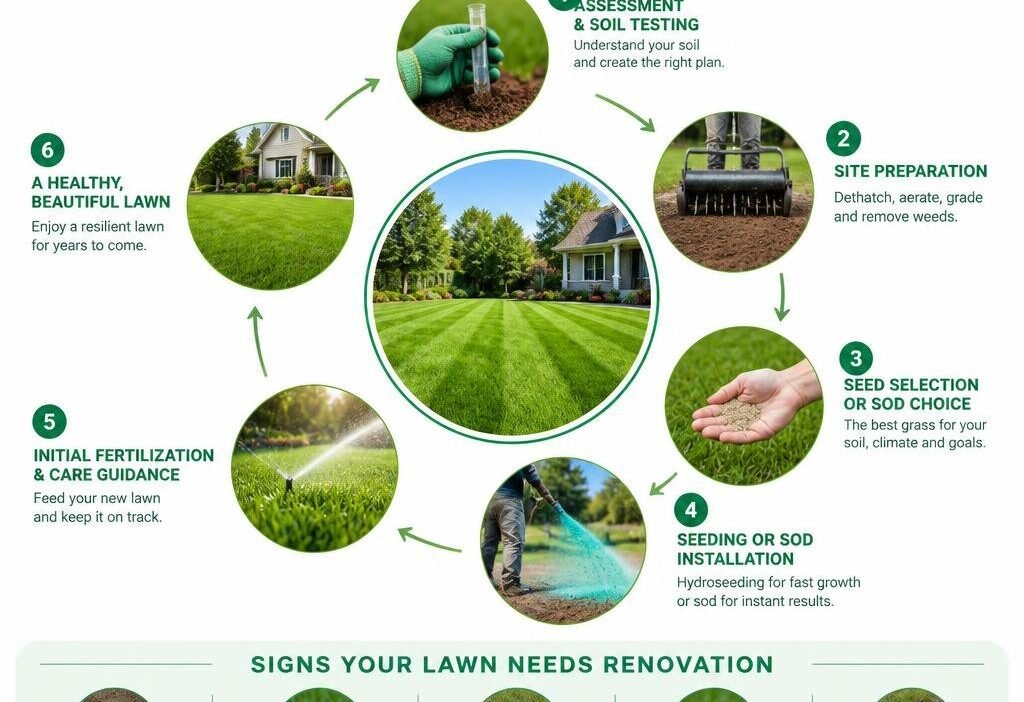
Understanding the typical steps involved in a professional lawn renovation can help homeowners appreciate the depth and complexity of the service. While specific approaches may vary slightly based on the lawn’s condition and local climate, a comprehensive renovation generally follows a structured process designed for optimal results.
It all begins with a thorough assessment, often including soil testing. This crucial step analyzes the soil’s composition, pH level, and nutrient content. The results guide the entire renovation plan, determining what amendments are needed to create the ideal growing environment for your chosen grass type. Without this foundational understanding, any renovation effort is essentially a shot in the dark.
Following the assessment, preparation of the site is paramount. This can involve dethatching and core aeration as previously discussed. If significant drainage problems or uneven surfaces exist, grading might be necessary. This involves reshaping the land to ensure proper water runoff and prevent pooling, which is vital for long-term lawn health. Existing weeds and undesirable grass might also be removed, sometimes requiring specialized treatments to clear the slate for new growth.
Next comes the crucial stage of seed selection or sod choice. Based on the soil test, local climate, sun exposure, and homeowner preferences, the renovation company will recommend the most suitable grass types or seed blends. This might include cool-season grasses like fescue or bluegrass, or warm-season varieties such as Bermuda or Zoysia, selected for their resilience and aesthetic appeal in your specific region.
For seeding, advanced techniques like hydroseeding might be employed. Hydroseeding involves spraying a slurry mixture of seed, mulch, fertilizer, and water over the prepared soil. This method promotes faster germination, provides excellent erosion control, and ensures even seed distribution. Alternatively, if an instantly green lawn is desired, sod installation is the preferred method. Sod provides immediate coverage and can establish roots in as little as 2-3 weeks, significantly faster than the 6-8 weeks typically required for seeded lawns to become robust.
Finally, the process concludes with initial fertilization and clear instructions for post-renovation care. A professional service ensures that every step, from initial analysis to final application, is executed with precision. This meticulous approach is what defines a truly effective renovation, leading to a resilient and beautiful lawn.
Evaluating Candidates for Lawnscapes High-Quality Lawn Renovation
Choosing the right lawn renovation company is as critical as deciding to renovate your lawn itself. The success of your project hinges on the expertise, reliability, and professionalism of the team you hire. When searching for “lawn renovation services near me,” it’s important to look beyond just the price tag and consider several key factors.
First and foremost, verify their licensing and insurance. A reputable company will be properly licensed to operate in your area and carry comprehensive insurance. This protects both you and their workers in case of accidents or damage during the renovation process. Don’t hesitate to ask for proof of both.
Regional expertise is another non-negotiable factor. A company that understands the specific challenges and opportunities of your local climate, soil types, and common pests will be far more effective. They should be familiar with the best grass varieties for your area and the optimal timing for renovation activities. For instance, a company with deep knowledge of New England’s specific environmental conditions, like the professionals at Lawnscapes high-quality lawn renovation, will be better equipped to deliver superior results tailored to that region.
Assess their equipment standards. Professional lawn renovation requires specialized machinery for dethatching, aeration, grading, and hydroseeding. A company using well-maintained, modern equipment indicates a commitment to efficiency and quality results. Outdated or poorly maintained equipment can lead to subpar work and potential delays.
Finally, consider their track record and reputation. Look for customer reviews, testimonials, and before-and-after photos of their previous projects. A company with a strong portfolio and positive client feedback is a good indicator of their capability and customer satisfaction.
When weighing your options, it’s also helpful to consider the benefits of professional intervention versus a DIY approach. While some homeowners might attempt parts of a renovation themselves, the complexity and specialized equipment often make professional services a more efficient and effective choice.
Feature Professional Renovation DIY Approach Expertise Deep knowledge of soil science, grass types, diseases Limited, often based on online research Equipment Specialized, commercial-grade machinery Basic tools, rental equipment (can be costly) Efficiency Faster completion, less physical labor for homeowner Time-consuming, physically demanding Results Consistent, long-lasting, optimized for local conditions Variable, risk of errors, potential for re-work Cost Upfront investment, but long-term savings on issues Lower initial cost, but potential for hidden expenses Guarantees Reputable companies often offer warranties/guarantees No guarantees, all risk on homeowner
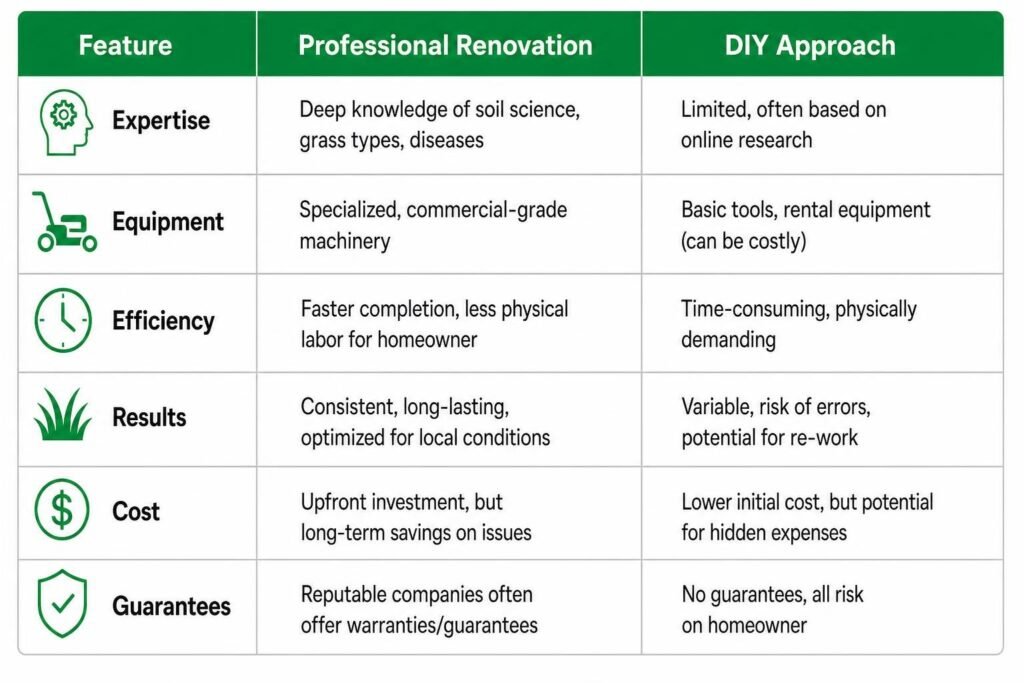
This table highlights why, for a truly transformative and lasting outcome, investing in professional lawn renovation services is often the smarter choice. Over 70% of homeowners report improved curb appeal and property value after professional lawn renovation services, underscoring the value of expert intervention.
Assessing Local Climate and Seed Blend Expertise
The success of your lawn renovation hinges significantly on selecting the right grass types for your specific environment. A reputable lawn renovation company will possess in-depth knowledge of local climate conditions and the ideal seed blend expertise to match. This isn’t a one-size-fits-all decision; what thrives in one region might struggle in another.
For instance, in cooler climates, cool-season grasses such as Kentucky bluegrass, perennial ryegrass, and various fescues (tall fescue, fine fescue) are typically recommended. These grasses perform best in spring and fall, going dormant in extreme summer heat. Conversely, in warmer regions, warm-season turf like Bermuda grass, Zoysia grass, St. Augustine grass, or Centipede grass are the preferred choices. These varieties flourish in hot temperatures and go dormant during colder months.
Beyond temperature zones, local expertise considers microclimates within your property. Does your lawn receive full sun all day, or is it heavily shaded? Some grasses, like fine fescues, are known for their shade tolerance, while others, such as Bermuda grass, require full sun to thrive. A knowledgeable professional will assess these conditions to recommend a blend that will truly prosper.
Drought resistance is another increasingly important factor, especially in areas prone to water restrictions or extended dry spells. Some grass varieties are naturally more water-efficient, requiring less irrigation once established. Similarly, understanding the ideal root depth for different grasses helps ensure they can access deeper soil moisture and nutrients, making them more resilient.
A professional company will not only recommend the right grass but also explain why it’s the best choice for your lawn, considering factors like expected foot traffic, desired aesthetic, and maintenance preferences. This tailored approach ensures that your renovated lawn is not just beautiful but also sustainable and well-adapted to its surroundings.
Pricing Structures and Scope of Work
Understanding the financial aspect of lawn renovation is crucial for homeowners. The cost of lawn renovation services can vary significantly based on several factors, and a transparent company will provide a detailed breakdown of their pricing structures and the comprehensive scope of work.
The primary determinant of cost is typically the square footage of the area to be renovated. Larger lawns naturally require more materials, labor, and time. Companies often price services per square foot or provide estimates based on the overall size of the project.
Labor costs are another significant component. This includes the time and skill required for tasks such as dethatching, aeration, topdressing, soil amendment, seeding, or sod installation. The complexity of the job, including any necessary soil prep like grading or extensive weed removal, will also influence labor hours.
Material fees cover the cost of grass seed or sod, soil amendments (compost, lime, fertilizer), and any other products used during the renovation. The quality and type of materials chosen can impact the overall price; for example, premium grass seed blends or specialized organic amendments might cost more than standard options.
Additional factors that can affect the total cost include:
- Current lawn condition: A severely neglected lawn requiring extensive weed removal or soil remediation will generally be more expensive to renovate than one with minor issues.
- Accessibility: Lawns that are difficult to access with machinery may incur higher labor costs.
- Specific services requested: Opting for hydroseeding over traditional seeding, or choosing sod installation, will have different price points.
- Regional pricing variations: Costs can differ based on the local market and prevailing rates for landscaping services.
When requesting project estimates, ensure they are comprehensive and clearly outline all services included, material costs, and labor charges. A reputable company will provide a written estimate and be willing to discuss any line item to ensure you understand what you’re paying for. The cheapest option isn’t always the best; focus on value, quality of work, and the long-term benefits of a properly renovated lawn. Homeowners who renovate their lawns often see fewer weed and pest issues, with up to a 30% reduction in ongoing maintenance costs, making the initial investment worthwhile.
Timing, Timeline, and Post-Renovation Turf Management
The timing of your lawn renovation is almost as important as the renovation itself. Scheduling the work during the optimal season can dramatically impact its success and the speed at which you see results.
For most cool-season grasses, fall renovation is generally considered the best time. The cooler air temperatures are ideal for new grass growth, while the soil remains warm enough to promote strong root development. This timing also minimizes competition from weeds, as many common weeds are slowing down their growth cycle. Spring renovation can also be effective, but it means new grass must contend with emerging weeds and the stress of summer heat soon after germination. Warm-season grasses, conversely, are best renovated in late spring or early summer when temperatures are consistently warm.
Once the renovation work is complete, understanding the germination windows and establishment timelines is key to managing expectations. Grass seed typically begins to germinate within 7-21 days, depending on the grass type and environmental conditions. However, it takes much longer for the new grass to fully establish a strong root system and become resilient.
For seeded lawns, you can expect to see noticeable green growth within a few weeks, but full turf maturation — where the lawn is dense enough for regular use — can take several months, often until the following growing season. Sod installation, on the other hand, provides an instantly green lawn, with roots establishing in as little as 2-3 weeks compared to 6-8 weeks for seeding. This quicker establishment means you’ll see a mature lawn much sooner.
A professional renovation company will provide a clear timeline for your specific project, outlining when you can expect to see initial growth, when light foot traffic is permissible, and when the lawn will be fully established. This guidance is invaluable for setting realistic expectations and planning your outdoor activities.
Essential Aftercare and Irrigation Protocols
The period immediately following lawn renovation is critical for its long-term success. Even the most meticulously performed renovation can fail without proper essential aftercare and diligent irrigation protocols. Your role as a homeowner shifts from planning to nurturing.
Immediately after seeding or sod installation, consistent moisture is paramount. New grass seeds need continuous dampness to germinate, and young seedlings require regular, shallow watering to establish their fragile root systems. For sod, consistent moisture helps the new roots bond with the underlying soil. The renovation company will provide a specific watering schedule, but generally, this involves frequent, light watering sessions (e.g., 2-3 times a day for 10-15 minutes) rather than infrequent, deep soaks, especially in the first few weeks.
As the grass matures, the irrigation schedule can gradually transition to deeper, less frequent watering to encourage roots to grow deeper into the soil. An automated lawn sprinkler system can be an invaluable asset during this phase, ensuring consistent and precise water delivery without constant manual effort.
The initial mowing of a newly renovated lawn should be delayed until the grass is tall enough (typically 3-4 inches) and the roots are somewhat established. Use a sharp mower blade and set it to a higher setting to avoid stressing the young grass. Never remove more than one-third of the blade height at any single mowing.
Weed control is another crucial aspect of aftercare. Young grass is vulnerable to weed competition. Many renovation companies will apply a pre-emergent herbicide during the process (if seeding allows) or recommend specific post-emergent treatments once the new grass is established. It’s vital to follow their advice carefully, as some herbicides can harm young grass.
Finally, continue to monitor your lawn for any signs of stress, disease, or pest activity. Early detection and intervention are key. Your renovation company should offer guidance on ongoing fertilization, pest management, and general maintenance to ensure your newly revitalized lawn remains healthy and vibrant for years to come.
Frequently Asked Questions About Lawn Renovation Services
We understand that homeowners often have many questions when considering a significant project like lawn renovation. Here, we address some of the most common inquiries to provide further clarity and confidence.
How Long Does It Take to See Results After Renovation?
The timeline for seeing results after a lawn renovation largely depends on whether you opt for seeding or sod installation, as well as the specific grass types used.
For seeded lawns, germination rates vary, but you can typically expect to see new green shoots appearing within 7 to 21 days. However, this is just the beginning. True root establishment and the development of a dense, resilient turf take much longer. While your lawn will look noticeably greener and fuller within 4-6 weeks, it can take 3-6 months, or even a full growing season, for the grass to fully mature and withstand regular foot traffic. Patience is key here; the initial growth is fragile.
With sod timelines, the results are much more immediate. Sod provides an instant green lawn, and the roots typically begin to knit with the underlying soil within 2-3 weeks. During this period, it’s crucial to keep the sod consistently moist. After about 3-4 weeks, the sod should be well-rooted and ready for light use, offering a much faster path to a mature-looking lawn.
Regardless of the method, ongoing care is vital for successful turf maturation. Consistent watering, proper mowing, and appropriate fertilization will help accelerate the process and ensure a healthy, long-lasting lawn.
What Is the Most Cost-Effective Season to Renovate?
While lawn renovation can technically be done in spring or fall, the most cost-effective season to renovate for cool-season grasses is generally late summer to early autumn. This period offers several advantages that can lead to better results and potentially fewer future expenses.
During autumn, soil temperatures are still warm, which is ideal for seed germination and robust root development. Simultaneously, air temperatures are cooler, reducing stress on new seedlings. This combination creates optimal growing conditions.
Another significant benefit of fall renovation is reduced weed competition. Many common lawn weeds are nearing the end of their life cycle in the fall, meaning new grass has less competition for nutrients, water, and sunlight. This often translates to fewer weed control efforts and costs in the following spring.
Furthermore, fall renovation allows the new grass to establish a strong root system before the stresses of winter dormancy and the intense heat of the following summer. This improved resilience can lead to a healthier lawn that requires less intervention and potentially less water in the long run. The benefit of improved soil temperature and reduced water conservation needs makes fall a prime choice.
For warm-season grasses, late spring to early summer is often the most cost-effective, aligning with their peak growth period and similar advantages regarding soil temperature and establishment before the peak of summer heat.
Can Soil Testing Prevent Future Turf Failure?
Absolutely, soil testing is a foundational step that can significantly prevent future turf failure and is one of the most valuable investments in any lawn renovation project. Many lawn problems stem from underlying soil issues that are invisible to the naked eye.
A professional soil test provides a detailed analysis of your soil’s composition, including its texture (sand, silt, clay), pH balancing, and the levels of essential nutrients like nitrogen, phosphorus, and potassium, as well as micronutrients. It can also identify any significant nutrient deficiency or excess that might be hindering grass growth.
By understanding these factors, a lawn renovation company can accurately determine the necessary soil amendments. For example, if the pH is too acidic, lime can be added to raise it; if it’s too alkaline, sulfur might be needed. Correcting the pH ensures that nutrients are available for the grass to absorb. Similarly, addressing nutrient deficiencies through targeted fertilization prevents weak growth and susceptibility to diseases.
Beyond nutrients and pH, a soil test can offer insights into the soil’s organic matter content and overall microbial health. Healthy soil is a living ecosystem, and fostering beneficial microbes improves nutrient cycling and disease resistance.
Without a soil test, renovation efforts are essentially guesswork. Applying the wrong amendments or planting grass that isn’t suited to the soil’s chemistry can lead to wasted time and money, and ultimately, a lawn that continues to struggle. By providing a scientific basis for the renovation plan, soil testing acts as a proactive measure, safeguarding your investment and paving the way for a truly thriving lawn.
Conclusion
Embarking on a lawn renovation journey is more than just improving aesthetics; it’s an investment in the long-term value and health of your property. We’ve explored how professional lawn renovation goes beyond routine maintenance, addressing deep-seated issues from soil compaction to nutrient deficiencies. By understanding the meticulous process, from soil testing and grading to expert seed selection and post-renovation care, homeowners can appreciate the comprehensive effort involved in creating a truly vibrant outdoor space.
Choosing the right company for “lawn renovation services near me” means looking for expertise, local knowledge, proper licensing, and a commitment to quality. A professional team ensures that your renovation is tailored to your specific climate and soil conditions, setting the stage for sustainable growth. The benefits extend beyond curb appeal, contributing to a healthier environment through improved sustainable turf practices, better water retention, and reduced reliance on ongoing chemical treatments.
A professionally renovated lawn transforms your outdoor space into a sanctuary for relaxation and enjoyment, enhancing your home’s beauty and value for years to come. It’s about making your green dreams come true, creating a resilient and beautiful lawn that invites you to embrace outdoor living and enjoy the natural beauty surrounding your home. By making informed choices, you’re not just renovating a lawn; you’re cultivating a healthier, more beautiful future for your property.


