

The Science Behind Glowing Waters
Imagine paddling through waters that shimmer with an ethereal blue light, each stroke of your oar igniting a galaxy beneath you. This isn’t a scene from a science fiction movie; it’s the mesmerizing reality of a glowing beach, a natural wonder caused by bioluminescence. Experiencing this phenomenon, especially from the quiet intimacy of a kayak, is an unforgettable natural spectacle that many seek to witness firsthand.
These glowing waters offer a rare connection to nature’s magic. We often hear about them in exotic locales, but this extraordinary event occurs in various places around the globe. For those eager to explore this phenomenon, particularly through active participation, guided bioluminescence kayaking experiences offer a unique perspective.
In this extensive guide, we will delve into the science behind these luminous displays. We will explore the organisms responsible and reveal the best global destinations to witness them. You’ll learn about optimal viewing conditions, safety precautions, and practical tips for maximizing your chances of seeing and photographing these incredible glowing beaches.
The magic of a glowing beach, whether viewed from the shore or from the vantage point of a kayak, is fundamentally a biological process. Bioluminescence is the emission of light by living organisms through a chemical reaction. It’s a “cold light,” meaning very little heat is generated, making it distinct from incandescence, which produces light through heat. This natural light show is predominantly orchestrated by microscopic marine life, transforming dark waters into shimmering canvases.
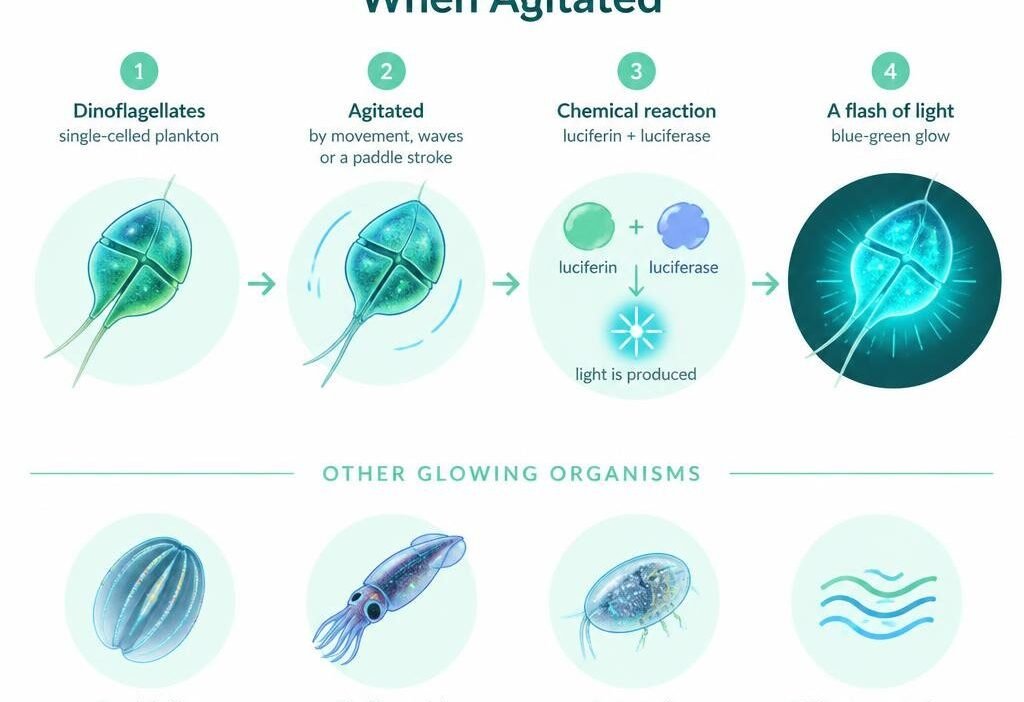
The primary orchestrators of this celestial glow in the ocean are often single-celled organisms known as dinoflagellates, a type of plankton. These tiny entities contain a molecule called luciferin and an enzyme called luciferase. When disturbed—whether by a wave breaking on the shore, the movement of a fish, or the paddle of a kayak—a chemical reaction occurs. Luciferin oxidizes in the presence of luciferase, producing a brilliant flash of blue-green light. This sudden burst of light is believed to be a defense mechanism, startling predators or attracting larger predators to consume the organisms that are trying to eat the dinoflagellates.
While dinoflagellates are the most common culprits, other organisms also contribute to the spectacle in various locations. Comb jellies, for instance, are gelatinous marine animals that create a similar glow when agitated. In some parts of the world, like Toyama Bay in Japan, firefly squid are responsible for the light, brought to the surface by unusual currents. In the Maldives, tiny crustaceans called ostracods can also play a role, adding to the complexity of the “Sea of Stars” phenomenon. The specific type of organism responsible can influence the color and intensity of the glow, from vibrant blue to greenish-white.
Organisms You Will Encounter
When embarking on a bioluminescence kayaking tour, the stars of the show are undoubtedly these fascinating organisms. Understanding them enhances the appreciation of the experience:
- Dinoflagellates: These microscopic, single-celled algae are the most widespread cause of oceanic bioluminescence. Species like Pyrocystis fusiformis are particularly known for their bright blue flashes. They thrive in warm, nutrient-rich waters, often forming dense blooms that, during the day, might appear as a “red tide” (though not all red tides are bioluminescent). At night, their collective light emission is what creates the stunning blue trails.
- Comb Jellies (Ctenophores): Found in many brackish water environments, such as Florida’s Indian River Lagoon, comb jellies are transparent, jelly-like creatures that also produce light when disturbed. Unlike the flash of dinoflagellates, the light from comb jellies often appears as a softer, more persistent glow, creating mesmerising trails as they move or are touched.
- Sea Sparkle (Noctiluca scintillans): A specific type of dinoflagellate, Noctiluca scintillans is known for creating widespread, often reddish-orange, blooms during the day and a spectacular blue or green glow at night. It’s responsible for many of the glowing beach phenomena seen globally, including in places like Hong Kong.
- Ostracods: These tiny crustaceans, sometimes called “seed shrimp,” are less common but contribute to bioluminescence in specific regions, such as the Maldives. Their light production is also a chemical reaction, often creating a more sustained glow than the rapid flashes of dinoflagellates.
The collective effect of these organisms, especially when their populations are dense, is truly remarkable. As your kayak glides through the water, or as you dip your hand in, you’ll witness countless individual light emissions, forming radiant trails and shimmering patterns that make the water appear to come alive.
What Happens During Bioluminescence Kayaking Tours
Embarking on a bioluminescence kayaking tour is an adventure designed to immerse you safely and intimately in this natural wonder. These tours are expertly guided experiences, ensuring both your safety and the best possible viewing opportunities.
The journey typically begins before complete darkness sets in. You’ll meet your guides at a designated launch point, often a calm bay or lagoon. Here, a comprehensive safety briefing is standard. Guides will cover kayaking basics, safety protocols, and what to expect during the tour. They’ll also provide essential gear, including life vests and paddles. This preparation phase is crucial, as it allows everyone to get comfortable before navigating in the dark.
As twilight transitions into full night, you’ll launch your kayaks onto the water. The initial paddle might feel a little disorienting in the dim light, but your eyes will quickly adjust. The real magic begins once you reach the prime viewing areas. With each paddle stroke, the water around your oar will ignite with a vibrant blue-green light. It’s a surreal experience, as if you’re painting with light on the water’s surface. Your kayak’s movement creates glowing wakes, leaving ethereal trails behind you.
Many tours utilize clear-bottom kayaks, which amplify the experience by allowing you to see the glow directly beneath you, creating an even more immersive, “floating on stars” sensation. In some locations, like Florida’s Space Coast, you might even encounter wildlife that triggers the glow. Manatees gliding beneath your kayak can leave ghostly, luminous outlines, and dolphins swimming by can create spectacular, explosive light displays as their bodies disturb millions of dinoflagellates. These chance encounters add another layer of wonder to an already extraordinary night. The guides are often knowledgeable naturalists who can provide insights into the ecosystem and the bioluminescent organisms themselves, enriching your understanding of this unique environment.
Step-by-Step Tour Itinerary
While specific tour operators may vary their approach, a typical bioluminescence kayaking tour often follows a similar progression:
- Gear Fitting and Safety Instructions (Pre-Launch): Upon arrival, you’ll be fitted with life vests and receive a brief but thorough safety talk. Guides will explain how to properly use your kayak and paddle, and what to do in case of an accidental capsize (though these are rare in calm lagoon waters).
- Evening Launch (Dusk): As the sun begins to set, you’ll launch your kayaks into the water. This twilight period is often beautiful in itself, offering stunning sunset views before the main event. Guides will lead the way, ensuring everyone stays together.
- Lagoon Navigation to Viewing Area (Early Night): You’ll paddle for a short distance to reach the optimal viewing location, often a sheltered cove or a particularly dense bloom area. During this time, your eyes will gradually adjust to the darkness.
- Sensory Adaptation and Bioluminescence Viewing (Night): Once in the prime spot, the real show begins. Guides will encourage you to dip your hands in the water, splash, and paddle gently to activate the glow. This is when you’ll see the brilliant blue flashes and trails. Many tours allow for a period of quiet observation, letting you soak in the magic.
- Wildlife Encounters (Optional): Depending on the location and time of year, guides might point out marine life. In Florida, for example, the movement of manatees or dolphins can create larger, more dramatic bioluminescent displays.
- Return Paddle (Late Night): After a memorable viewing period, you’ll begin the paddle back to the launch point. Even the return journey can be magical, with the glow still visible around your paddles and kayak.
- Post-Tour Information: Back on shore, guides might offer additional information, answer questions, and assist with disembarking. It’s common to feel a sense of awe and wonder long after the tour concludes.
These tours are designed to be accessible to most fitness levels, with guides providing support and ensuring a comfortable pace.
Optimal Conditions: When and Where to Go
Timing and location are paramount when planning to witness the breathtaking phenomenon of bioluminescence. While the glow can be unpredictable, certain conditions significantly increase your chances of a spectacular display.
The most critical factor is the new moon. Bioluminescence is best viewed under the darkest possible skies, free from light pollution. A new moon phase ensures minimal lunar interference, allowing the subtle (and sometimes not-so-subtle) blue-green light to shine brightest. Conversely, a full moon can wash out the glow, making it difficult to perceive. We always recommend checking lunar calendars when planning your trip.
Seasonal timing also plays a crucial role, as the organisms responsible for bioluminescence, particularly dinoflagellates, thrive under specific conditions. Warm water temperatures often lead to larger blooms and more intense displays.
Weather factors are equally important. Clear, cloudless nights are ideal, as clouds can reflect ambient light from distant towns, reducing visibility. Rain and storms, while not always detrimental, can sometimes dilute the bioluminescent effects by dispersing the plankton. Calm waters are also generally preferred, as excessive chop can make viewing difficult and kayaking less enjoyable.
Top Global Destinations for Bioluminescence Kayaking Tours
While bioluminescence can appear in many coastal areas, some locations are renowned for their consistent and spectacular displays, making them prime destinations for kayaking tours.
Location Primary Organism(s) Peak Viewing Season (Approx.) Optimal Conditions Florida, USA (Space Coast) Dinoflagellates, Comb Jellies June – October (Peak: July-Sept) Warm water, new moon, calm nights, brackish lagoons Maldives (Vaadhoo Island) Dinoflagellates, Ostracods April – November (Peak: Sept-Oct) Warm tropical waters, new moon, calm nights California, USA (Various) Dinoflagellates Spring – Summer (Good rains) Warm water, new moon, calm nights, red tide events Puerto Rico (Mosquito Bay) Dinoflagellates Year-round (best new moon) Warm tropical waters, strict conservation, new moon Jamaica (Luminous Lagoon) Dinoflagellates Year-round (best new moon) Warm tropical waters, consistent visibility, new moon Sri Lanka (Kalpitiya) Dinoflagellates April – November (Peak: Sept-Oct) Warm tropical waters, new moon, calm nights Oregon, USA (Various) Dinoflagellates Late Summer – Early Fall Warm water, new moon, active surf, red tide events Florida’s Space Coast (Indian River Lagoon, Mosquito Lagoon): This region is globally recognized for its incredible bioluminescence. The brackish waters of the Indian River Lagoon and Mosquito Lagoon host both dinoflagellates and comb jellies, offering two distinct types of glow. The season typically runs from June to October, with peak viewing between July and September. Optimal viewing is during the new moon phases. Tours here are highly popular and often sell out, so booking in advance is essential.
Maldives (Vaadhoo Island, Mudhdhoo Island): Often dubbed the “Sea of Stars,” the Maldives offers some of the most iconic bioluminescent experiences. Vaadhoo Island gained viral fame, with the glow most visible during June to October. Other islands like Hulhumalé and Mudhdhoo also experience this phenomenon, often peaking between April and November, with September and October being particularly active months. The glow here is primarily from dinoflagellates and sometimes ostracods, creating a breathtaking effect as waves break on the shore.
California: Bioluminescent events in California are often associated with larger “red tide” algal blooms. While these can be unpredictable, they are most common in spring and into summer, especially during years with good rains and warm weather. Locations like Tomales Bay (near Point Reyes), Dana Point, Newport Beach, Laguna Beach, and San Diego area beaches have all witnessed spectacular displays. Monitoring local aquarium websites and social media for real-time updates is key for catching these ephemeral events.
Mosquito Bay, Puerto Rico: Consistently ranked among the brightest bioluminescent bays in the world, Mosquito Bay on Vieques Island is a true marvel. Its high concentration of dinoflagellates creates an intense, vivid glow. Strict conservation measures are in place to protect this fragile ecosystem, often limiting access to guided electric boat or kayak tours, and prohibiting swimming with chemicals on your body.
Luminous Lagoon, Falmouth, Jamaica: This lagoon is another location famous for its year-round bioluminescence. Here, the concentration of dinoflagellates is so high that the water glows brilliantly with any disturbance. Many tours offer boat rides where you can jump in and swim, experiencing the glow all around your body – a truly magical experience.
Sri Lanka: Similar to the Maldives, Sri Lanka’s coastlines, particularly around Kalpitiya and occasionally Galle Face Beach, have documented bioluminescence. The most likely time to see glowing beaches here is April to November, with the most action in September and October, mirroring the conditions favorable for plankton growth in the region.
Oregon, USA: While less frequent than tropical locations, Oregon’s coast has experienced stunning bioluminescent events, particularly from late summer through early fall. Beaches like Cannon Beach, Fort Stevens, Pacific City, Newport, and areas around Nehalem Bay and Yaquina Bay have all been reported. These events are often tied to red tide blooms and require dark, moonless nights and active surf to be seen best.
Regardless of the destination, planning your visit around a new moon phase and checking local conditions and tour availability will significantly enhance your chances of witnessing this natural wonder.
Practical Planning and Preparation
A successful bioluminescence kayaking tour hinges on thoughtful preparation. Since these are nighttime excursions, specific considerations are necessary to ensure safety, comfort, and optimal viewing.
Firstly, booking in advance is highly recommended, especially during peak seasons. Popular tours, particularly in hotspots like Florida’s Space Coast or Puerto Rico, can sell out weeks or even months ahead.
Checking the moon phase is paramount. Aim for dates closest to the new moon for the darkest skies and most intense glow. While some glow might be visible during other phases, the experience is significantly diminished.
Insect repellent is a must, especially for tours in marshy or lagoon environments like Florida’s Mosquito Lagoon. Mosquitoes and other biting insects can be quite active after dark, and you don’t want them detracting from your magical experience. Opt for eco-friendly or natural repellents if possible, to minimize impact on the delicate ecosystems.
Red flashlights are invaluable. White light can ruin your night vision, which takes about 15-20 minutes to fully adjust to darkness. Red light preserves your night vision, allowing you to see the bioluminescence more clearly and navigate safely without blinding others. Many tour operators provide these, but bringing your own small one can be helpful.
Dry bags are essential for protecting personal items like phones, cameras, and extra clothing from splashes. Even if you don’t plan on getting soaked, water inevitably gets into kayaks.
Water safety should always be a priority. Listen carefully to your guides’ instructions, wear your life vest at all times, and stay with the group. You are in a natural environment, and conditions can change.
What to Wear on Bioluminescence Kayaking Tours
Choosing the right attire ensures you remain comfortable throughout your nighttime adventure:
- Quick-Dry Clothing: You will likely get wet from paddle splashes or climbing in and out of the kayak. Synthetic fabrics like nylon or polyester are ideal as they dry quickly and wick moisture away from your skin. Avoid cotton, which stays wet and can make you cold.
- Water Shoes or Sandals: Closed-toe water shoes are best to protect your feet from any sharp objects on the launch site or in the shallow waters. Strapped sandals can also work, but flip-flops are not recommended as they can easily come off.
- Weather Layers: Even on warm evenings, temperatures can drop after sunset, especially on the water. Bring a light jacket or a long-sleeved shirt that you can easily put on or take off. A rain jacket might also be a good idea, depending on the forecast.
- Change of Clothes: Always have a full change of dry clothes and a towel waiting for you in your car or accommodation. Changing into warm, dry clothes after the tour will significantly improve your comfort.
Night Photography and Viewing Best Practices
Capturing the elusive glow of bioluminescence with a camera can be challenging but incredibly rewarding. Here are some tips:
- Dark Adaptation: Before even thinking about your camera, allow your eyes to fully adjust to the darkness (15-20 minutes). Avoid looking at phone screens or bright lights during this time.
- Long Exposure: Bioluminescence is often faint to a camera sensor, so long exposure times (typically 5-30 seconds) are necessary to gather enough light.
- High ISO: Increase your camera’s ISO setting (e.g., ISO 1600-6400 or higher) to make the sensor more sensitive to light. Be mindful that higher ISO can introduce more “noise” (graininess) into your photos.
- Tripod Mounting: A stable platform is crucial for long exposures to prevent blurry images. While a full tripod might be impractical in a kayak, consider a small, flexible tripod that can be mounted to the kayak or a stable surface. Alternatively, rest your camera on a dry bag or your lap for stability.
- Manual Focus: Autofocus systems struggle in low light. Switch your camera to manual focus and set it to infinity. You might need to pre-focus on a distant light source before the tour.
- Turn Off Flash: Your camera’s flash will completely wash out the bioluminescence. Keep it off.
- Screen Dimming: If using a smartphone, dim its screen as much as possible to preserve your night vision and avoid disturbing others.
- Experiment: Bioluminescence photography is an art. Don’t be afraid to experiment with different settings and angles. You might not get perfect shots, but the attempt is part of the fun!
While photography is great, the most important thing is to be present and enjoy the moment. Sometimes, no photograph can truly capture the immersive, otherworldly beauty of seeing the water glow with your own eyes.
Frequently Asked Questions About Night Kayaking
Many travelers have common questions when planning their first bioluminescence kayaking adventure. Here, we address some of the most frequently asked:
Is it safe to swim during a night kayak tour?
The safety of swimming in bioluminescent waters depends heavily on the specific location, local regulations, and the conditions of the water. Generally, the bioluminescent organisms themselves are not harmful to humans. However, swimming in the dark carries inherent risks:
- Visibility Limits: Poor visibility at night means you can’t see potential obstacles, marine life, or the bottom.
- Guided Protocols: Many tours, especially in sensitive ecosystems like Puerto Rico’s Mosquito Bay, strictly prohibit swimming to protect the organisms and the environment. Other locations, like Jamaica’s Luminous Lagoon, actively encourage swimming as part of the experience. Always adhere to your tour guide’s instructions.
- Red Tide Precautions: If the bioluminescence is associated with a red tide (algal bloom), there might be concerns about respiratory irritation or skin reactions, even if the specific dinoflagellates causing the glow are not toxic. Local authorities will issue warnings if this is a concern.
- Marine Life: While rare, swimming at night increases the chance of encountering marine life that you might otherwise avoid during the day.
- Water Conditions: Always be mindful of currents, water temperature, and any other ocean conditions your guide advises on.
In summary, while the glow itself is safe, always consult with your tour operator and local authorities regarding swimming, and prioritize your safety in dark waters.
How long does the bioluminescent glow typically last?
The duration and intensity of a bioluminescent event are highly variable and depend on several interconnected factors:
- Bloom Duration: A dense bloom of dinoflagellates can last anywhere from a few days to several weeks, or even a couple of months in highly stable environments. For instance, a major bioluminescence event in California in spring 2020 lasted nearly six weeks.
- Plankton Concentration: The denser the concentration of bioluminescent organisms, the brighter and more sustained the glow will be. This concentration is influenced by nutrient levels, water temperature, and currents.
- Environmental Factors: Water temperature, tides, and weather conditions all play a role. Warm, calm waters with abundant nutrients tend to foster stronger, longer-lasting blooms. Heavy rains or strong storms can sometimes disperse the plankton, diluting the effect.
- Disturbance: The glow itself is a reaction to disturbance. While the organisms are present, the visible light only occurs when something moves through the water.
Bioluminescence is a natural, ephemeral phenomenon. While we can predict peak seasons and optimal conditions, nature always has the final say.
Can you see bioluminescence with the naked eye?
Absolutely, yes! In fact, seeing bioluminescence with your naked eye is often more impressive and immersive than what a camera can capture. The human eye, once adapted to darkness, is incredibly sensitive to light.
- Dark Adaptation: This is key. It takes about 15-20 minutes for your eyes to fully adjust to low light conditions. During this time, avoid looking at any bright sources of light, including phone screens, flashlights, or headlights.
- Light Pollution: The less ambient light pollution from nearby towns or cities, the better. Seek out truly dark locations for the most vivid displays.
- Real-Time Visibility: When conditions are right, the glow is clearly visible in real-time. You’ll see the water sparkle as you paddle, the waves light up as they break, and trails appear as fish swim by. It truly feels like stars are dancing in the water.
- Sensory Perception: The experience is multi-sensory. The cool water, the sounds of the night, and the visual spectacle combine to create a profound and unforgettable memory that no photograph can fully replicate.
While cameras can create stunning long-exposure images that show the cumulative light, the immediate, sparkling flashes that respond to your touch are best appreciated directly.
Conclusion
Experiencing a glowing beach, particularly from the intimate perspective of a kayak, is a truly unparalleled adventure. It’s a chance to connect with nature’s hidden magic, witnessing a phenomenon that feels both ancient and otherworldly. From the scientific marvel of dinoflagellates and comb jellies to the practicalities of planning your trip under a new moon, we’ve explored the many facets of this extraordinary natural light show.
Whether you’re dreaming of the vibrant lagoons of Florida’s Space Coast, the iconic “Sea of Stars” in the Maldives, or the ephemeral glows along California’s coastline, the journey to witness bioluminescence is a bucket-list travel item for many. We encourage you to embrace the planning, prepare for the conditions, and most importantly, allow yourself to be fully present in the moment.
As with all natural wonders, conservation awareness is crucial. Remember to practice leave-no-trace principles, avoid introducing chemicals into these delicate ecosystems, and choose responsible tour operators who prioritize environmental protection. By doing so, we can help ensure that these glowing beaches continue to inspire awe for generations to come.
The memories forged under a sky full of stars and on waters that shimmer with their own light are truly unforgettable. So, go forth, explore, and let the magic of the glowing beach illuminate your next adventure.


