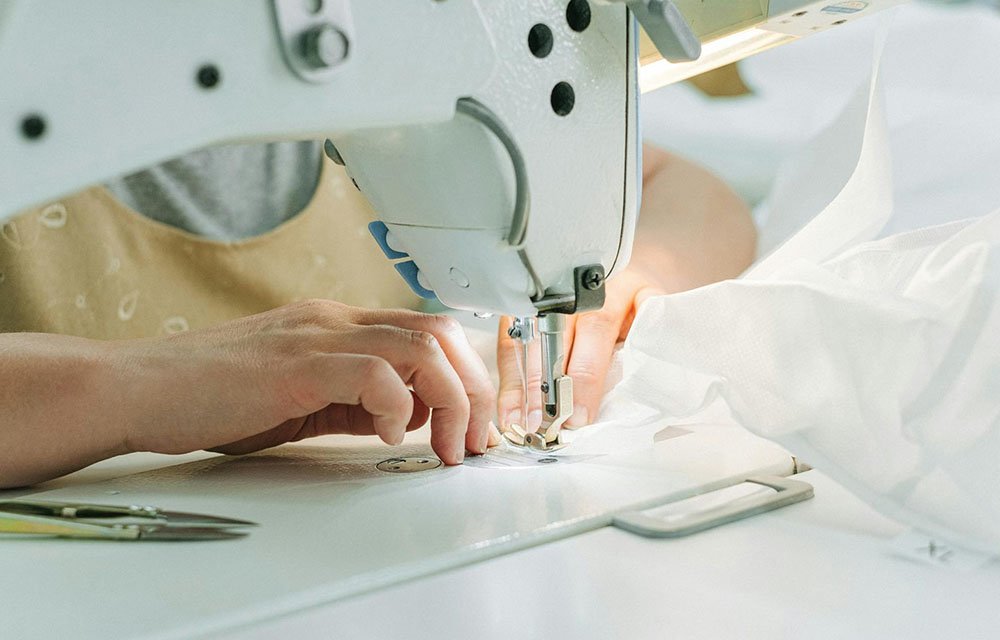
Industrial sewing has quietly become one of the most innovative corners of modern manufacturing.
From the precision-required seams in an airbag or car seat, to the deep quilted layers of a premium mattress, to the aesthetic stitching on a designer sofa, the same fundamental technologies are evolving in parallel across multiple industries — often solving similar problems in slightly different ways.
This creates a huge opportunity: when mattress, automotive interiors and furniture manufacturers actively learn from each other, innovation accelerates.
With the help of leading industrial sewing machine supplier, Atlanta Attachment Co., let’s explore:
- How industrial sewing machines and related technologies are advancing
- What each sector does particularly well
- How techniques in one area can (and should) influence another
The New Era of Industrial Sewing Machinery
Modern industrial sewing is no longer “just” needle and thread. Across all three sectors, we’re seeing similar technology themes:
1.1 Servo-Driven and Programmable Machines
Older clutch motors are rapidly being replaced by energy-efficient servo motors and fully programmable control units:
- Precise stitch control: Speed, stitch length, and penetration can be tuned for different materials and patterns.
- Programmable patterns: Operators can save stitch programs for specific seat covers, mattress borders, or armrest designs.
- Energy savings & noise reduction: Particularly important in large plants with hundreds of machines.
Cross-industry benefit:
Automotive’s long experience with programmable pattern sewing for seat covers (e.g. decorative double seams, French seams) can be applied to premium sofas and mattress top panels to create more complex, repeatable stitching designs without increasing labour cost.
1.2 CNC & Template-Based Sewing Systems
CNC-controlled sewing units and template-based systems are increasingly common where shapes are complex:
- Automotive interiors: Airbags, steering wheel covers, seat panels, door trims.
- Furniture: Curved armrests, patterned upholstery, stitched branding.
- Mattresses: Quilting patterns on panels and borders.
These systems use predefined sewing paths to guarantee repeatability and reduce variation between operators.
Transferable lesson:
- From automotive to others: Automotive’s rigorous approach to fixturing and templates (e.g. jigs that ensure identical placement of fabric and foam) can improve consistency in furniture and mattress production, reducing rejects and rework.
- From furniture to others: Furniture makers often balance structure with aesthetics. Their template-based decorative patterns can inspire more visually distinctive seat designs or mattress tops while keeping production under control.
1.3 Integrated Cutting, Sewing & Material Handling
Inline systems that combine automatic cutting, sewing and transport are becoming more prevalent:
- Automatic cutters feed pre-cut pieces into sewing cells.
- Conveyor belts and stackers minimise manual handling.
- Automated label or tag application ensures traceability.
Who leads where:
- Mattress manufacturers have mastered high-throughput, large-format handling: rolls of ticking, foam, and border fabrics moving quickly through quilting and tape-edge machines.
- Automotive interior plants excel at cell-based manufacturing, where cutting, sewing, and assembly are tightly integrated, often with robotic assistance.
- Furniture plants tend to be more modular and flexible, handling a broader range of SKUs and custom orders.
Cross-industry idea:
Mattress factories can borrow automotive-style cell layouts and line balancing, while automotive and furniture plants can learn from mattress producers’ large-format material handling to manage bulkier seat cushions or oversized sofa components more efficiently.
1.4 Digitalisation, IoT & Data-Driven Sewing
Industry 4.0 is entering the sewing world:
- Machines collect data on runtime, cycle counts, stoppages, and errors.
- Operators can be guided by on-screen work instructions.
- Maintenance can be scheduled based on actual usage, not guesswork.
How each sector can contribute:
- Automotive interiors are strong in traceability: linking sewing operations to specific VINs or seat batches, logging which machine did which seam and when.
- Mattress manufacturers can leverage this for lot-level tracking, linking quilts and tape edges to specific production runs for warranty and quality control.
- Furniture manufacturers can use the same data to manage custom orders, tracking stitch programs and materials used for specific clients or lines.
Mattress Manufacturing: Lessons in High-Throughput Quilting
Mattress production is all about volume, bulk materials, and consistent comfort.
2.1 Advanced Quilting Machines
Modern quilting lines can handle:
- Multiple layers (ticking, foam, fiber, backing)
- Complex stitch patterns and logos
- High-speed production with continuous feeding
What others can learn:
- Seat and door panel quilting in automotive can adopt mattress-style multi-layer quilting strategies for more plush interiors without adding excessive manual work.
- Furniture manufacturers can borrow large-format quilting for headboards, bench seats, and wall panels, offering premium looks with manageable labour.
2.2 Tape-Edge & Border Sewing
Specialised machines form and attach mattress borders seamlessly and at scale. These machines deal with:
- Heavy, thick assemblies
- Continuous seam quality over long lengths
- Tight control of edge alignment
Potential cross-pollination:
- Automotive seat and furniture edge-finishing could adopt tape-edge style techniques for certain products (e.g. mattress-style edged cushions or luxury seats) to create distinctive, durable edges.
- Techniques for handling thick stack-ups can help automotive manufacturers working with multi-layer foam, leather, and heating elements in premium seats.
Automotive Interiors: Precision, Safety & Lean Thinking
Automotive interiors operate in a world of tight tolerances, safety standards, and intense cost pressure.
3.1 Safety-Critical Sewing: Airbags & Structural Seams
Airbags and structural seams (like those in airbag-compatible seat covers) demand:
- Controlled thread tension and seam strength
- Specific stitch patterns and densities
- Documented, traceable parameters
What others can adopt:
- Mattress & furniture manufacturers can use automotive-style process capability studies (Cp/Cpk) and stricter seam-strength testing to reduce warranty claims (e.g. burst seams, premature wear).
- Applying Failure Mode and Effects Analysis (FMEA) to sewing operations can systematically identify and mitigate sewing-related defects across all sectors.
3.2 Lean Manufacturing & Standardised Work
Automotive plants push lean methods hard:
- Standardised work instructions for every operation
- Visual management (kanban, andon lights, clear status displays)
- Quick-change tooling to support model changes
How this benefits others:
- Mattress lines can adopt lean cell design and quick changeovers for quilting patterns and border tapes to support more frequent design refreshes without losing productivity.
- Furniture workshops can heavily benefit from standardised work and visual aids to reduce variation in seam placement, cushion filling, and cover fit.
3.3 Ergonomics & Operator Assist
Automotive interiors often involve heavy or awkward parts (seat frames, large covers). Plants invest in:
- Lift assists and manipulators
- Guided fixtures that reduce strain
- Workstation design for minimal reach and twist
Transferable learning:
- Mattress and furniture factories can reduce musculoskeletal injuries and improve productivity by adopting automotive-style ergonomic standards — especially for:
- Handling large mattress panels
- Flipping heavy sofas or recliner parts
- Moving stacks of quilted covers or cushions
Furniture Sewing: Flexibility, Customisation & Aesthetics
Furniture manufacturing has a different superpower: customisation and visual design.
4.1 Short Runs, High Mix
Furniture plants frequently handle:
- Many SKUs and custom options
- Frequent fabric changes (leathers, velvets, technical textiles)
- Colour and stitching variations for aesthetics
This creates strong capabilities in:
- Fast setup and thread changeovers
- Operator skill in handling diverse materials
- Flexible sewing cells that can switch products quickly
What others can learn:
- Automotive interiors can adopt more furniture-style flexibility to support highly customised interiors (special editions, trim options) without exploding complexity.
- Mattress manufacturers looking to expand into mass customisation (e.g. personalised quilting patterns, branding, colours) can study furniture plants’ approach to short-run efficiency.
4.2 Design-Led Stitching
Furniture stitches are often part of the design language:
- Contrasting threads
- Decorative top-stitch patterns
- Sculpted quilting for comfort and appearance
With programmable machines, these design features can now scale beyond artisan production.
Cross-pollination opportunities:
- Automotive brands can borrow more from furniture in terms of stitch aesthetics to differentiate trim levels and create more “home-like” cabin environments.
- Mattress brands can evolve from purely functional quilting to signature stitch patterns that visually reinforce brand positioning (luxury, minimal, sporty, etc.).
- Shared Challenges, Shared Solutions
Across mattress, automotive interiors, and furniture, many challenges are fundamentally similar:
- Labour shortages and skill gaps
- Solution: Semi-automation, operator-assist systems, intuitive HMIs and training simulations can be shared across sectors.
- Quality consistency at scale
- Solution: Standardised work, digital instructions, inline inspection, and automated seam monitoring (e.g. sensor-based tension control) are applicable everywhere.
- Sustainability and waste reduction
- Solution:
- Better nesting and cutting optimisation
- Real-time scrap tracking
- Designing seams for easier disassembly and recycling (important for mattresses and furniture, increasingly relevant for automotive interiors too).
- Solution:
- Shorter product lifecycles
- Solution: Quick-change tooling, modular fixtures, and programmable sewing patterns enable faster design refresh cycles across all three industries.
Practical Ways to Encourage Cross-Industry Innovation
If you’re in mattress, automotive interiors or furniture manufacturing, here are concrete steps to harness cross-industry learning:
- Benchmark Outside Your Sector
- Visit plants in the other two industries.
- Attend trade shows that aren’t “yours” and talk to machine suppliers serving multiple sectors.
- Involve Machine Builders Early
- Many industrial sewing machine and automation suppliers already work across all three industries.
- Ask them: “What are your automotive clients doing that your mattress/furniture clients aren’t — and vice versa?”
- Pilot Small Cross-Over Projects
- Example: Trial a mattress-style quilting pattern on a furniture upholstery line.
- Or test automotive-grade seam inspection on a high-complaint sofa or mattress model.
- Create Cross-Functional Teams
- Put process engineers, industrial designers and sewing technicians from different product lines in the same room to redesign one seam, one workstation, or one cell.
- Share Data and Best Practices
- Implement common KPIs (first-pass yield, seam defect rate, changeover time) across different product lines and compare.
Conclusion: One Needle, Many Lessons
Mattresses, car seats, and sofas might look like completely different products, but at a process level they share a powerful common denominator: industrial sewing technology.
- Mattress manufacturers excel at high-throughput quilting and bulk handling.
- Automotive interior suppliers lead in precision, traceability, and lean operations.
- Furniture makers shine in flexibility, aesthetics, and customisation.
When these worlds talk to each other — and when they actively borrow machinery concepts, fixturing tricks, digitalisation strategies and ergonomic solutions — everyone wins:
- Higher quality
- Lower waste
- Faster innovation
- More distinctive products
The technology is already converging. The real opportunity now is cultural: being curious enough to look over the fence and learn from the way other industries sew.