Key Takeaways
- Tower servers offer remarkable flexibility and scalability, making them suited to diverse business requirements and budgets.
- Technological innovations have boosted the performance and energy efficiency of tower servers.
- Serving at the edge, tower servers bring crucial processing power closer to where data is actually generated.
- Modern tower servers support vital applications, including virtualization and AI-driven workloads, all without sacrificing reliability.
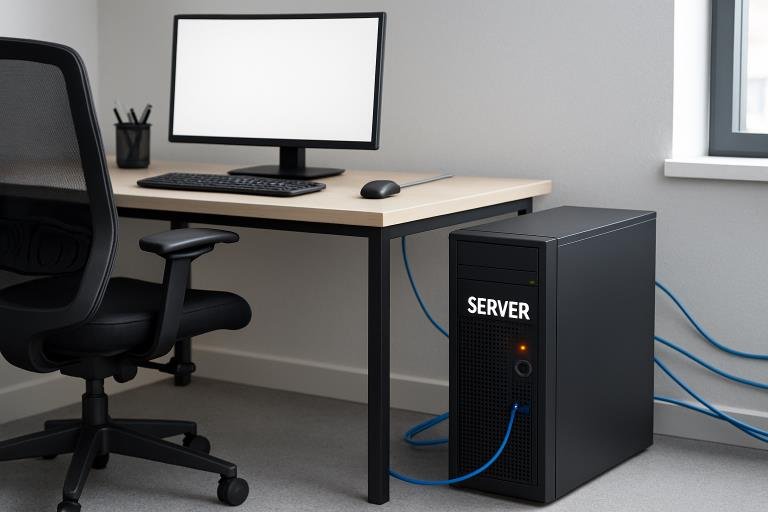
Tower servers remain a core component of IT infrastructure due to their versatility, scalability, and user-friendly design. As businesses of all sizes focus on streamlining operations and future-proofing technology investments, this lineup of business-grade tower servers exemplifies how modern models can adapt to evolving performance demands. Tower servers are highly valued for their standalone capabilities, allowing companies to grow their IT assets incrementally while ensuring that their critical workloads are supported by dedicated hardware.
The adaptability of tower servers means organizations can implement cost-effective technology without the commitment to enterprise-level, rack-mounted data centers. Especially for small and mid-sized businesses, the ability to deploy powerful, yet manageable, servers is a strategic advantage. As organizations seek to optimize processing power near the source of data creation, tower servers are assuming new roles, including edge deployments and on-site real-time analytics processing.
Flexibility and Scalability
Tower servers stand out by providing scalable infrastructure options for businesses at all stages. Unlike rack servers, which require separate chassis and cooling systems, tower servers operate independently, making them ideal for environments that lack dedicated server rooms. Companies can start with a single device, then seamlessly scale up by adding more units as they grow. This modular approach provides an affordable on-ramp to powerful, enterprise-grade resources. Additionally, tower servers deliver versatility—offering configurations to match specific business workloads, from basic file sharing to transaction processing and database hosting.
Business owners and IT administrators appreciate the ease of setup and minimal space requirements. The ability to integrate these servers into existing office environments without needing specialized infrastructure makes them practical for many industries. Furthermore, modern tower servers can support advanced virtualization, enabling multiple applications and services to operate securely on a single device. These benefits have helped tower servers maintain a strong presence in the evolving landscape of distributed and hybrid IT environments.
Enhanced Performance and Energy Efficiency
State-of-the-art tower servers are now equipped with cutting-edge processors, generous RAM capacities, and a range of storage options, all designed for lightning-fast data access. The integration of innovative cooling methods, including liquid-based solutions, enables these devices to operate under intensive workloads without risk of overheating. This results in not only a boost in sustained performance but also a reduction in operational costs related to energy consumption. Efficient power supplies and intelligent fan controls help further reduce electricity bills while extending the service life of vital hardware components.
With advances in both hardware and software-driven energy management techniques, businesses that deploy tower servers experience higher productivity with reduced environmental impact. Large enterprises and growing companies alike can confidently rely on tower servers to handle everything from core business applications to compute-heavy analytics in a responsible manner.
Role in Edge Computing
The proliferation of IoT devices and demand for instantaneous analytics have made edge computing a priority for modern organizations. Tower servers excel in heterogeneous environments that require quick, localized processing. In manufacturing, for example, deploying a tower server on-site enables the real-time analysis of critical machine data, improving efficiency and reducing costly downtime. This decentralization of computing power not only minimizes network latency and bandwidth usage but also enhances security by keeping sensitive data closer to its source.
Many industries, such as retail, healthcare, and logistics, are increasingly adopting edge infrastructure strategies. Tower servers are well-suited for these scenarios because they are small-footprint, easily monitored, and provide the compute muscle necessary for real-time data crunching. As digital transformation accelerates, organizations are discovering that tower servers provide a practical and reliable means of delivering high-quality services to remote sites and branch offices, eliminating the complexities associated with full-scale data center deployments.
Support for Virtualization and AI Workloads
Today’s tower servers are more than just basic hardware—they include advanced features that empower businesses to leverage technology such as virtualization and AI. The proliferation of GPU-accelerated processing and built-in support for AI inferencing means that tower servers can now be tasked with machine learning projects, business intelligence analytics, or Distributed Unit (DU) deployments for next-generation telecommunications. These built-in enhancements reduce the need for external components, streamline power usage, and simplify administration. Enterprises can now run dozens of virtual machines, or deploy AI models for automated operations—all within a standard office footprint.
Cost-Effectiveness for Small Businesses
For small- to medium-sized businesses, the economic value of tower servers is evident not only in the upfront costs but also in their long-term ownership. Tower servers eliminate the need for additional investments in racks, cabinets, and specialized cooling typically required in other form factors. Their simple, standalone setup reduces complexity and time-to-deploy for IT teams, making them the preferred choice for rapidly expanding organizations.
Reliability and Performance
Tower servers are engineered with enterprise-class reliability. Features like redundant power supplies, failover cooling, and disk mirroring provide peace of mind that mission-critical services will remain accessible. These safeguards help reduce downtime due to hardware faults and keep day-to-day operations running smoothly. By investing in robust components and comprehensive system monitoring, businesses can trust that they are equipped for both growth and the occasional unexpected challenge.
Easy Management and Maintenance
Sophisticated management consoles and remote monitoring tools make maintaining modern tower servers simpler than ever. Administrators can automate patching, manage user access, and diagnose issues with real-time alerts—no matter where they are. The accessibility and clarity these tools provide result in faster IT response times, fewer disruptions, and better resource allocation for organizations striving to maximize technology ROI.
Conclusion
Tower servers have evolved in tandem with the business world’s shift toward more agile, distributed, and intelligent IT systems. With advancements in energy efficiency, processing power, and remote management, these devices continue to provide reliable solutions for companies that balance present requirements with future growth. Whether deployed inside a dedicated data closet or at the edge supporting IoT initiatives, modern tower servers remain a cornerstone of efficient, secure, and scalable business operations.