Key Takeaways
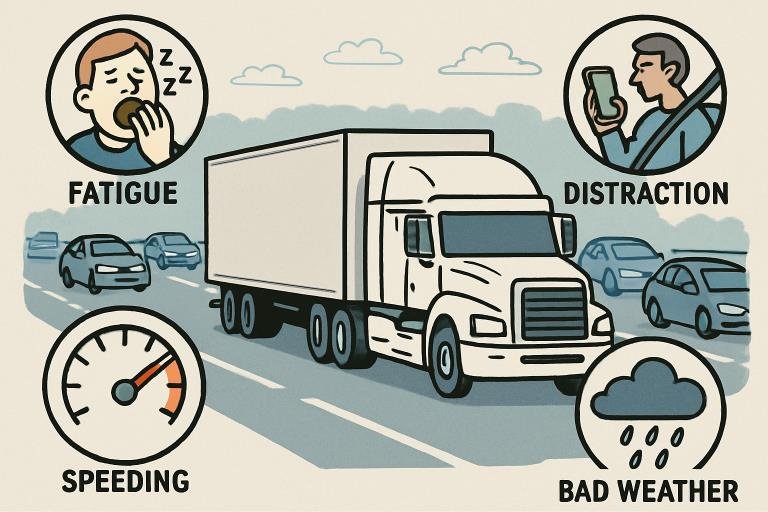
- Driver fatigue and distraction are leading contributors to truck accidents.
- Speeding and aggressive driving behaviors significantly increase accident risks.
- Proper vehicle maintenance and adherence to safety regulations are essential for preventing mechanical failures.
Every year, thousands of families are impacted by the aftermath of truck accidents. These incidents often result in catastrophic injuries or even loss of life, underscoring the serious risks present on highways and busy streets. Recognizing the factors that contribute to these accidents is essential for both truck drivers and other road users, as knowledge is the first step towards prevention. If you’ve been involved in a truck accident, understanding the causes can be vital for your recovery and for holding responsible parties accountable.
The sheer size and weight of commercial trucks magnify the consequences of even minor driving errors or mechanical failures. In many cases, innocent motorists bear the brunt of a crash’s impact. By delving into these common causes, we can empower individuals with practical knowledge and encourage safer practices across the trucking industry.
Authorities and safety experts consistently emphasize the same root causes behind truck collisions. Addressing these issues—whether through better legislation, training, or awareness campaigns—can dramatically reduce accident rates and save lives.
This article will examine the causes of these crashes, present recent statistics, and provide recommendations for policymakers and everyday drivers to enhance road safety for all.
Driver Fatigue
Fatigue is a silent danger on the road for truck drivers who routinely face long, monotonous hours behind the wheel. Research by the National Highway Traffic Safety Administration (NHTSA) shows that drowsy driving is responsible for tens of thousands of crashes each year, many involving commercial vehicles. Sleep deprivation impairs judgment, slows reaction times, and can ultimately lead to devastating accidents.
Distracted Driving
Distraction remains a pervasive threat among truck drivers, whether it’s glancing at a mobile device, eating, or managing GPS and radio systems. According to the NHTSA, distracted driving is implicated in over 3,000 fatal crashes annually. Even a brief lapse in attention can have deadly consequences, particularly when operating a large, heavy vehicle at highway speeds.
Speeding and Aggressive Driving
Speeding, whether due to tight delivery schedules or driver impatience, significantly diminishes a truck driver’s ability to react to sudden changes in traffic patterns or road conditions. Aggressive behaviors—such as tailgating or abrupt lane changes—greatly enhance the risk of causing multi-vehicle collisions, which tend to be more severe when trucks are involved. Studies by the Insurance Institute for Highway Safety (IIHS) confirm that speeding is a major factor in the majority of trucking accidents.
Improper Vehicle Maintenance
Mechanical failures, such as brake malfunctions, tire blowouts, and faulty headlights, are frequently cited in truck accident investigations. Regular inspections and timely repairs are non-negotiable responsibilities for trucking companies. The Federal Motor Carrier Safety Administration (FMCSA) enforces strict rules regarding vehicle maintenance, as proper maintenance greatly reduces the risk of catastrophic road failures.
Adverse Weather Conditions
Heavy rain, snow, ice, or dense fog dramatically compromises both visibility and traction. While bad weather is unavoidable, accidents stemming from it are often preventable with proper speed reduction and defensive driving techniques. Commercial drivers must be trained to recognize dangerous conditions and adapt their driving accordingly, as wet or icy roads are a frequent factor in jackknife and rollover accidents.
Inadequate Driver Training
Truck drivers require specialized knowledge, not only to handle the technical aspects of their vehicles but to respond safely to emergencies and challenging conditions. Inadequate or rushed training can leave drivers unprepared for the realities of the road. Comprehensive education—covering everything from safety regulations to emergency maneuvers—plays a pivotal role in reducing preventable errors behind the wheel.
Overloaded or Improperly Loaded Cargo
Improperly secured or overfilled cargo creates two major hazards: unstable loads raise the likelihood of rollovers, while excessive weight puts extra strain on brakes and axles. Regulations require precise weight distribution and securement methods, but even small lapses can result in catastrophic outcomes. It’s crucial for loading personnel to follow best practices and for drivers to double-check their loads before departing.
Reckless or Aggressive Driving
Tailgating, weaving through traffic, and “road rage” incidents are not restricted to passenger vehicles—in fact, their consequences are even graver when large trucks are involved. Reckless actions not only endanger the truck driver but also jeopardize every motorist sharing the highway. Law enforcement and company oversight are crucial in discouraging dangerous driving behaviors and protecting everyone on the road.
Mitigating the main causes of truck accidents requires cooperation between drivers, companies, regulators, and the public. Regular training, diligent vehicle maintenance, adherence to safety laws, and a commitment to responsible driving behavior will collectively enhance road safety. More insight and statistics on truck-related accidents and their prevention can be found through the Insurance Institute for Highway Safety (IIHS).