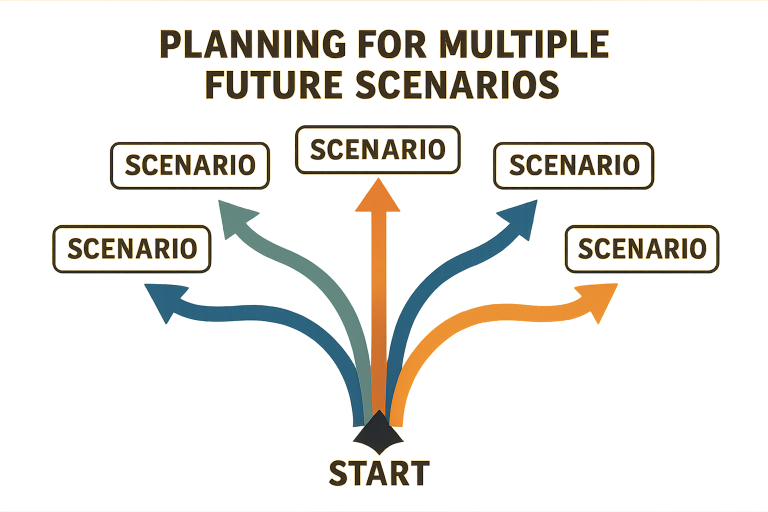
In an era defined by rapid transformation and market uncertainty, achieving sustainable revenue growth requires more than traditional planning. Organizations must proactively anticipate trends and prepare for potential disruptions, making consulting for revenue growth a strategic investment for future-proofing business models. Strategic scenario planning has become a cornerstone for forward-looking companies that seek to thrive in a volatile landscape.
By using scenario planning, businesses develop a deeper understanding of potential futures, strengthening their capacity to respond effectively to external pressures. This comprehensive approach not only improves decision-making but also unlocks new opportunities for revenue expansion. Companies adopting sophisticated scenario strategies have demonstrated remarkable resilience and gained clear competitive advantages. Addressing uncertainty is not about predicting the future with certainty but equipping the organization to succeed regardless of how the future unfolds.
Whether navigating economic downturns, technological disruptions, or regulatory shifts, organizations that leverage strategic scenario planning find themselves better positioned to adapt and thrive. By blending discipline, foresight, and agile responses, these companies can seize growth opportunities without compromising stability. Business leaders exploring this discipline will find that its principles can be tailored to most industries and operational scales, creating a meaningful impact on both short- and long-term performance.
Understanding Strategic Scenario Planning
Strategic scenario planning is the process of developing detailed, plausible outlines of different futures, based on varying sets of assumptions and influences. Unlike single-track forecasting, which projects current conditions into the future, scenario planning challenges leaders to consider a spectrum of outcomes, including changes in market trends, technological advancements, and global events. These narratives enable organizations to develop actionable strategies for multiple potential outcomes, thereby improving preparedness and strategic agility.
Importance in Revenue Growth
For organizations, the pace and scale of change in today’s environment underscore the necessity for more robust planning. Strategic scenario planning ensures that leaders are not solely reactive. Instead, it enables them to pivot quickly, reduce risk, and identify new avenues for growth. The process allows businesses to refine or remix their value propositions, tap into emerging markets, and shore up revenue streams, even when conditions shift unexpectedly. Scenario planning also helps mitigate cognitive biases in strategic decisions, allowing clearer pathways to revenue growth.
Key Components of Effective Scenario Planning
- Identifying Critical Uncertainties:Evaluate which environmental factors, such as regulatory issues, economic cycles, or technological innovations, could introduce significant changes to business outcomes.
- Developing Diverse Scenarios:Create three to five distinctive narratives, each rooted in different combinations of environmental, market, and organizational shifts.
- Analyzing Implications:Carefully assess the potential impacts of each scenario on your organization’s operational, financial, and strategic priorities.
- Formulating Strategic Responses:Invest in tailored action plans for each scenario to ensure the organization is prepared to act swiftly and efficiently.
Real-World Examples
Organizations that have adopted strategic scenario planning often highlight its decisive impact on growth outcomes. An illustrative case is media outlets adapting to the digital economy. Through partnerships with content marketing platforms, some outlets achieved a 40% increase in revenue, showing how timely scenario-based decisions can drive measurable success. These organizations viewed digital disruption as an opportunity rather than a threat, and rapidly shifted their business and monetization models.
In another example, leading global financial institutions have used advanced scenario planning to assess the impacts of geopolitical conflicts or global pandemics. These insights informed decisions such as resource reallocation, supply chain diversification, and new market entry. Their readiness enabled sustained performance even amid global economic shocks.
Steps to Implement Scenario Planning
- Assemble a Cross-Functional Team:Diversity in expertise fosters a richer understanding of potential influences and responses.
- Identify Key Drivers:Assess the macro and micro drivers influencing business performance, including technological shifts, consumer trends, and regulatory developments.
- Develop Scenarios:Create convincing narratives for each scenario, describing how the world and your marketplace could change over the relevant planning horizon.
- Analyze Impact:Evaluate how each scenario could impact finances, operations, and workforce productivity.
- Develop Strategies:Build and vet contingency plans for each scenario, outlining responsibilities, action steps, and success metrics.
- Monitor and Update:Track leading indicators and triggers for each scenario on an ongoing basis, incorporating lessons learned as environments evolve.
Common Challenges and Solutions
Businesses may encounter obstacles such as ingrained biases and resource limitations, but these challenges are surmountable. It is vital to cultivate an organizational mindset that values open communication, scenario thinking, and continuous learning. Appointing scenario champions, allocating dedicated resources, and integrating scenario planning into existing strategic processes can also help overcome challenges and instill accountability throughout the organization.
Future Trends in Scenario Planning
The future of scenario planning will be increasingly driven by advancements in data analytics, artificial intelligence, and real-time environmental scanning. These technologies promise more precise, rapid, and actionable insight, allowing organizations to continuously update plans based on live data streams. Scenario planning is set to evolve into a dynamic discipline, in which organizations cycle rapidly through scenario refreshes and continuously adapt their business models to sustain ongoing agility and revenue growth.
Conclusion
Strategic scenario planning enables organizations to prepare for a range of possible futures, substantially increasing their ability to grow revenue amid uncertainty. Companies that invest in this discipline arm themselves with the capabilities to pivot when necessary, identify new opportunities as they arise, and ensure their longevity in an ever-changing business landscape.