Key Takeaways
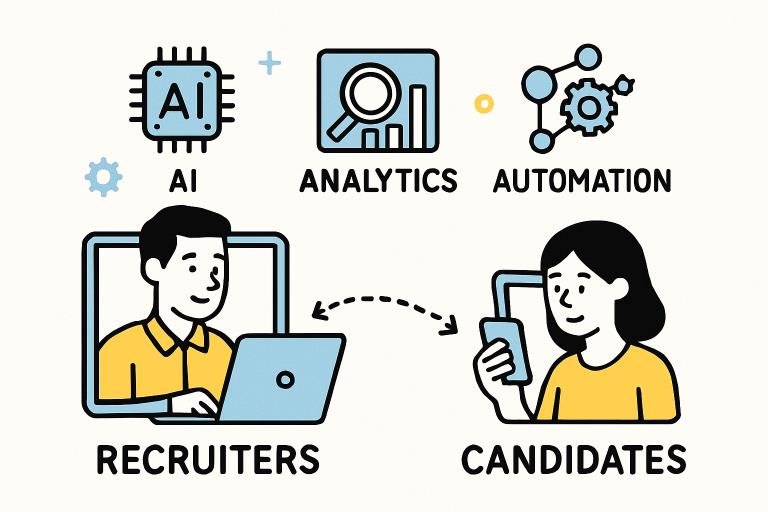
- Artificial Intelligence and analytics are transforming recruitment processes, enhancing precision and objectivity in decision-making.
- Automation tools take repetitive tasks off recruiters’ plates, freeing them to focus on relationship-building, interviewing, and strategic talent planning.
- Candidate experience is consistently improved through smarter communication, instant feedback, and tailored outreach, making companies more attractive to top talent.
- Organizations leveraging modern recruiting technologies report faster hiring times, improved retention rates, and more robust workforce planning capabilities.
In the fast-paced world of talent acquisition, cutting-edge technology is challenging long-held hiring traditions by streamlining recruitment workflows and equipping HR teams with sharper decision-making capabilities. Many organizations are actively searching for cost-effective ways to identify, engage, and secure the best candidates in an increasingly competitive job market. Innovative, digital-first solutions not only automate routine administrative tasks but also transform how companies identify talent and distinguish themselves as employers of choice. These advancements offer more than just speed; they elevate the quality of hiring decisions, strengthen candidate relationships, and enhance the end-to-end applicant journey.
Recruitment professionals today find themselves at a pivotal crossroads, balancing the drive for innovation with the critical need to maintain trusted, meaningful human touchpoints throughout the hiring process. As the landscape evolves, utilizing today’s sophisticated recruiting platforms—such as ATS automation—gives organizations an edge, enabling them to craft more equitable, data-driven, and responsive strategies while also improving their employer brands. The ability to merge human intuition with technology-driven precision leads to a more effective and satisfying experience for both candidates and companies. These changes make a measurable impact, as applicants benefit from greater transparency and responsiveness, while recruiters gain actionable insights and efficiency.
The Rise of AI in Recruitment
Artificial Intelligence is rapidly becoming the cornerstone of talent acquisition strategies. Competitively designed AI-powered platforms can process enormous volumes of resumes and candidate data to identify the most promising applicants in record time. They use sophisticated algorithms to predict which candidates are most likely to succeed, recommend ideal role placements, and even generate shortlists with greater accuracy than manual review alone ever could. By removing much of the guesswork and subjectivity from initial screening, recruiters can focus their efforts on candidates who demonstrate the right skills, experiences, and potential—even when the talent pool is vast. Research from SHRM shows that AI-enabled hiring systems can learn from historical hiring patterns, refine their algorithms over time, and deliver consistently better outcomes for employers by reducing poor-fit hires and supporting longer-term organizational success.
Data-Driven Decision Making
Data analytics underpin the new wave of strategic hiring by revealing actionable trends in candidate performance, turnover, and the characteristics of top performers. Today’s recruitment platforms collect and analyze vast amounts of HR data, providing recruiters with evidence-based insights that go far beyond gut feelings or instinct. Intelligence from these platforms supports everything from workforce planning and skill-gap analysis to sourcing improvements and onboarding. As a result, companies are better able to target specific skill shortages, address high-turnover areas, and fine-tune their job descriptions to better match candidates. Organizations using modern AI frameworks have reported up to 91% accuracy in predicting employee turnover, dramatically improving recruitment success, according to research by the Harvard Business Review. In addition, many systems use anonymized scoring and objective criteria to help reduce unconscious bias from early hiring stages, supporting more diverse and equitable recruitment outcomes.
Automation Enhancing Efficiency
Recruiting teams often find that a substantial portion of their workload is bogged down by administrative tasks—reviewing resumes, coordinating schedules, sending routine emails, and managing candidate documentation. With robust automation, these repeatable actions are managed seamlessly, allowing recruiters to prioritize higher-value activities such as evaluating cultural fit, consulting with hiring managers, and conducting in-depth interviews. Modern recruiting suites now include AI-powered chatbots that can pre-screen candidates and answer inquiries 24/7, as well as scheduling software that minimizes back-and-forth. Automated assessments—such as computerized skill tests and scenario-based evaluations—ensure more standardized and impartial candidate evaluations. According to recent studies referenced by Forbes, businesses that have implemented automated recruitment workflows have seen marked improvements in recruiter productivity, faster time-to-fill, and higher candidate engagement throughout the process.
Improving Candidate Experience
In an era where employer reputation matters, job seekers expect efficiency, transparency, and personalization from the moment they apply. The latest recruiting technology meets these expectations by streamlining communication, tailoring outreach, and providing automated updates at every step. Enhanced systems enable companies to set up tailored communication protocols, proactively inform candidates, and provide more relevant feedback for each application. Candidates appreciate timely interview scheduling that accommodates their calendar, easy digital document submission, and the confidence that their applications are being reviewed objectively. This improved experience not only builds trust but also strengthens a company’s reputation and encourages top talent to apply again in the future, contributing to a healthier talent pipeline and stronger employer branding over the long term.
Challenges and Considerations
While technology-driven recruiting offers considerable benefits, employers must also navigate complex challenges related to privacy, data security, and ethics. AI and automation tools depend on large volumes of high-quality data and require regular human input to ensure they do not inadvertently reinforce existing biases. Over-reliance on automation can risk making interactions feel impersonal or excluding qualified applicants who may not fit standard algorithms. Additionally, organizations must integrate new platforms with legacy HR systems, encourage staff adoption, and invest in ongoing training to keep processes effective and people-oriented. Addressing these considerations is critical to maintaining a fair, compliant, and human-centric approach as recruitment technology becomes an industry standard.
Future Outlook
The rapid advancements in talent acquisition technology, particularly in artificial intelligence, natural language processing, and predictive analytics, are transforming the recruiting landscape. These innovations enable companies to automate insights and deliver personalized experiences, enhancing their ability to source, attract, and retain top talent. Organizations must focus on creating adaptable, tech-savvy recruiting teams and establishing a strong digital infrastructure to keep pace with these trends. Companies that prioritize digital transformation in their recruitment processes are already experiencing faster, more efficient hiring, positioning themselves for future growth and competitiveness. Ultimately, the adoption of advanced recruiting tools, alongside a commitment to automation, AI, and ethical practices, is crucial for organizations seeking to enrich candidate experiences and improve hiring outcomes. Investments in these areas are essential for securing the best talent in a dynamic market.