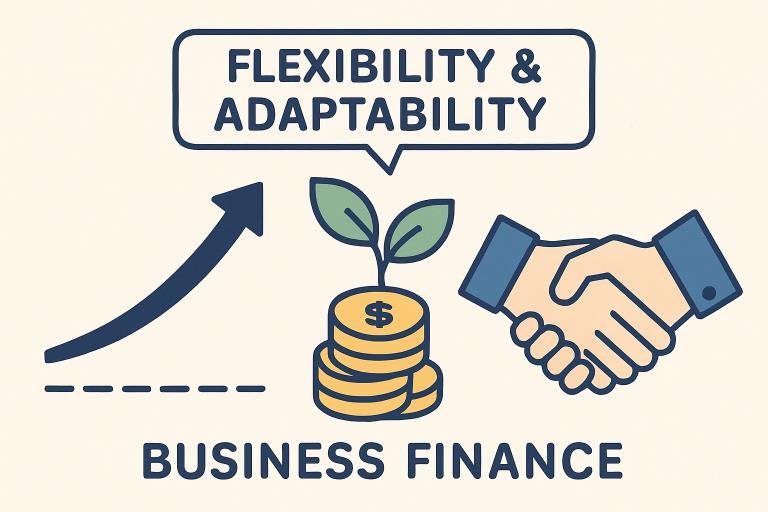
Staying competitive and resilient is crucial for today’s businesses. To do so, organizations need more than a one-size-fits-all approach to funding. Challenges such as shifting market demands, seasonal variations, and opportunities for rapid expansion mean access to flexible financial solutions is more important than ever. In response to these needs, innovative lenders and technology-driven platforms, such as an SME finance provider, are transforming the landscape, making customized funding options accessible to companies of all sizes.
Unlike traditional loans that can be rigid and slow to adapt, modern flexible finance offerings support businesses through both prosperous and challenging times. This versatility enables companies to capitalize on new opportunities and keep operations running smoothly, regardless of external pressures. Organizations leveraging these tailored financial products are often better positioned for sustained growth and long-term stability.
These advances are driven by a surge in fintech innovation and shifts in how lenders evaluate risk and cash flow. Alongside specialized finance providers, mainstream financial institutions are beginning to integrate more adaptable loan products into their portfolios. This competitive environment is giving business owners a wider range of choices than ever before, opening new pathways for expansion, managing working capital, and building crisis resilience.
The rapid speed of change in business means leaders require solutions that evolve alongside their operations. Flexible business finance options provide freedom and confidence to pursue ambitious goals, quickly access resources, and protect against sudden uncertainty. These qualities can be instrumental in securing a stable future.
Understanding Flexible Business Finance
Flexible business finance is any financial product or structure designed to adjust according to a company’s specific needs. The most common offerings include:
- Lines of credit (which enable businesses to draw funds and repay as needed, only paying interest on what is used)
- Revenue-based financing (repayments rise or fall in line with real-time company sales)
- Invoice financing and factoring (which unlock fast cash against outstanding invoices)
- Short-term working capital loans with customizable repayment terms
- Equipment leasing or finance, matched to asset usage and business cycles
Providers of flexible finance review a business’s cash flow, growth projections, collateral, and risk factors. They set repayment terms and borrowing limits tailored to the organization’s current and anticipated needs, rather than relying solely on fixed schedules or strict credit criteria. This approach gives companies room to adapt as market circumstances change.
Benefits of Flexible Financing
- Adaptability:Solutions scale up or down, tracking business performance and enabling companies to navigate both booms and downturns without financial strain.
- Improved Cash Flow Management:Smooth access to funds ensures day-to-day operations run efficiently and lets businesses seize strategic opportunities as they arise.
- Reduced Financial Strain:Flexible repayments based on revenue or operational cycles prevent cash flow bottlenecks and help maintain financial health.
- Faster Access to Capital:Many modern fintech providers streamline the application and approval process, releasing funds quickly when companies need them most.
- Encourages Innovation and Growth:Quick access to finance fuels product launches, market expansion, and investment in new technology or staff without lengthy delays.
Recent Developments in Flexible Financing
The world of business finance is evolving rapidly. In recent years, several companies have brought remarkable new options to market. As an example, Flex, a leading fintech firm, has raised significant capital to enhance its AI-driven payments and personal finance solutions, focusing on making funds more accessible to business owners. This allows for seamless financial management tools that dynamically support commercial growth and operational shifts. For more about this, see their coverage on ABF Journal.
Another noteworthy development is Idea Financial’s expansion of legal lending and small business services. Backed by a substantial corporate loan, the organization is innovating to provide even more flexible, industry-specific solutions, underscoring the growing recognition of the need for personalized, accessible finance. Those interested can find more information on this trend through PR Newswire.
Major outlets such as Forbes have also analyzed how technology is reshaping lending, giving even the smallest companies a chance to compete and thrive regardless of economic headwinds.
Implementing Flexible Financing in Your Business
To successfully leverage these adaptable financial options, business leaders should take a strategic approach:
- Assess Financial Needs:Analyze your company’s cash flow to identify periods when additional funding is essential or when revenue dips.
- Research the Options:Examine various flexible finance solutions and speak with reputable providers in your industry.
- Consult Qualified Advisors:Engage with financial experts to weigh the advantages, risks, and obligations of each possible product.
- Implement and Monitor:Carefully introduce the chosen solution into your operations, closely track its impact, and adapt your approach as your company’s requirements evolve.
Conclusion
Flexible business finance solutions are shaping the future of commerce. By using loan products, lines of credit, and revenue-based financing that can be calibrated to real-world needs, organizations build resilience and seize new opportunities. The ongoing shift away from rigid traditional models means companies prepared to embrace this new generation of adaptable funding stand to benefit most. Staying agile and informed about the latest advances will empower business leaders to make decisions that safeguard stability and support ambitious growth objectives. For a deeper understanding of flexible business finance and emerging trends, resources from trusted authorities such as Inc.com offer excellent practical perspectives.