Key Takeaways
- Immediate responses can minimize water damage and repair costs.
- Familiarity with your plumbing system provides a major advantage during emergencies.
- Temporary interventions may curb the damage until a professional arrives.
Plumbing emergencies tend to happen out of nowhere, disrupting your living space and posing risks to your property. Taking swift, decisive steps is essential to limiting water damage and restoring safety in your home. Whether it is a burst pipe or a fast-spreading leak, your response can make all the difference. If you need immediate help, finding an emergency plumber near me should be a top priority in urgent situations.
Understanding these emergencies and knowing what actions to take reduces panic and empowers you to control the situation effectively. This practical guide outlines the critical things to do when plumbing disasters strike. With clear, quick thinking, you can prevent the situation from spiraling and save yourself from unnecessary expenses and stress.
Recognizing Common Plumbing Emergencies
The first step in handling a crisis is understanding when you are in the midst of a true plumbing emergency. The most typical situations that demand urgent attention include:
- Burst pipes. These are often due to freezing weather or aging infrastructure and can release large volumes of water rapidly.
- Overflowing fixtures. Toilets, sinks, or bathtubs overflowing uncontrollably can lead to flooding and property damage.
- Major leaks. Water suddenly streaming from pipes, hoses, or appliances needs immediate action.
- Sewer backups. Foul odors or water backing up through drains may indicate a serious problem in your main sewer line.
Each of these incidents can quickly escalate, making fast action essential. Severe water or sewer problems can impact your health, safety, and property value.
If you want to improve your overall home safety, understanding home plumbing basics is important.
Immediate Steps to Take
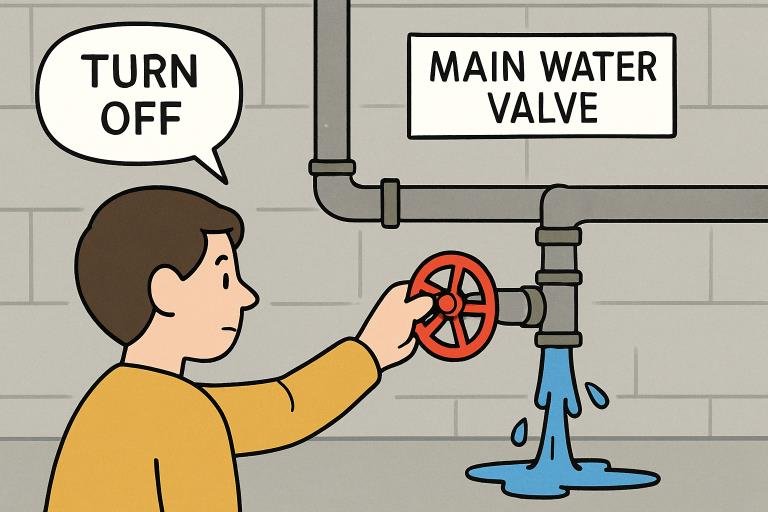
- Shut Off the Water Supply. Locate your home’s main water valve and turn it off immediately to stop the flow. The main valve is often located by the water meter or where the main line enters your house. For isolated issues, such as a leaky sink, use the dedicated shut-off valve for that fixture.
- Turn Off the Water Heater. Next, power down the water heater to protect it from damage. For electric water heaters, use the circuit breaker; for gas heaters, switch the control to the “pilot” setting.
- Drain Out Remaining Water. Open every faucet in the home to let out any residual water in the pipes. This step reduces internal water pressure and can slow or stop ongoing leaks.
- Contain Leaks. Use buckets to collect dripping water, and towels or a wet/dry vacuum to soak up pooling. Quick containment can save floors, walls, and possessions from further damage.
- Ventilate the Area. Proper ventilation helps wet areas dry faster, reducing mold and mildew risk. Open doors and windows if possible, and run fans in the affected area.
- Document the Damage. Take thorough photos or videos and make notes for your insurance provider and for professional plumbers, who can use this information for a faster response.
When to Call a Professional Plumber
Some scenarios require more than just quick thinking and household solutions. Serious cases need a professional’s immediate expertise. Call a licensed plumber without delay if you encounter:
- Major leaks or burst pipes. These events can compromise structural integrity and lead to costly repairs if not fixed right away.
- Sewer backups. Not only are backups hazardous to your health, but resolving them also requires specialized tools.
- Gas leaks. If you ever detect a rotten egg smell or hissing sound near gas lines, leave the area and call emergency servicesbefore a plumber.
Preventive Measures to Avoid Future Emergencies
Taking care of your plumbing system and staying proactive lowers the odds of surprise emergencies. The following practices are recommended:
- Annual Inspections. Schedule regular professional inspections to catch small problems before they become emergencies.
- Pipe Insulation. Insulate pipes in areas vulnerable to freezing. This precaution can reduce the risk of pipes bursting in cold weather.
- System Familiarity. Every household member should know where the primary and secondary shut-off valves are located, so anyone can act during a crisis.
- Install Leak Detectors. Modern leak detectors can provide early warnings. They are especially useful for vacation homes or properties that are vacant for long stretches.
Adopting these best practices can give you confidence that you’re prepared to handle whatever plumbing emergency might arise in the future.
Conclusion
Quick, correct action is critical to minimizing harm and costs during a plumbing emergency. By recognizing the signs, using immediate containment strategies, and relying on preventive maintenance, you can protect your home and family. Preparation and swift responses create peace of mind when unexpected plumbing disasters occur.