Key Takeaways:
- Artificial intelligence accelerates the discovery of novel bioactive peptides, predicts their properties, and enables the creation of customized therapeutics for diseases such as cancer, metabolic disorders, and neurodegeneration.
- Innovations such as biodegradable, needle-free patches enhance patient compliance, enable at-home treatments, and make peptide therapies more practical and accessible.
- Peptides such as BPC-157 and TB-500 support tissue repair, manage inflammation, and facilitate recovery from injuries or surgery, expanding their role in musculoskeletal health and wound healing.
- Compounds like Selank and Semax show promise in improving memory, mood, and neuroplasticity, with potential applications in anxiety, age-related memory loss, and neurodegenerative conditions.
- Modern solid-phase peptide synthesis and click chemistry allow precise, automated production of complex peptides, accelerating research and clinical applications.
- Algorithm-guided peptide design enables bespoke molecules tailored for stability and efficacy, marking a shift from trial-and-error to predictive, condition-specific therapeutics.
Peptide science is transforming modern medicine and biotechnology, unlocking new frontiers in both research and therapeutic applications. With advanced tools augmenting the field and novel peptides being investigated for a range of applications, the landscape is evolving rapidly. In particular, shifts in how peptide therapies are delivered and the power of artificial intelligence are at the heart of these innovations. For researchers and clinicians, understanding the state of the science and exploring resources for research peptides is more important than ever.
Recent innovations span everything from patient-friendly delivery systems to AI-driven molecular design. These developments have made peptide science a focal point for regenerative medicine, cognitive health, and efficient compound production. As technology continues to drive discovery, the horizons for peptide-based treatments and research continue to expand, promising improved patient outcomes and new research directions.
- Artificial intelligence (AI) is revolutionizing peptide design and discovery.
- Non-injectable peptide delivery systems are improving patient experiences.
- Peptide therapies are expanding into new areas, such as tissue regeneration and brain health.
- Advancements in synthesis are making peptide production more efficient and sophisticated.
Finding out where to buy research peptides can help scientists and clinicians keep pace with this fast-moving field. Access to high-quality peptides enables experimentation with emerging modalities and direct participation in the next wave of clinical innovation.
AI Revolutionizes Peptide Design
Artificial intelligence has quickly become one of the most important catalysts for progress in peptide science. By simulating vast possible sequences and predicting their properties, AI platforms are accelerating the identification of novel bioactive peptides. Technologies such as RFpeptides, a deep learning system, now enable the design of macrocyclic peptides based on the structure or sequence of specific biological targets. These computational models can analyze massive datasets, discern patterns that elude human experts, and propose optimized candidates for therapeutic use more quickly than traditional processes. According to Nature Biotechnology, AI-driven peptide design is expected to reshape everything from cancer therapy to metabolic disease management.
Advancements in Non-Injectable Delivery Systems
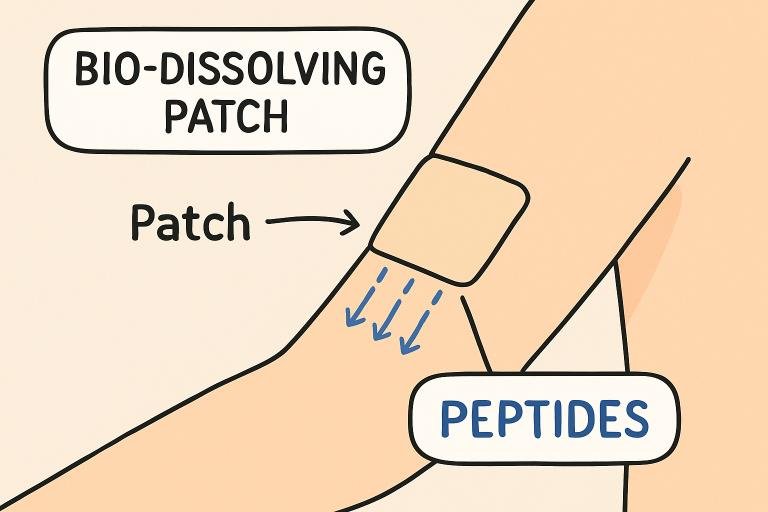
One of the greatest limitations of early peptide therapies was the need for injection, which often led to reduced patient compliance due to inconvenience or discomfort. Now, cutting-edge delivery systems are removing this barrier. Recent innovations include bio-dissolving patches from companies like Amino Innovations, which allow for painless, needle-free absorption through the skin. These patches release peptides using lattice technology, streamlining therapy and boosting patient satisfaction. Such advances not only improve the practicality of peptide use but may also open up new opportunities for at-home and long-term treatments, making therapies more accessible and less invasive. Amino Innovations has developed a next-generation peptide patch platform that redefines everyday wellness through precision-engineered, needle-free delivery.
Peptides in Regenerative Medicine
Peptide science has found a dynamic role in regenerative medicine. Compounds such as BPC-157 and TB-500 are being investigated for their capacity to promote cellular repair, aid recovery after surgery, and accelerate the healing of sports injuries. These bioactive molecules interact with growth factors and the cellular matrix, helping to manage inflammation and trigger tissue regeneration. As more clinical trials validate these effects, researchers anticipate an increase in peptide-based therapies for musculoskeletal health and wound repair. The Healthline network has explored its expanding use, noting the impact on future pain and injury protocols.
Cognitive Health and Peptide Therapies
Another fast-growing frontier is the application of peptides to cognitive and neurological health. Researchers are exploring how peptides such as Selank and Semax can regulate mood, reduce anxiety, and improve memory and neuroplasticity. By influencing neurotransmitter systems and modulating brain inflammation, these compounds are of high interest for developing treatments for anxiety disorders, age-related memory loss, and neurodegenerative diseases. Ongoing studies suggest that peptides may help safeguard the brain against chronic stress or environmental toxins, opening new possibilities for preventive and restorative cognitive care.
Advanced Synthesis Techniques
The science of peptide synthesis has also advanced rapidly. Modern solid-phase peptide synthesis (SPPS) is increasingly automated and precise, enabling the synthesis of longer, more complex peptide chains. Innovations such as click chemistry are further streamlining synthesis, allowing researchers to quickly link peptide fragments, a crucial step for developing multifunctional therapeutics and diagnostic agents. These techniques enable scaling up production and easily customizing sequences for specific research goals. This era of rapid and flexible synthesis supports ongoing discovery, turning groundbreaking research concepts into clinical reality.
AI-Powered Peptide Design in Therapeutics
Artificial intelligence does more than just optimize existing molecules. It is also empowering the invention of wholly new peptides, designed from the ground up to meet complex therapeutic goals. AI-guided development is producing customized peptides for specific conditions, such as obesity, diabetes, Alzheimer’s disease, and Parkinson’s disease. This bespoke approach tailors each sequence for maximum stability and effectiveness, marking a shift from trial-and-error discovery to precise, predictive design. As algorithm-driven research continues, these next-generation therapeutics could dramatically expand the range of treatable diseases and enhance the effectiveness of existing treatments.
Future Outlook
The future of peptide science is rich with potential. With AI tools making it easier to discover and engineer peptides, user-friendly delivery systems improving patient adherence, and the range of applications broadening to include everything from organ repair to brain health, the opportunities for innovation are immense. As deeper knowledge and more sophisticated technologies converge, peptides are set to become an essential part of the therapeutic toolkit for clinicians, researchers, and biotechnologists worldwide. For anyone in the life sciences, continued attention to this vibrant field will be essential as it shapes the next decade of medicine.