The average person attending a bottomless brunch asks one singularly terrible question – how many drinks do we get? Unfortunately, the answer to that isn’t necessarily indicative of the overall experience. The drinks are almost always fine. It’s the food that’s going to tell you whether or not it’s worth the $40.
Start with the bread
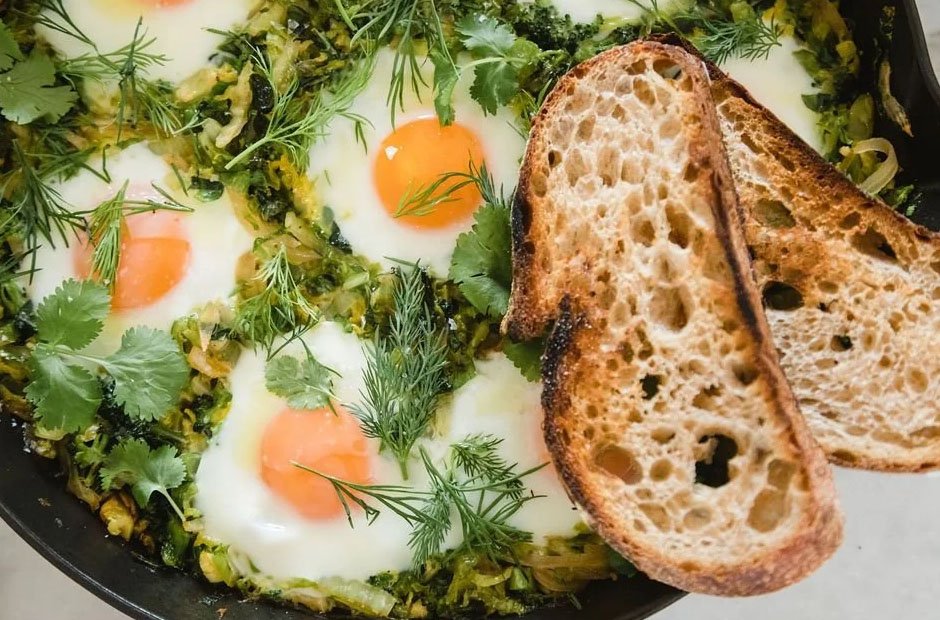
It may seem obvious, but many people tend to ignore this fact. Practically every brunch dish is served on a bread foundation. Whether it’s Eggs Benedict, avocado toast, shakshuka with side bread, or French toast. If a kitchen is using sliced bread from a commercial supplier or pre-packed brioche, you’re going to be able to taste it. The good ones acquire their bread from artisanal suppliers or bake it themselves. Sourdough bread made with real fermentation has a flavor and texture that you simply won’t find in the supermarket variety. It should be tangy and pleasantly chewy. Supermarket brioche is often too greasy and falls apart as soon as you put the poached egg on top.
Which brings us to the next clue. If the menu specifies the supplier’s name, you can be confident. If it just says “toast”, you should probably be worried.
Look for the hero dish
A menu curated by a chef has that one dish, at least, that you won’t find anywhere else in the vicinity. Not the “avocado toast with a twist” but something truly unique and specific. It might use harissa, chimichurri, miso, or some combination that shouldn’t work on paper but does. These dishes are the real indicators of creative investment versus trend-following. If you’re looking for a bottomless brunch in covent garden that takes its food seriously, the hero dish is where you’ll spot the difference.
The egg litmus test
The technical skill of a cook comes out most in a poached egg. On the face of it, it’s an easy thing. The white should be just set, but not at all jellyish, and the yolk should break when you cut it, but with a bit of resistance. Doing that right on a busy weekend service, at numbers, every time, is hard.
Hollandaise is the next check. Jarred hollandaise tastes of everything a jarred hollandaise should: flat, overly acidulent, slightly glutinous. A kitchen that makes it fresh will serve you a sauce that’s slightly glossy, a warm temperature, and emulsified enough to create a sheen, rather than a pool, around the egg.
Shakshuka is the other test order if you’re wishing to get the measure of a kitchen’s intentions. Pretty much anybody can crack a few eggs into tomato sauce. A good one will have enough acid and heat to create complex depth, and the eggs should be cooked exactly to order, rather than left to sit in the sauce until the yolk starts to resemble the moon’s surface.
Balance across the menu
Brunch menus that limit themselves to a hulking protein component, either in the form of some kind of full English, egg-topped-anything, or stacks on stacks, put you at risk of what chefs refer to as “brunch fatigue.” You are full, sure, but not satisfied. Menus that are fun to read successfully balance the heavy stuff with things you’d probably rather eat that just so happen to contain some veg. Roasted tomatoes, when done properly, can be just as appealing as a bacon plate.
Atmosphere and food aren’t mutually exclusive
There are noisy bottomless brunches with token-gesture food, but it never has to be that way. A high-energy, all-hands-in-the-air experience and a good quality kitchen aren’t mutually exclusive. Advertising a bottomless brunch as ‘festive’ or ‘themed’ often means the kitchen expects the drinks and entertainment to do most of the heavy lifting. And those places often use their menu to talk up the concept first and the meal second.
Look at how they describe the food. If it’s all superlatives and no specifics, be skeptical. If the menu describes technique, sourcing, or particular ingredients, the kitchen is probably proud of what it’s producing.
The coffee question
It’s disappointing when a great food menu is accompanied by bad coffee. It’s actually more upsetting than you’d think. Bad coffee can imply that management cuts corners wherever they can, using low-quality ingredients to save money. It can also just make the place seem lazy and indifferent. But beyond what it might infer about the restaurant, bad coffee simply tastes bad. We’re here to talk about the places doing it right, though. The ones who treat coffee like the good stuff it is.
The drinks in a bottomless package will keep coming regardless. The food and the coffee are what you’ll actually remember.