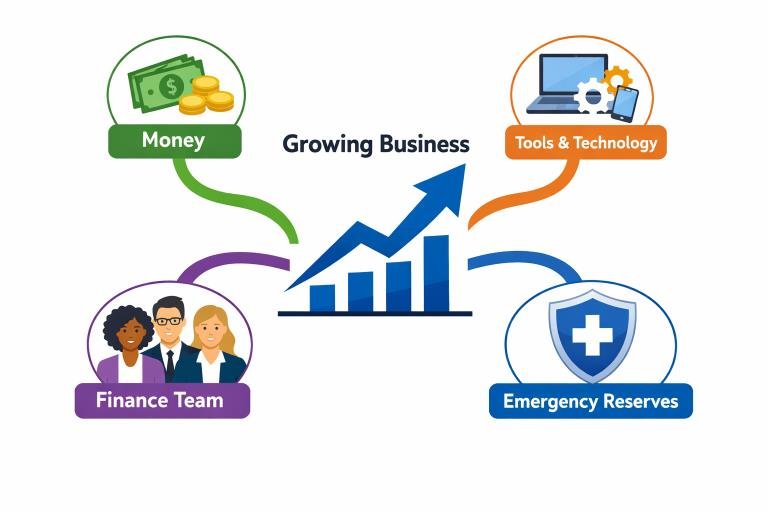
As your business moves from startup to growth stage, cultivating financial flexibility becomes a core pillar of long-term success. With market conditions shifting rapidly and opportunities emerging unexpectedly, the ability to adapt and efficiently redeploy capital can set thriving companies apart. Today, more businesses are tapping into resources like ScotPac NZ to diversify their financial strategies and sustain growth even amid challenges.
Robust financial flexibility empowers businesses to balance the demands of present-day operations with future expansion. Whether navigating supply chain disruptions, responding to customer demand, or scaling into new markets, adaptable financial management ensures resources are available when they count most. A proactive approach also helps shape stronger corporate resilience by providing the bandwidth to react without panic or unplanned sacrifice.
Understanding Financial Flexibility
Financial flexibility refers to a company’s capacity to adjust its resources quickly and effectively in response to internal and external changes. This involves more than cash on hand; it encompasses an integrated approach to financing, working capital management, and investment in tools or talent that fuel ongoing success. Flexible companies can react to challenges, fund innovation, and pursue opportunities that might otherwise be unattainable.
Key to financial flexibility is recognizing that growth rarely follows a straight path. Unexpected costs, delayed client payments, or sudden regulatory shifts can disrupt even the most finely tuned plans. Companies that build agility into their finances avoid being boxed in by unforeseen developments and instead leverage change to gain a competitive advantage. According to a recent Inc. analysis, financial flexibility promotes both stability and strategic innovation.
Key Strategies to Enhance Financial Flexibility
- Establish a Solid Financial Structure:Create strong financial systems suited for scale. This starts with reliable accounting practices, budgeting processes, and forecasting tools. Companies that prioritize organizational transparency and predictive analysis can identify trends early and allocate funds strategically. Building these foundations allows for continued efficient operation as the business grows, ensuring clarity even as complexity increases.
- Leverage Alternative Financing Options:In today’s environment, relying exclusively on traditional bank loans can severely limit flexibility. Exploring alternatives such as lines of credit, equipment financing, and revenue-based advances offers tailored options for different growth stages. These approaches can be critical when projects require upfront investment or when seasonal fluctuations stress cash flow. Seeking creative financing opens up avenues to tap into operational agility.
- Implement Proactive Working Capital Management:Actively managing receivables, payables, and inventory enhances day-to-day liquidity. By leveraging technology and real-time analytics, businesses can spot patterns and adjust operations to achieve maximum efficiency. Some firms also use external working capital solutions to avoid over-reliance on reserves, enabling funds to continue working toward growth objectives. According to CNBC reporting, proactive management is linked to long-term savings and reduced financial stress.
- Invest in Technology and Talent:Allocating resources to technology upgrades and workforce development pays ongoing dividends. Cutting-edge accounting platforms, flexible ERP systems, and cloud-based reporting help sharpen competitive edge and uncover efficiencies. Meanwhile, developing a skilled team ensures solid execution and resilience, especially when encountering disruption or pivoting to new models. A forward-thinking approach can support sustained performance through any economic cycle.
- Maintain a Dedicated Emergency Reserve:Healthy financial reserves typically covering three to six months of operating costs serve as a buffer during revenue shortfalls or external shocks. Having this cushion protects core operations and staff, keeping business running while longer-term adjustments are made. This kind of safety net brings peace of mind and averts rushed, reactive decisions in periods of high uncertainty.
Expanding on Financial Adaptability
One aspect that is often underappreciated is the importance of building strategic relationships with diverse financial partners. Rather than relying solely on one provider or one type of capital, cultivating a network of banks, investors, and alternative lenders can offer additional avenues for support and negotiated terms. These relationships can be especially valuable when a business hits a temporary snag and needs bridge financing or swift access to additional working capital.
Another cornerstone of adaptability is developing regular scenario planning practices. By frequently assessing “what-if” scenarios such as sudden drops in demand, unexpected regulatory costs, or even rapid growth, companies can better anticipate their cash flow needs under a variety of circumstances. This forward-looking mindset is essential in today’s unpredictable environment, as it prevents a reactionary scramble and sets the stage for intelligent, calculated responses.
Real-Life Example: Adapting to Economic Uncertainty
Consider a mid-sized construction firm encountering volatile material prices and unpredictable completion schedules. By securing a flexible line of credit, the company smooths out irregular revenue streams, meets payroll on time, and funds new projects even when capital inflow is delayed. Flexible financing enables them to stay active in the market rather than pausing operations during slow periods or scrambling for emergency funding.
Final Thoughts
In summary, building financial flexibility isn’t a one-time project but an ongoing commitment. The most successful businesses continually refine their approaches, paying close attention to market shifts and internal performance. By continuously evaluating cash flows, investment options, and financing terms, leadership can respond dynamically to emerging challenges and capitalize on opportunities as they arise. The resulting clarity and preparedness not only cushion against shocks but also foster trust among employees, partners, and stakeholders. Those ready to champion adaptability in all financial matters are the ones who ultimately thrive and scale, no matter what tomorrow brings.