

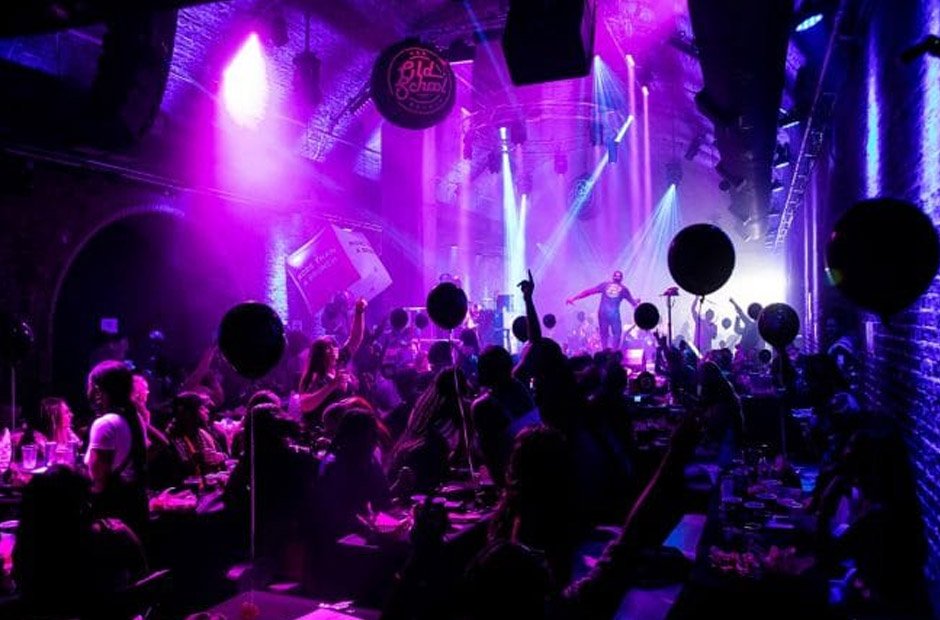
Having a party for a big birthday, an engagement, a wedding, or just because you haven’t seen your friends and family in too long is great. But the expense can spiral and all too often the party itself is a bit flat. Too many distractions, not enough conversation, everyone’s left sticking negative feedback about other people’s politics on the fridge. Or maybe you went all out, halftime fireworks, trapeze artists, Beyoncé, and still, kinda underwhelmed? It’s the little things that count. Fun, chat, music, drinks, views, scents, and tastes of the party.
The thematic anchor – why it matters more than you think
Most of the energy you put into planning an event is devoted to logistics: the capacity of the venue, the food and drink options, the guest list. What’s underestimated is the “getting started” problem. Even groups who are intimately close need time to loosen up – and too often, that lag frames the tone of the whole evening.
A thematic anchor eliminates it. If a venue ties itself to a broad category – say a specific genre, era, or style – guests arrive sharing a common frame of reference and understanding what they’re being brought into. There’s no awkward silence waiting for someone to set the tone because the atmosphere has done that job first. A 90s and 00s R&B concept works especially great here because it’s ‘the sound of nostalgia,’ and shared memories break down the social distance between guests faster than virtually any other route.
Structured spontaneity – the energy needs a guide
One of the best principles in event design is structured spontaneity. It’s a bit of a paradox, but it’s powerful. A live DJ who takes requests makes people feel involved without having to plan the setlist for the evening. An interactive host who can read the room and be a conduit between the group and the entertainment creates an atmosphere without the need to be the life of the party.
This is exactly why formats like r&b bottomless brunch london succeed for group occasions – they combine a strong thematic identity with built-in entertainment and service structures that remove the friction. The host’s job becomes showing up, not managing.
The density factor – size isn’t always better
Bigger venues remove energy from the room. A room that fits 200 with 60 guests in it feels like a half-empty airport terminal, and that physical lack of presence becomes a mental lack of presence. High-energy functions need a room where the guest count forms pressure – not discomfort, but proximity. Something is happening _here_, and you are right in the middle of it.
When evaluating a venue, your group should fill roughly 70-80% of the usable space. Good zoning helps as well. A well-designed room separates high-energy regions like the dance floor from lower-intensity spots like booths or bar seating to prevent guest fatigue without actually asking anyone to leave the room.
Lighting and sound – the two levers most hosts ignore
Good lighting sets the mood for a party and also is critical for moving from one phase of the event to another. Lighting transitions are one of the clearest behavioral clues that your event is hitting its groove and moving from people mingling to the “party”. Bright lights to low; high-contrast will immediately create a change in your guest’s demeanor; they naturally adjust to the change in light, often subconsciously loosening up and becoming more animated. Thus giving you a much more energized and engaged ambiance during the event peak. This is one of the cues that they are cued in on; another is sound.
Acoustics are the unsung hero in the event world. They should immerse the guests in the sound, making it feel as if it’s enveloping them. If the environment feels as though they are listening from the outside-in, they will simply get loud. If you notice your event is getting really loud, it’s almost always because people are having to yell over the music in order to talk to one another. This quickly becomes exhausting, and in most situations, the only thing to do is head towards the door to find some quiet. Event music should above (above 100-120 bpm) engage between 75-80% of the people during the “peak” time of your event (depending on the exact type, for concerts the metrics are a little different). Most people require more energy to stay beyond that “80%” range than the event provides… and again, usually, they head for the exits.
Menu format as an energy tool
Sitting at a table to eat is fine, but a high-energy group event can suffer from mealtime formality. Communal platters and food stations encourage people to get up, move around, and interact with each other. A flowing drink package keeps them mobile and social. If they’re not waiting for their specific course to be brought to the table or for a server to see that their glass is empty, they are more likely to stay fully engaged in the event.
Instagrammability isn’t vanity – it’s social proof
Designing spaces that attract the right ‘gramming creates content, sure. But they also create social proof. When guests take out their phone and snap a shot of something, they’re also broadcasting to everyone around them, “This moment is worth capturing.” Reactions to that signal reverberate through the event. People gather around, others’ phones come out, people start mingling or dancing or interacting more. The event becomes a loop.
Venues that get this concept don’t just follow trends with visual stimulants like neon and super-dark walls. They amplify hits of visual contrast because it speeds up the “this is an awesome event” loop.
The best group events, arguably, aren’t the most expensive. They’re the ones where that loop is so firmly tuned that people come in ready to go. No seat-warming needed; they’re already hot.


