Optimizing the Thermal Envelope for Home Systems Efficiency
The foundation of any energy-efficient home, whether newly built or undergoing a remodel, lies in its thermal envelope. This critical component acts as the barrier between your conditioned indoor environment and the fluctuating outdoor climate. A well-optimized thermal envelope minimizes heat transfer, ensuring your heating and cooling systems don’t have to work overtime.
Central to this optimization are several key elements: insulation, air sealing, and vapor retarders. Insulation, measured by its R-value, determines its resistance to heat flow. For superior home systems efficiency, we often recommend high R-value insulation, aiming for R-20 to R-30 in walls and R-50 to R-70 in ceilings. Materials like fiberglass, cellulose, or spray foam, when carefully installed to fill wall cavities completely, provide excellent thermal protection. For homeowners looking into advanced insulation solutions, exploring options that offer robust ClimaShield home energy savings can be a valuable step.
Air sealing works hand-in-hand with insulation. Even the best insulation can be compromised by uncontrolled air leaks, which allow conditioned air to escape and unconditioned air to infiltrate. We focus on sealing gaps and cracks around windows, doors, electrical outlets, and plumbing penetrations. This not only prevents energy loss but also enhances indoor air quality and comfort.
Vapor retarders are another crucial layer, particularly in climates with significant humidity variations. They manage moisture migration through the building envelope, preventing condensation within walls and attics that can lead to mold, mildew, and structural damage. The proper design and installation of these retarders, based on your specific climate zone, are essential for long-term durability and efficiency. Addressing moisture control and minimizing thermal bridging (points where heat can easily transfer through the building structure) are integral to a truly effective weatherization strategy.
Advanced Framing and Passive Solar Design
Beyond the basic thermal envelope, advanced construction techniques and thoughtful design principles can further elevate home systems efficiency. Advanced framing, often called Optimum Value Engineering (OVE), is a construction method that reduces the amount of lumber used in a home’s frame. By optimizing stud spacing and eliminating unnecessary wood, OVE creates more space for insulation, reduces thermal bridging, and minimizes material waste.
Other innovative construction methods include Structural Insulated Panels (SIPs) and Insulating Concrete Forms (ICFs). SIPs are composite building materials that consist of an insulating foam core sandwiched between two structural facings, offering superior insulation and air tightness. ICFs use interlocking foam blocks that are filled with concrete, providing exceptional thermal mass, strength, and sound insulation. These techniques not only boost energy performance but can also accelerate construction timelines and reduce potential for errors.
Another powerful strategy is passive solar design, which harnesses the sun’s energy for heating and cooling without mechanical systems. This involves careful consideration of a home’s orientation, window placement, and material choices. Key passive solar heating and cooling strategies include:
- Optimal Solar Orientation:Positioning the longest side of the home to face south (in the Northern Hemisphere) to maximize winter sun exposure.
- Strategic Window Placement:Large, south-facing windows to allow winter sun to penetrate and warm interior spaces, coupled with shading devices (overhangs, awnings) to block high summer sun.
- Thermal Mass:Incorporating materials like concrete, stone, or tile inside the home to absorb and store solar heat during the day and release it slowly at night.
- Natural Ventilation:Designing for cross-ventilation with operable windows and vents to allow cool breezes to flush out heat.
- Daylighting:Maximizing natural light to reduce the need for artificial lighting.
- Cool Roofs:Utilizing reflective roofing materials that absorb less solar radiation, keeping the home cooler in warm climates.
High-Performance HVAC and Water Heating Integration
Once the thermal envelope is optimized, the next crucial step for home systems efficiency is upgrading the heating, ventilation, air conditioning (HVAC), and water heating systems. These are typically the largest energy consumers in a home, and modern, high-efficiency options can lead to substantial savings.
Heat pumps, both air-source and geothermal, are at the forefront of energy-efficient heating and cooling. Air-source heat pumps work by transferring heat between your home and the outside air, providing both heating in winter and cooling in summer. Geothermal systems take this a step further, utilizing the stable underground temperatures to achieve even greater efficiency. They are significantly more efficient than traditional furnaces and air conditioners, as they move heat rather than generate it. For example, while a conventional furnace burns fuel to create heat, a heat pump extracts existing heat from the environment, making it a much more energy-efficient solution. The expertise required for such efficient systems, whether residential or for larger operations, is paramount. For instance, understanding the principles behind S.O.S. commercial furnace efficiency highlights the depth of knowledge needed to optimize any heating system for maximum performance and cost savings.
When it comes to water heating, tankless water heaters offer a compelling alternative to traditional storage tank models. They heat water on demand, eliminating standby energy losses and providing a continuous supply of hot water. The U.S. Department of Energy estimates that tankless water heaters are about 30% more efficient than conventional gas water heaters. Heat pump water heaters are another excellent option, using ambient air to heat water with remarkable efficiency.
Choosing ENERGY STAR certified products across all your HVAC and water heating needs ensures you’re investing in technologies that meet strict energy-efficiency specifications set by the U.S. EPA. These products are designed to save you money on utility bills and reduce your carbon footprint.
Here’s a simplified comparison of efficiency:
- Traditional Combustion Furnace:Generates heat by burning fuel (e.g., natural gas, oil). Efficiency measured by AFUE (Annual Fuel Utilization Efficiency), typically 80-98%.
- Traditional Air Conditioner:Uses refrigerant cycle to remove heat from indoor air. Efficiency measured by SEER (Seasonal Energy Efficiency Ratio), typically 13-21.
- Air-Source Heat Pump:Moves heat. Efficiency measured by HSPF (Heating Seasonal Performance Factor) for heating, typically 7-13, and SEER for cooling, typically 15-26+. Can be 2-3 times more efficient than electric resistance heating.
- Geothermal Heat Pump:Moves heat using ground temperature. Efficiency measured by EER (Energy Efficiency Ratio) and COP (Coefficient of Performance), often achieving COPs of 3-5, meaning for every unit of electricity consumed, 3-5 units of heat are delivered.
Maintenance Strategies for Home Systems Efficiency
Even the most advanced HVAC and water heating systems require regular maintenance to sustain their peak performance and ensure long-term home systems efficiency. Simple, consistent practices can yield significant energy and cost savings.
One of the easiest yet most impactful tasks is regular filter replacement for your HVAC system. A filthy, clogged filter restricts airflow, forcing your system to work harder and consume more energy. Replacing it with a clean one can reduce your air conditioner’s energy usage by 5% to 15%. We recommend checking your filters every two months and replacing them if light doesn’t easily pass through.
Coil cleaning is another vital maintenance step. The evaporator and condenser coils collect dirt and debris over time, reducing their ability to absorb and release heat efficiently. Keeping these coils clean ensures optimal heat transfer and prevents your system from overworking. Similarly, maintaining clear airflow by regularly cleaning vents and ensuring they are unobstructed is crucial.
Ductwork sealing addresses energy loss from leaks in your home’s duct system. Leaky ducts can waste a significant amount of conditioned air before it reaches your living spaces. Sealing these leaks improves system efficiency, enhances comfort, and reduces utility bills. While some minor sealing can be a DIY project, professional ductwork sealing and cleaning, typically recommended every three to five years, can ensure comprehensive coverage and optimal performance.
Finally, professional tune-ups for your HVAC system are indispensable. An annual inspection by a qualified technician can identify potential issues before they become costly breakdowns, optimize system settings, and ensure all components are operating at peak efficiency. These tune-ups can extend the lifespan of your equipment and maintain the energy savings you expect. This proactive approach ensures your systems run smoothly, especially during peak demand seasons, and helps avoid unexpected repair costs.
Leveraging Smart Technology and Automation
In May 2026, smart home technologies and automation are no longer just about convenience; they are powerful tools for optimizing home systems efficiency. By providing real-time data, intelligent control, and seamless integration, these technologies empower homeowners to manage their energy consumption proactively and effectively.
Smart thermostats, for instance, go beyond simple programming. Many models learn your habits, adjust temperatures based on occupancy sensors, and can be controlled remotely via smartphone apps. ENERGY STAR estimates that programmable thermostats can save consumers about $180 per year in energy costs. Automated lighting systems, which can include smart bulbs, dimmers, and timers, allow you to control lighting remotely, schedule on/off times, and even adjust brightness based on natural light levels. Given that lighting can make up 10% to 20% of a home’s total electrical use, these controls offer significant savings potential.
Energy storage systems (ESS), often in the form of home batteries, are becoming increasingly common, especially when paired with renewable energy sources like solar panels. These systems store excess energy generated during off-peak hours or from solar PV for use when electricity prices are higher or during grid outages, enhancing energy resilience. Advanced systems, like those offered by providers specializing in efficient home systems, integrate these components seamlessly for maximum benefit.
Inverter-based air conditioning units, which can precisely modulate their output, work particularly well with smart home systems. They can respond dynamically to real-time pricing signals and occupancy data, ensuring optimal comfort with minimal energy use. Multi-objective energy management systems in smart homes are being developed and refined to simultaneously minimize costs, reduce the peak-to-average ratio (PAR) of electricity demand, and even extend the lifespan of battery storage by optimizing charging and discharging cycles.
Intelligent Controls and Home Systems Efficiency
The integration of intelligent controls extends beyond individual appliances to create a truly holistic approach to home systems efficiency. Programmable blinds and drapes, for example, can automatically adjust throughout the day to control solar heat gain in summer and retain heat in winter, passively regulating indoor temperatures. This reduces the workload on your HVAC system.
Multi-zone HVAC systems are another excellent example of intelligent control. Instead of heating or cooling the entire house to a single temperature, these systems allow you to create distinct temperature zones. You can condition only the occupied areas, reducing energy waste in unused rooms. This is particularly beneficial for larger homes or those with varying occupancy patterns.
Phantom load reduction, or eliminating “vampire electronics,” is a simple yet effective strategy. Many electronic devices continue to draw small amounts of power even when turned off or in standby mode. Smart power strips or simply unplugging devices when not in use can eliminate this unnecessary energy consumption.
With the rise of electric vehicles (EVs), integrating EV charging into a smart home system is also becoming a key aspect of energy management. Smart chargers can be programmed to charge during off-peak hours when electricity is cheaper, or to prioritize charging from home solar systems.
Academic research is continually advancing heuristic-based optimization algorithms that can predict energy needs, solar generation, and real-time electricity pricing. These algorithms allow smart home systems to dynamically schedule appliance use, battery charging, and HVAC operation to achieve the most cost-effective and energy-efficient outcomes. By responding to real-time pricing signals, homeowners can shift energy-intensive activities to periods when electricity is cheapest, further reducing their utility bills and contributing to grid stability. This level of intelligent control transforms a house into a truly responsive and efficient living environment.
The Path to Net-Zero Performance
Achieving net-zero energy performance represents the pinnacle of home systems efficiency. A net-zero home is designed to produce as much renewable energy as it consumes over the course of a year, effectively eliminating annual energy bills and significantly reducing its environmental impact. This ambitious goal is increasingly attainable through a combination of aggressive efficiency measures and on-site renewable energy generation, primarily solar photovoltaic (PV) systems.
Solar PV panels convert sunlight directly into electricity. Modern PV systems are highly efficient and durable, and the cost of solar electricity can be 60% to 70% of the cost of electricity purchased from the grid. When a home generates more electricity than it uses, the excess is often sent back to the utility grid through a process called net metering. This allows homeowners to receive credits for their surplus energy, which can then offset consumption during times when solar production is low (e.g., at night or on cloudy days). This effectively turns the grid into a “virtual battery.”
Energy storage systems (ESS), particularly home batteries, play a crucial role in enhancing energy resilience and optimizing solar self-consumption. Batteries store excess solar energy for use during peak demand periods or power outages, providing independence from the grid and protecting against fluctuating electricity prices. Advanced energy management systems can optimize battery discharging cycles to maximize economic benefits and extend battery life. The synergy between solar PV, energy storage, and highly efficient systems like heat pumps creates a residential microgrid that was previously unfeasible, offering unprecedented control over energy use and generation.
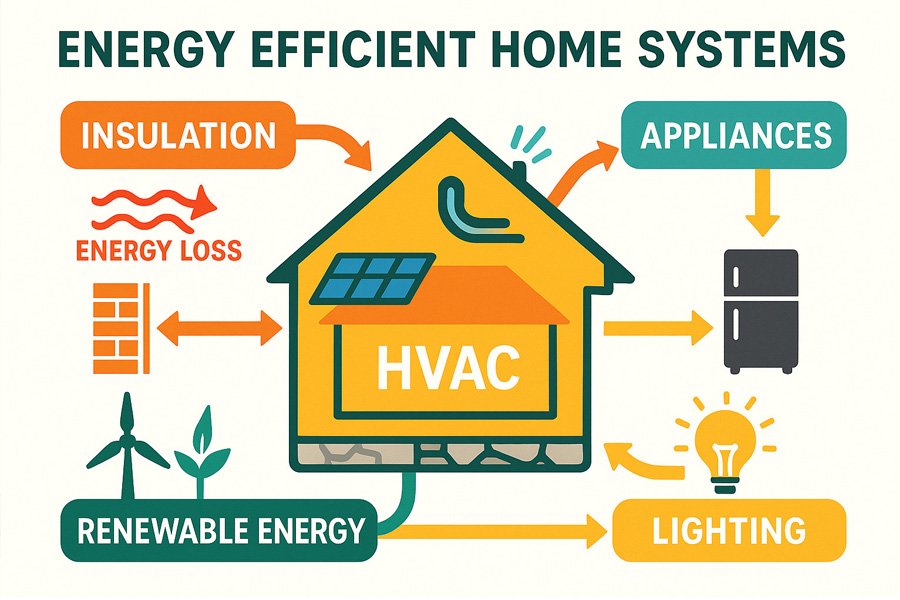
Imagine a system where solar panels generate electricity during the day, charging a home battery. This stored energy powers your home in the evening, and any remaining surplus is sent to the grid. During winter, when solar production might be lower, your heat pump efficiently warms your home, drawing on stored energy or grid power when necessary, all while your smart thermostat maintains optimal comfort. This integrated approach is what defines the flow of energy in a net-zero residential microgrid.
Alternative Construction and Renewable Generation
The journey to net-zero energy isn’t limited to conventional building types. Alternative construction methods can also achieve remarkable levels of home systems efficiency, often leveraging natural principles and sustainable materials.
Earth-sheltered homes, for example, are partially or fully built into the ground. This design takes advantage of the earth’s stable temperature, providing natural insulation that reduces heating and cooling loads dramatically. The surrounding soil acts as a massive thermal mass, regulating indoor temperatures with minimal energy input.
Straw bale construction utilizes bales of straw as structural or insulating elements. These thick walls offer exceptional insulation properties, contributing to a highly efficient thermal envelope. While requiring careful planning for moisture protection and compliance with building codes, straw bale homes can achieve very low energy consumption.
Log homes, traditionally known for their rustic appeal, can also be energy efficient when designed with modern techniques. The thermal mass of solid logs helps to store and slowly release heat, moderating indoor temperatures. Proper sealing, adequate insulation in the roof and foundation, and high-performance windows are crucial for optimizing a log home’s efficiency.
Manufactured homes, built to specific U.S. Department of Housing and Urban Development (HUD) standards, have also seen significant advancements in energy efficiency. Many manufacturers now offer packages that include enhanced insulation, high-efficiency windows, and ENERGY STAR appliances, making them a viable option for those seeking affordable, energy-efficient housing.
Regardless of the construction type, the integration of on-site renewable generation, primarily solar PV, remains a cornerstone of net-zero performance. Coupled with energy storage solutions, these homes become highly resilient, self-sufficient, and environmentally friendly. The synergy between a well-designed building envelope, efficient systems, and renewable generation is what ultimately allows homeowners to achieve net-zero goals, enjoying stabilized energy costs for decades to come.
Frequently Asked Questions about Home Efficiency
As we navigate the complexities of home systems efficiency, several common questions arise for homeowners looking to make informed decisions.
What is the first step in a whole-house energy upgrade?
The most crucial first step is to conduct a comprehensive home energy assessment. This process involves a professional evaluation of your home’s energy consumption, identifying air leaks, inspecting insulation levels, and analyzing the efficiency of your HVAC and water heating systems. The U.S. Department of Energy’s Home Energy Score provides a standardized rating of your home’s current efficiency, a list of recommended improvements, and potential savings. This assessment helps you understand precisely how your home uses energy and pinpoints the most cost-effective opportunities for improvement. Without a baseline energy consumption analysis, it’s challenging to prioritize upgrades effectively. Often, identifying and sealing air leaks is one of the most impactful and affordable initial improvements.
How do tax credits and rebates support efficiency goals?
Financing options, tax credits, and rebates are invaluable resources for making energy-efficient home upgrades more accessible and affordable. The federal government often offers tax credits for residential energy efficiency improvements, such as installing heat pumps, solar panels, or energy-efficient windows. Beyond federal programs, many states and local utilities provide their own rebates and incentives for purchasing ENERGY STAR certified products, conducting energy assessments, or upgrading to high-efficiency HVAC systems. These programs can significantly reduce the upfront cost of upgrades, making the investment more feasible and accelerating the payback period. We always recommend checking local and federal resources, such as the ENERGY STAR rebate finder tool, to see what incentives are available in your area for reaching net-zero goals.
Can alternative home types achieve high energy efficiency?
Absolutely. While often perceived as niche, alternative home types like earth-sheltered, straw bale, and log homes can achieve exceptional energy efficiency, sometimes even surpassing conventional construction. Earth-sheltered homes benefit from the insulating properties and stable temperatures of the surrounding soil, leading to significantly reduced heating and cooling loads. Straw bale homes leverage the thick, dense insulation of straw bales, creating a highly airtight and well-insulated envelope. Log homes, with their substantial thermal mass, can store and slowly release heat, moderating indoor temperatures. Even manufactured homes have made great strides, with many models offering enhanced weatherization, insulation, and ENERGY STAR appliances. The key to efficiency in any alternative home type lies in meticulous design, proper construction techniques, and ensuring all systems—from insulation to ventilation—are integrated for optimal performance and compliance with relevant building codes.
Conclusion
Embracing home systems efficiency is more than just a trend; it’s a strategic investment in your property’s future, comfort, and sustainability. As of May 2026, the technologies and knowledge available empower us to transform our homes into highly efficient, comfortable, and environmentally responsible living spaces. By adopting a whole-house approach—optimizing your thermal envelope, integrating high-performance HVAC and water heating, and leveraging smart technology—you can unlock significant energy savings and enhance your quality of life.
The long-term value of these upgrades extends beyond reduced utility bills; it includes improved indoor air quality, increased comfort, enhanced home resilience, and a smaller carbon footprint. Whether you’re planning a remodel or designing a new home, focusing on these core systems ensures you’re future-proofing your residential assets against rising energy costs and evolving efficiency standards. Taking control of your home’s energy performance is a powerful step towards a more sustainable and comfortable future for all of us.