Behind every safe, reliable flight lies the skill and precision of aircraft maintenance technicians — and the tools they use. From complex engine diagnostics to delicate avionics checks, every job in aviation maintenance depends on having the right tool for the task.
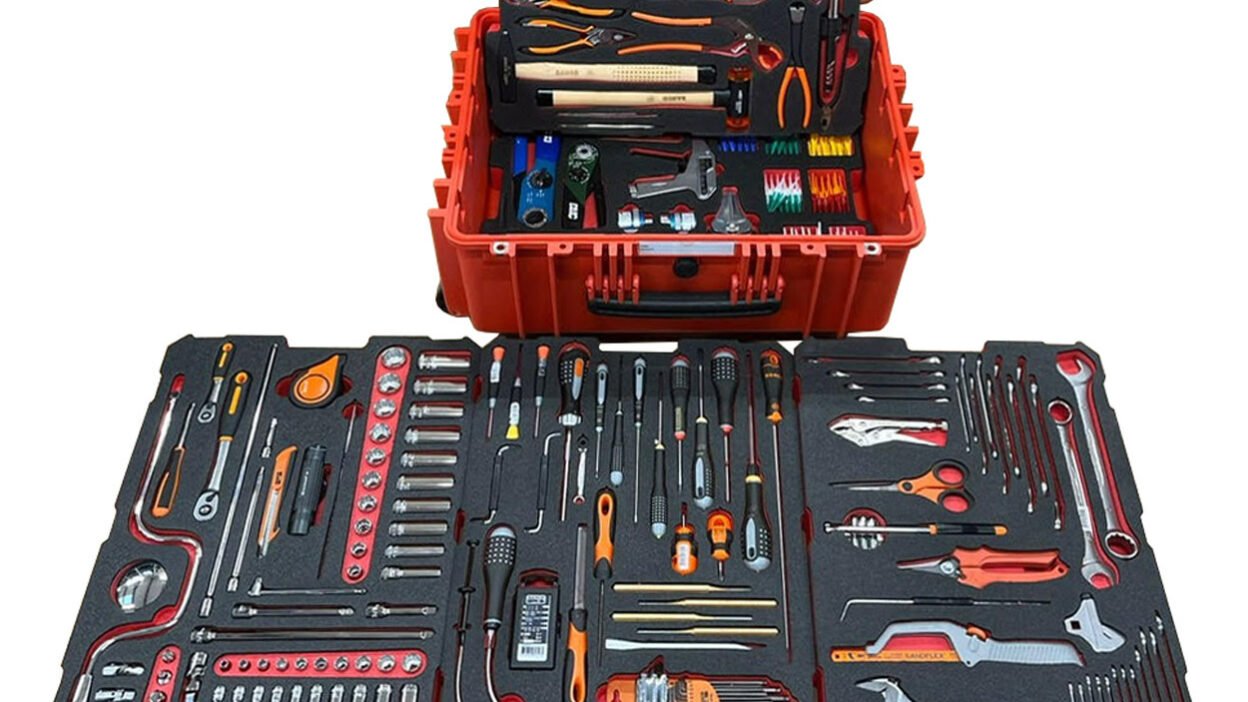
An aircraft technician’s toolkit is a carefully curated collection of instruments designed for accuracy, consistency, and safety. It’s a mix of highly specialised aviation equipment and premium general tools — each playing a part in keeping aircraft operating flawlessly.
With the guidance of the aviation tool experts at HSM Aviation, let’s open up that toolkit and explore what’s inside.
Precision General Tools: The Foundation of Every Technician’s Work
Before you get to the specialist gear, every aviation engineer relies on a solid set of general tools. These are the essentials — but in aviation, they’re built to far tighter tolerances and crafted from high-grade materials to meet regulatory standards.
a) Hand Tools
Spanners and Wrenches: Aviation wrenches must deliver exact torque without rounding fasteners or slipping. Technicians often carry combination, ratcheting, and torque wrenches that can be precisely calibrated.
Screwdrivers: Flathead and Phillips screwdrivers are common, but in aviation, the focus is on precision. Many technicians use hollow-ground tips to prevent cam-out, and magnetic shafts for working in tight, confined spaces.
Pliers and Wire Cutters: From needle-nose pliers to locking and safety-wire pliers, these are indispensable for manipulating cables, securing fasteners, and performing safety wiring — a key task in aircraft maintenance.
b) Measuring and Alignment Tools
Micrometers and Vernier Calipers: Used for checking wear, clearance, and component dimensions with absolute precision.
Feeler Gauges and Rulers: Essential for setting gaps, measuring tolerances, and aligning mechanical parts accurately.
Torque Wrenches: In aviation, torque accuracy can be a matter of safety. These tools are routinely calibrated to ensure every fastener meets exact manufacturer specifications.
c) Power and Pneumatic Tools
Cordless Drills and Drivers: Lightweight and controlled, these tools reduce fatigue while minimising the risk of overtightening.
Air-Powered Rivet Guns and Drills: Commonly used for airframe work, especially when assembling or repairing aluminium panels.
Aviation-Specific Tools: Designed for Precision and Compliance
Aircraft are incredibly complex machines — and maintaining them requires tools designed specifically for the aviation environment. These specialist instruments enable technicians to perform intricate inspections and repairs safely and efficiently.
a) Safety Wire and Locking Tools
Fasteners on an aircraft can never be left to chance. Safety wire pliers, wire twisters, and locking tools are used to secure bolts, nuts, and fittings against loosening due to vibration — a standard part of aircraft maintenance.
b) Borescopes and Visual Inspection Equipment
Modern inspection cameras, particularly borescopes, are vital for examining the internal components of engines, turbines, and airframes. They allow technicians to detect wear or damage without dismantling critical systems — saving time and ensuring accuracy during visual inspections.
c) Aircraft Jacks and Lifting Equipment
From tripod jacks used to raise entire aircraft to axle jacks for individual wheel or landing gear work, lifting systems are purpose-built for safety and stability. Each is engineered to handle the exact loads specified for a particular aircraft type.
d) Sheet Metal and Riveting Tools
A significant portion of airframe maintenance involves working with sheet metal:
Rivet guns and bucking bars for permanent fastenings
Cleco temporary fasteners for panel alignment
Countersink and dimpling tools for flush riveting
Deburring tools to eliminate sharp edges and prevent structural stress
Avionics and Electrical Diagnostic Equipment
As aircraft technology advances, so does the importance of electronic testing and calibration. Avionics specialists use a suite of diagnostic tools to maintain the integrity of flight control and communication systems.
- Multimeters and Oscilloscopes: For testing voltage, current, and electronic signal quality throughout the aircraft’s electrical systems.
- Pitot-Static Test Sets: Simulate flight conditions by generating pressure and vacuum to verify altitude and airspeed instruments.
- Bonding and Continuity Testers: Ensure that all conductive surfaces are properly grounded, reducing static buildup and electrical interference.
- Battery Testers and Chargers: Critical for maintaining onboard and emergency power systems.
Engine-Specific Tools
Aircraft engines — whether piston or turbine — demand their own specialist set of diagnostic and service tools. These enable technicians to measure, align, and verify system performance with absolute precision.
- Compression and Leak-Down Testers: Used to evaluate the condition of piston engine cylinders.
- Fuel Pressure and Flow Testers: Ensure the correct operation of fuel systems and injectors.
- Vibration Analyzers and Balancers: Crucial for detecting imbalance in propellers and turbine components, which can cause wear and fatigue.
- Temperature and Pressure Probes: Allow technicians to monitor performance under controlled testing conditions.
Ground Support and Environmental Tools
Beyond what fits in a toolbox, aircraft maintenance relies heavily on ground support equipment (GSE). These larger tools enable safe servicing, testing, and handling of the aircraft while it’s on the ground.
- Tugs and Towbars: For controlled aircraft movement on the apron.
- Ground Power Units (GPUs): Supply electrical power during maintenance and system testing.
- Hydraulic Test Rigs: Used to pressurise and verify aircraft hydraulic systems.
- Gas Service Carts: Provide regulated nitrogen and oxygen for tyre inflation and pressurised systems.
Calibration and Tool Control
Tool control is a cornerstone of aviation maintenance. Every single tool used on an aircraft must be accounted for — both for safety and regulatory compliance. Losing a single screwdriver could pose a foreign object damage (FOD) risk.
Likewise, calibration is non-negotiable. Measuring and torque tools must be checked regularly against certified standards to maintain accuracy. Many workshops now employ digital tool tracking systems, ensuring full traceability and compliance with maintenance regulations.
Conclusion
The toolkit of an aircraft technician is much more than a box of tools — it’s a system built around precision, safety, and accountability. From finely calibrated micrometers to advanced borescopes and avionics testers, every item serves a vital role in maintaining flight safety.
Whether it’s a general-purpose wrench or a specialised turbine inspection camera, the guiding principle is the same: precision means safety. And in the world of aviation maintenance, there’s no room for anything less.