Discovering the art of jewelry making from the comfort of your home is a journey that can unlock your creative potential and lead to beautifully crafted, personalized designs. Whether you’re seeking a new hobby or contemplating a small business, learning the basics can be both fun and fulfilling. To set yourself up for success, it’s essential to learn about the process, starting with choosing the right jewelry making tools and materials to suit your desired style.
Modern jewelry making encompasses a wide range of skills, from simple stringing to creating intricate, professional pieces. The process is accessible for beginners and provides ample opportunities for growth through hands-on practice. Whether you love delicate beadwork, classic wire-wrapped pieces, or dream of working with metals and stones, this comprehensive guide will help you begin your creative journey.
As you embark on this rewarding path, you’ll need a strong foundation. Having essential tools, a dedicated workspace, and a clear understanding of basic jewelry techniques will help you avoid frustration and allow for a smoother learning experience. With consistent practice and a willingness to experiment, you’ll not only refine your technical skills but also develop an eye for unique designs.
Understanding Jewelry Making
Jewelry making is a broad creative field that includes everything from beading and knotting to delicate metalwork and gemstone setting. The style of jewelry you want to produce—whether minimalist, bold, classical, or contemporary—will shape which techniques and materials you focus on. For beginners, exploring popular methods such as beadwork, wire wrapping, and simple chain designs is ideal, as they require less specialized equipment and allow for quick progress.
Gathering Essential Tools and Materials
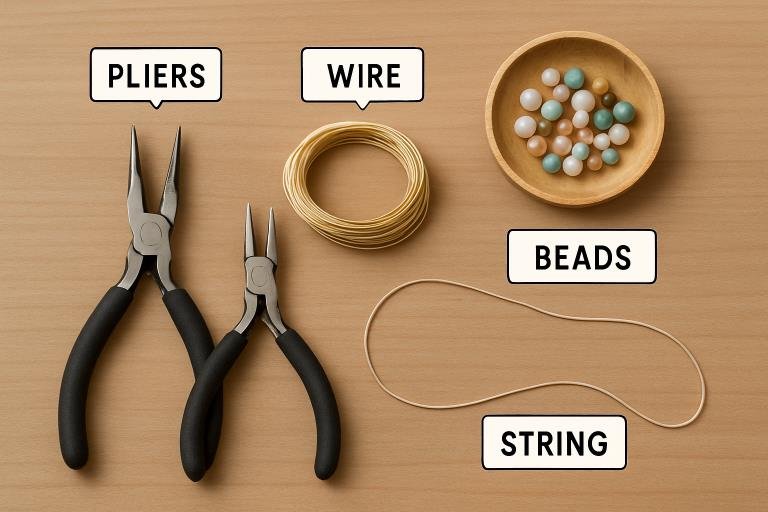
Building your toolkit is the first important step. Beginners should equip themselves with a few basics, such as:
- Stringing wire for necklaces and bracelets
- Different gauges of wire (commonly 24, 22, and 20 gauge) for wrapping and structuring
- Bead stoppers to prevent accidental spills
- Crimping beads and covers to secure endings
- Crimping pliers for a professional finish
- Chain nose pliers for bending and gripping
Over time, you can expand your tools with specialty items, depending on the techniques you wish to master. Shopping for kits is a great way to ensure you have coordinated, quality tools from the start, and you can explore more options with guides from established publications.
Setting Up Your Workspace
A dedicated workspace not only makes jewelry making more enjoyable but also keeps your projects organized and your supplies accessible. Select a well-lit, well-ventilated space, such as a corner desk, craft table, or an unused dining area. A comfortable chair, a sturdy table, and proper storage—such as small drawers or divided trays for beads and findings—will help streamline your work. Keeping your workspace tidy reduces the risk of losing small components, making crafting safer and more productive.
Learning Basic Techniques
Mastering a core set of jewelry-making techniques will form the backbone of your craft. Begin with foundational yet straightforward skills such as:
- Stringing beads onto wire or thread for necklaces and bracelets
- Making basic wire loops for connections
- Executing simple wire wrapping for pendants and earrings
- Practicing basic knotting with cord or thread
Online videos, illustrated books, and local classes are all fantastic resources for step-by-step learning. Focus on accuracy and neatness—these skills will enhance the quality of all your future projects.
Designing Your First Piece
Your initial designs should be simple but allow creative input. Sketch your jewelry idea on paper, select complementary materials, and gather the tools needed. Projects such as a classic beaded bracelet, a pendant necklace, or simple wire earrings are perfect starting points. As you craft your first piece, pay attention to detail, and don’t get discouraged by small mistakes—they’re a natural part of the learning process.
Practicing and Refining Your Skills
Improvement comes with practice. The more you create, the more confident you’ll become in handling different materials and techniques. Experiment with new textures, color palettes, and patterns to expand your skill set and discover your unique artistic voice. Participate in online communities or local groups to share your work and gather feedback. Remember, patience is key, and every piece will bring you closer to mastering your craft.
Exploring Advanced Techniques
Once you’re comfortable with the basics, challenge yourself with advanced jewelry-making skills. Techniques such as soldering—joining pieces of metal with heat—stone setting, and metal stamping enable intricate, custom designs, opening the door to higher-value pieces. These skills may require specialized tools and, in some cases, safety equipment, making workshops or supervised courses ideal for beginners seeking hands-on experience.
Considering a Home-Based Jewelry Business
If your passion grows, transforming your hobby into a small business is a natural next step. Begin by creating a business plan that outlines your goals, products, target audience, and strategies. Discover how to establish fair prices by considering materials, time, and market trends. Establish an online presence via social media or an e-commerce platform, and explore sales opportunities at craft fairs or local boutiques. For a detailed roadmap, you might consult in-depth resources such as the Small Business Administration’s guide to writing a business plan.
Jewelry making is as much about exploration as it is about technique. Whether making gifts for friends, customizing accessories, or pursuing a new business venture, the creativity and satisfaction found in crafting jewelry are truly rewarding. With every new project, your experience and style will evolve, resulting in exceptional, meaningful creations.