Key Takeaways
- Combining physical and natural deterrents offers the most comprehensive protection against burrowing animals.
- Regular property maintenance, barrier reinforcement, and monitoring are crucial for long-term effectiveness.
- Tailoring your approach to local wildlife patterns will yield better results for your home and landscape.
Introduction
Burrowing animals such as groundhogs, woodchucks, and rodents can inflict considerable damage to your property. They may undermine foundations, disrupt gardens, and leave unsightly holes across lawns and landscaped areas. Protecting your home and grounds calls for proactive and layered defenses, one of the most efficient approaches in deterring persistent wildlife.
Taking action can safeguard both the structure and beauty of your landscape. Solutions for wildlife issues range from physical barriers to natural deterrents and technological innovations. If you are struggling with ongoing infestations, consider Sudbury wildlife control solutions for safe and effective removal, effective removal to help restore and defend your property quickly and efficiently. Early intervention not only minimizes repair costs but also prevents animals from establishing long-term nesting sites. By combining professional assistance with preventive maintenance, homeowners can maintain a secure, visually appealing outdoor space year-round.
Install Underground Fencing
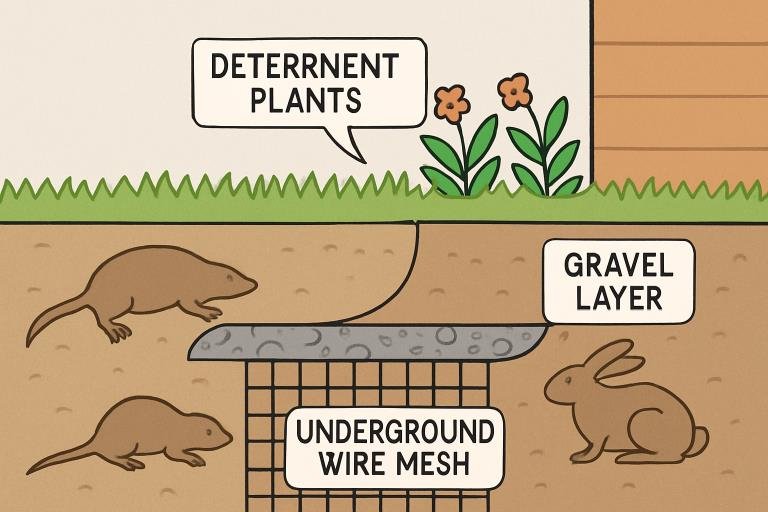
For property owners seeking a tried-and-true method, underground fencing is one of the most reliable deterrents against burrowing pests. Using heavy-gauge galvanized wire mesh with a grid no larger than 3×3 inches, create a barrier that extends at least 12 inches below the soil. At the bottom, bend the mesh outward at a right angle and extend it another 12 inches away from the protected area. This creates a physical barrier that effectively blocks digging rodents from accessing foundations, outbuildings, and gardens. According to the National Wildlife Federation, underground fencing remains one of the top recommendations for excluding nuisance wildlife from target zones.
Utilize Gravel Barriers
Gravel or crushed stone barriers add an extra layer of defense along your perimeter. Laying down a three-foot-wide band of coarse gravel makes digging uncomfortable for animals and discourages continued attempts to burrow. Gravel also provides clear visual clues, helping homeowners spot signs of renewed wildlife activity sooner. In addition, stone bands around structures are low-maintenance and provide lasting functionality year-round. This simple yet effective approach has also been recommended by industry experts to deter a wide range of burrowing pests.
Employ Natural Repellents
For those who prefer chemical-free options, nature offers several plant-based deterrents. Species such as lavender, marigolds, and mint have aromas that repel deer, rabbits, and other small mammals. You can further discourage invaders by applying predator urine, blood meal, or homemade sprays using strong-smelling essential oils. Not only do these deterrents help reduce wildlife interest, but they are also safe for beneficial insects and children using the yard.
Install Motion-Activated Devices
Technology brings an additional layer of automated protection with motion-activated deterrents. These devices use lights, sound, or sudden bursts of water to startle burrowing animals and make your yard feel unsafe to them. Over time, local wildlife can be conditioned to avoid your property altogether. For best results, rotate devices to target new areas so that animals do not get accustomed to a single stimulus.
Maintain Your Landscape
Well-managed landscaping plays a significant role in discouraging pest activity. Trim shrubs and trees regularly, and avoid planting attractants too close to your house. Use durable materials, such as crushed stone or pea gravel, around the foundation instead of traditional wood mulch to offer even less appeal to tunneling animals. Direct proper drainage away from your home to discourage soggy soil, which is highly attractive to pests seeking easy digging conditions.
Seal Entry Points
Routine checks and repairs are critical to preventing new burrows from forming near your home. Inspect your foundation, crawlspace, and other vulnerable areas for holes, cracks, and gaps. Seal all openings with sturdy materials like copper mesh or steel wool, both of which are difficult for rodents to chew through. Pair this practice with regular inspections to address emerging problems before they cause damage. The U.S. Environmental Protection Agency also emphasizes exclusion and sealing as key components of integrated pest management.
Implement Multi-Layered Defense Systems
In areas with heavy wildlife pressure, a single barrier may not be sufficient. Combining several methods creates a multi-layered approach that adapts to animal behavior and shifts in seasonal activity. For example, pair underground fencing with gravel and plant-based repellents, and integrate regular use of motion-activated devices. This overlapping defense provides long-term, adaptive protection and can be quickly modified if you observe changing patterns of pest activity.
Regular Monitoring and Maintenance
No barrier is truly set-and-forget. Ongoing vigilance ensures that your defense systems remain effective. Conduct thorough inspections, especially after severe weather or seasonal changes, and promptly repair any breaches. Regular monitoring enables early detection of tunneling attempts and helps keep your property free from damage. Preventive maintenance also saves money by preventing minor problems from escalating.
Final Thoughts
Deterring burrowing animals is best achieved through a blend of physical barriers, natural deterrents, and continuous monitoring. By implementing these strategies and maintaining diligence, you can protect your property’s foundation, garden, and curb appeal from costly and unsightly damage. When challenges persist, expert help from wildlife control services ensures your home remains safe and beautiful year-round.