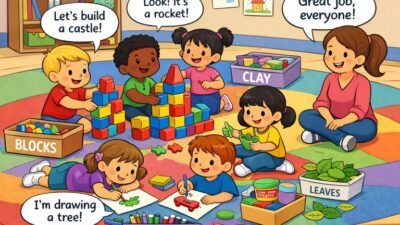
In a rapidly evolving global landscape, the definition of educational success is shifting. For decades, the primary focus of schooling was almost exclusively on academic attainment. This usually meant a strict emphasis on test scores, grade point averages, and university acceptances. While these metrics remain important, parents and educators increasingly recognise that a singular focus on grades is no longer sufficient to prepare children for the complexities of the modern world. Parents are beginning to see that a child who only knows how to pass exams may struggle when faced with life’s unpredictable challenges.
Today, the most forward-thinking educational institutions are adopting a holistic approach. This model values intellectual growth alongside physical, emotional, and social development. By integrating rigorous academics with arts, sports, and community engagement, holistic education aims to nurture resilient, adaptable, and well-rounded individuals ready to tackle future challenges. It creates a balanced ecosystem where a child’s character is prioritised just as highly as their cognitive abilities.
The Components of a Holistic Model
Holistic education is not just a buzzword. It is a structural approach to learning that recognises the interconnectedness of different developmental areas. It moves beyond the traditional lecture method to create an immersive environment where learning happens everywhere. This extends from the science lab to the playing field, and from the art studio to the community service centre.
A prime example of this philosophy in action is Bangkok Patana, a British international school that has long championed the idea that true excellence requires balance. By offering a vast array of extracurricular activities alongside a robust curriculum, schools following this model allow students to discover passions they might never encounter in a traditional classroom setting. Whether it is mastering a musical instrument, competing in varsity sports, or leading a debate team, these experiences teach students that success comes in many forms. This exposure helps children build a multifaceted identity that serves them well throughout their lives.
The Science of Skill Development
One of the strongest arguments for holistic education lies in neuroscience. The skills required to balance a busy schedule of academics and extracurriculars (such as planning, prioritising, and self-regulation) are governed by a specific set of mental processes known as executive functions.
According to the Centre on the Developing Child at Harvard University, these executive function skills act as the brain’s air traffic control system, enabling individuals to manage information, avoid distractions, and hold multiple pieces of information at one time. These are not innate traits that children are born with. Instead, they must be developed through practice and supportive environments.
A holistic school environment naturally provides the training ground for this system. When a student has to manage their time between a physics project and swim practice, they are actively strengthening these neural pathways. This connects directly to the broader goal of enhancing student success, as strong executive functions are a better predictor of lifelong achievement than IQ alone. By engaging in diverse activities, students are essentially coaching their own brains to be more efficient and flexible. This mental agility is crucial in an era where distractions are constant, and information overload is the norm.
Building Resilience Through Diverse Experiences
Beyond cognitive development, holistic education plays a critical role in building emotional resilience and soft skills. In a safe school environment, failure is not a dead end but a learning opportunity. Losing a sports match, failing to get a part in the school play, or struggling with a difficult piece of music teaches children how to bounce back.
The benefits of this broad engagement include several key areas:
- Adaptability: Students learn to switch contexts quickly. They move from analytical thinking in math class to creative expression in art or physical coordination in sports. This flexibility helps them adjust to new situations with ease.
- Collaboration: Team sports and ensemble arts require students to work effectively with others. They learn to negotiate roles and resolve conflicts without adult intervention, which is a vital skill for adulthood.
- Global Citizenship: Many international holistic schools emphasise community service and environmental stewardship. This fosters a sense of responsibility toward the wider world and helps students understand their place in a global society.
- Self-Confidence: Achieving small wins in various areas builds a robust sense of self-esteem. Their worth is not tied to a single metric like a report card, allowing them to feel capable in multiple domains.
Preparing for the Future Workplace
The ultimate goal of education is to prepare young people for independence. The modern workplace rarely demands rote memorisation. Instead, employers seek individuals who can think critically, lead teams, and manage stress. As automation and artificial intelligence take over routine tasks, the “human” skills developed through holistic education become even more valuable.
A student who has spent years juggling the demands of a holistic education enters university and the workforce with a distinct advantage. They have already learned how to balance competing priorities and maintain their well-being under pressure. They understand that while technical knowledge is necessary, the ability to connect with others and navigate complex social dynamics is equally vital.
By prioritising the whole child, holistic international education ensures that students leave school not just with a diploma, but with a toolkit of life skills. They emerge as curious, capable, and compassionate adults who are prepared not just to survive in the future, but to thrive in it.