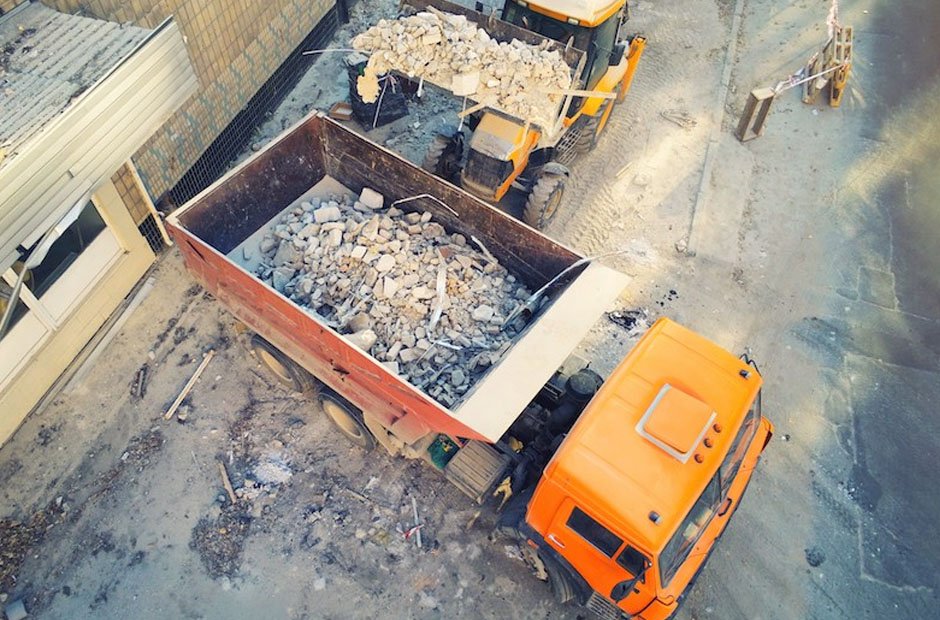
The reason why post-project cleanup costs so much is not that it’s physically demanding, but rather that the whole operation is neglected in your planning. Most site supervisors approach the final clean-up as one almighty dash – skips are quickly filled to capacity, haul-away rates go through the roof, along with the labor hours needed to engage in the often-slow process of sorting. But the separation of materials doesn’t have to happen all at once. It could be going on throughout the entire final phase of work. And there are steps you can take way ahead of that first truck backing onto site.
Treat scrap as a recoverable asset, not a disposal problem
The economic case for recycling leftovers is rather simple as all your costs for removal are offset by every dollar in scrap you recover. What is often not so easy to calculate is what it costs you to have workers properly sort materials on your site and then to compare that against what you can expect in return from a reputable recycling partner.
That sorting labor is far less painful when you know your efforts are being well rewarded. While most general mixed ferrous metal recyclers pay per tonne in the single-digit dollar range, clean, high-grade non-ferrous metals can return thousands of dollars per tonne. To make sure the extra effort needed to achieve that level of separation makes sense for your bottom line, get a price as early on as possible. Pricing your sorted metals through silverwater scrap metal gives you a concrete number to build into your project’s cost recovery estimates before the final cleanup begins.
Build separation into the job from day one
Construction and demolition waste constitutes between 30% to 40% of solid waste produced in the majority of industrialized nations (World Bank). A large portion could potentially be salvaged – steel, copper, aluminum, timber – that is, if it hasn’t been chucked into a mixed skip with concrete rubble and plastic wrap.
Source separation is the basic first step, sorting materials on-site instead of off-site. Color-coded, well-marked bins for material streams – one for copper wiring, one for aluminum offcuts, one for ferrous scrap like steel beam off-cuts – precludes cross-contamination and maintains the value of the material you’ve collected. Ferrous metals are magnetic, non-ferrous are not. Educating your team on that difference will cost you ten minutes and part of that fridge magnet you got at the last trade show.
The bins need to be included in your site logistics plan, not squeezed in where space allows. A skip that blocks traffic or is inconveniently located in relation to the works will not result in its proper utilization. Place them where subcontractors naturally congregate.
Lock cleanup into subcontractor contracts
Implementing a “clean-as-you-go” policy eliminates the feeling that cleaning up is not your responsibility. For example, if a cleanup subcontractor is responsible for removing their own waste each day (not at the end of each week, and not upon completion of the job), then the size of the end-of-job cleanup pile is manageable.
This isn’t just about cleaning up; it’s about safety. Scrap left laying around will eventually migrate to other areas and become a tripping hazard. Assigning a Waste Champion, someone responsible for moving unstable piles of sorted materials from place to place, helps to implement the policy. They aren’t there to do all the moving, simply to make certain that the right materials get to the right place in time to make that sortation worthwhile.
Reduce what arrives to reduce what’s left over
Just-in-time material deliveries are a lean construction principle that most project managers associate with speed, not waste. The connection is direct: the less surplus inventory sitting on site, the less protective packaging, off-cut material, and over-ordered stock you’re managing at the end.
This requires tighter coordination with suppliers, but the payoff is real. Fewer partial pallets. Less corrugated cardboard and plastic shrink wrap accumulating in corners. A smaller overall volume to sort and haul when the project closes out.
Staging areas – designated zones for materials intended for reuse or salvage – work alongside this principle. When leftover materials have a specific place to go rather than drifting into the general waste stream, the end-of-project sort becomes faster and more profitable.
Connect cleanup to certification if the project calls for it
Not all duties necessitate official reporting, but if your project is seeking sustainability credits in programs like LEED or Green Star, the percentage of material you divert from landfill will be important. A Waste Management Plan that monitors recycling versus landfilling can help with those credits and prove your status to customers that request it.
The circular economy concept – keeping things in use rather than tossing them away – may be framed in environmental terms but it’s also just common sense good asset management. A tonne of steel or copper doesn’t lose its value because your job is done.
Post-job cleanup will always be necessary. The difference between a cleanup that costs you money and a cleanup the best part of which is that you got some cash back is almost all in the prep: the bins, the rules, the storage, and the organisation you have in place to take the separated waste off your hands.