Key Takeaways
- The H-1B visa covers a broad spectrum of specialty occupations, not just technology positions.
- There are strict annual registration windows and visa limits for the program.
- H-1B visa holders can change employers under specific procedures.
- Bringing family members involves separate visa processes and regulations.
- Holding an H-1B visa does not guarantee a green card or permanent U.S. residency.
The H-1B visa program plays a vital role for skilled professionals who wish to work in the United States, yet it is also surrounded by many misconceptions. Both prospective applicants and employers often find themselves navigating a maze of myths, which can complicate the process and lead to misinformed decisions. Understanding the truth about this visa category is essential for anyone interested in working or hiring under the H-1B program. For an in-depth exploration of H-1B topics, consult Lighthouse Immigration for additional insights and detailed guidance.
This article clarifies widespread misunderstandings and presents factual information about the H-1B visa, helping applicants and employers make informed choices.
Myth 1: The H-1B Visa Is Exclusively for Tech Workers
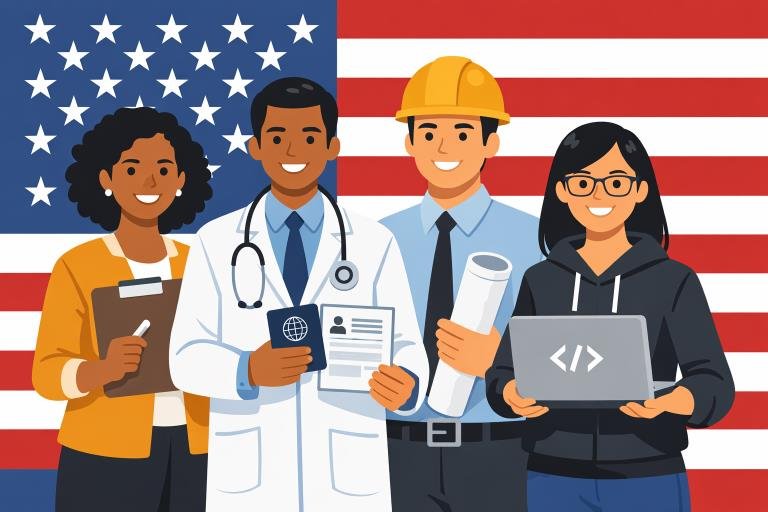
One of the most persistent myths about the H-1B visa is that it is intended solely for technology and software professionals. While it is true that the tech industry is a principal user of the H-1B program, the visa extends far beyond this sphere. Under U.S. immigration regulations, the H-1B visa is designed for specialty occupations that demand specialized knowledge and at least a bachelor’s degree. Architects, accountants, financial analysts, educators, medical practitioners, and legal professionals represent just some of the fields where H-1B professionals are employed.
Myth 2: H-1B Applications Can Be Submitted Anytime
A common point of confusion is the timing of H-1B applications. Many assume that petitions can be filed throughout the year, but in reality, the U.S. Citizenship and Immigration Services (USCIS) sets a specific annual deadline. Each year, there is a registration period, usually in March, when employers must enter their candidates into a lottery. There is a statutory annual cap of 65,000 H-1B visas, plus an additional 20,000 for those holding advanced degrees from U.S. institutions. Missing the registration period means waiting until the next cycle, which increases competition and delays potential employment opportunities.
Myth 3: Approval in the H-1B Lottery Guarantees a Visa
Being drawn in the H-1B lottery is only the first step in a multi-phase process. Selection reserves a place in the application pool but does not ensure a visa will be granted. After the lottery, the employer and beneficiary must prepare a comprehensive petition with supporting evidence. The USCIS thoroughly examines each submission, which can result in approval, a request for additional evidence, or denial. Each petition is scrutinized individually, sometimes requiring detailed explanations of the job role and the candidate’s qualifications.
Myth 4: H-1B Holders Cannot Change Employers
Another prevalent myth is that H-1B employees are tied to their initial sponsoring employer. In fact, H-1B regulations allow for considerable mobility. Skilled workers are permitted to change employers through a straightforward process, often referred to as an H-1B transfer. The new employer must file a new petition, but employees can often begin working for the new organization as soon as USCIS receives the petition. This flexibility helps ensure that H-1B holders can pursue career advancement or improved working conditions.
Myth 5: Dependents of H-1B Holders Can Work Freely in the U.S.
Dependents of H-1B holders, specifically spouses and unmarried children under 21, receive H-4 visas for their stay in the United States. However, not all H-4 visa holders are permitted to work. Employment authorization is available only to H-4 spouses, and only under particular circumstances, such as when the H-1B principal holder is in the process of seeking permanent residency. The rules are subject to change, and eligibility often shifts along with federal policy, making it important to check the most recent guidance provided by USCIS or consult an immigration attorney.
Myth 6: An H-1B Visa Automatically Leads to a Green Card
There is a prevailing belief that holding an H-1B visa guarantees a path to permanent residency in the United States. While the H-1B is considered a dual-intent visa, making it possible to apply for a green card while working in the U.S., the transition is not automatic. Separate legal procedures, including labor certification and employer sponsorship, must be completed to obtain a green card. There are also annual quotas and substantial backlogs for certain countries, so it is not uncommon for applicants to wait several years before obtaining permanent residency.
Conclusion
Myths and misunderstandings can unnecessarily jeopardize the chances of a successful H-1B application or lead to missed opportunities for both workers and employers. Gaining a clear understanding of the rules, processes, and ongoing policy updates is essential for anyone engaged with this visa category. For authoritative and current guidelines, it is always best to consult official USCIS resources or seek advice from qualified immigration attorneys.