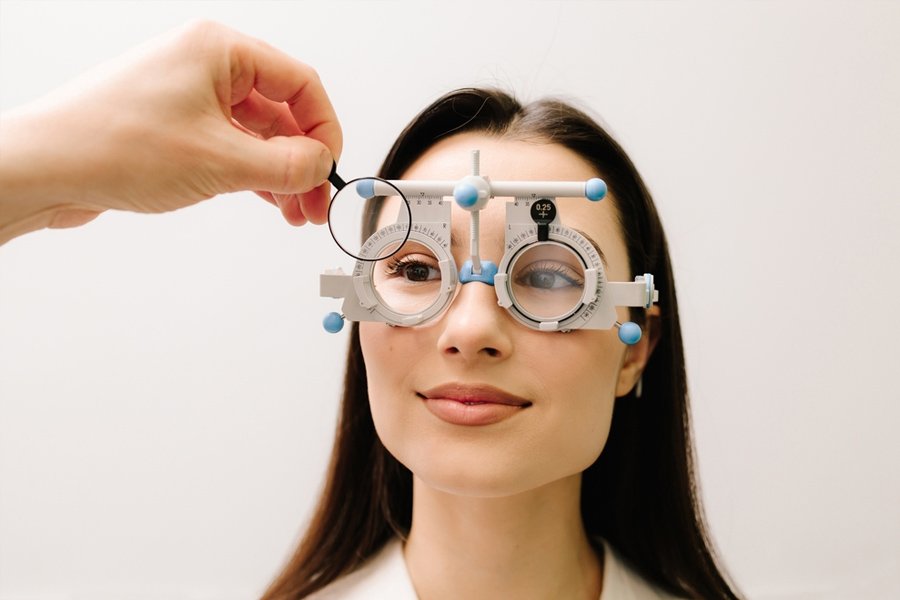
You might be feeling a little blindsided right now. Reading menus is harder, your phone has to be held farther away, and suddenly your eye doctor is talking about progressive lenses. Part of you wants to say yes and fix the problem. Another part of you worries about blurry “swim,” headaches, or wasting money on glasses you never get used to. An experienced optometrist in Austin, TX can help you understand your options and choose lenses that match your lifestyle.
If that sounds familiar, you are not alone. The shift from single-vision or reading glasses to progressive lenses is a real change. It affects how you see, how you move, and how confident you feel in daily life. The good news is that a careful, thoughtful eye doctor can make this transition much smoother than you might expect.
In simple terms, here is what you can expect. A good eye doctor will help you choose the right type of progressive lens, set realistic expectations, guide you through the first few weeks of adaptation, and adjust your prescription or frame fit if something feels off. You do not have to figure this out alone, and you are not “failing” if you do not love your new glasses on day one.
Why does switching to progressive lenses feel so overwhelming?
It often starts quietly. You notice that reading small print takes more effort. Your neck gets tight from looking over or under your glasses. You might even start avoiding tasks you used to enjoy, like sewing or reading at night. When the eye doctor explains that your eyes now need help at multiple distances, the idea of one pair of glasses handling everything sounds both helpful and intimidating.
Because of this tension, you might wonder if progressives are really worth the trouble. You might picture yourself tripping on stairs or feeling motion sick every time you turn your head. Some people even fear they are “too old” to adapt, or that if they do not get used to them instantly, it means something is wrong with their eyes.
Those fears are understandable. Progressive lenses require your brain and eyes to learn a new pattern. You look through the upper part to see far away, the middle for computer distance, and the lower portion for reading. At first, this feels unnatural. You may move your eyes when you really need to move your head. You might catch the blur at the sides of your vision and feel unsettled.
So where does that leave you? It leaves you needing not just a prescription, but guidance. This is where an experienced eye doctor makes a real difference in your transition to no-line multifocal lenses.
How exactly do eye doctors guide you through this transition?
First, a careful eye exam is only the starting point. During the visit, a good eye doctor will ask about your daily life. How many hours do you spend at a computer. Do you drive at night. Do you read in bed. Do you use multiple screens at different heights. These details help determine which style of progressive lens and what design will suit you best.
Modern progressives are not all the same. There are different designs for people who spend most of the day at a desk, who drive long distances, or who are constantly on the move. Resources such as the American Academy of Ophthalmology’s overview of what progressive lenses are and how they work can help you understand the basics, but your doctor connects that general information to your specific needs.
Next comes frame choice and fitting. This part is often underestimated. If the frame sits too low or too high on your nose, or if it is too large for your face, the “reading zone” might not line up with where you naturally look. A skilled provider will measure the distance between your pupils, the height of your eyes in the frame, and how the frame sits on your ears and nose. A few millimeters can change how easy or hard your first weeks are.
Then there is the emotional side. A thoughtful eye doctor will warn you that the first few days may feel odd. You might notice some distortion at the sides of your vision. You might feel tempted to switch back to your old glasses. Instead of brushing this off, your doctor can normalize it. You may hear something like, “Give it two weeks of steady wear. If you still feel off, come back and we will tweak the prescription or the fit.” That promise of follow up lowers your stress and gives you permission to ask for help.
Finally, if your work or hobbies are very specific, your doctor might talk with you about whether standard progressives are enough, or if you might eventually benefit from a second pair such as computer progressives. Many people also want to understand how progressives compare with bifocals. Resources like this explanation from Ohio State Wexner Medical Center on progressive lenses versus bifocals can give context, and your doctor can walk through what that means for you personally.
What are the real pros and cons of progressives compared to other options?
It can help to see the tradeoffs clearly. Here is a simple comparison that many patients find useful when deciding between progressives, bifocals, and separate single-vision glasses.
| Option | Main Advantages | Main Challenges | Who Often Benefits Most |
| Progressive lenses | No visible line. Smooth focus at distance, computer, and reading. One pair of glasses for most tasks. | Adaptation period of days to weeks. Possible side blur. Usually higher cost. | People who want one pair for most situations and are willing to adapt. |
| Bifocals | Clear distance and near with a defined line. Shorter learning curve for some people. | No intermediate zone for computer. Visible line. Some people notice image “jump” at the line. | People who mainly need distance and reading, and do less computer work. |
| Separate single-vision glasses | Each pair is simple to use. Often lower cost per pair. | Constant switching between pairs. Easy to misplace. Can feel inconvenient and frustrating. | People who rarely multitask visually or strongly dislike adapting to multifocals. |
This is where your eye doctor steps into the role of guide rather than just prescriber. The right choice is not only about what is “best” on paper. It is about what fits your habits, your budget, and your patience for a brief learning period with your new eye doctor prescribed multifocal glasses.
What can you do right now to make the transition smoother?
- Wear your new progressives consistently for the first two weeks
It is tempting to switch back to your old glasses when things feel strange. Try to resist that urge, especially during waking hours. Your brain needs repeated, consistent input to adjust. Put your progressives on in the morning and keep them on for most of the day. Avoid judging them based on the first hour. Give your eyes time to learn the new pattern.
- Practice “pointing your nose” at what you want to see
With progressives, you do best when you move your head slightly instead of only moving your eyes. If you are reading something on the side of your desk, turn your nose toward it so you look through the central part of the lens. When going down stairs, lower your chin a bit and look through the upper part so the steps stay clear. These small habits reduce distortion and help your confidence grow.
- Stay in touch with your eye doctor and speak up early
If you still feel off after 10 to 14 days of solid wear, contact your eye doctor. Do not suffer in silence or assume you “just cannot wear progressives.” Describe when you notice the problem most. Is it while driving, reading, or at the computer. Often, a simple frame adjustment or a small prescription tweak can make a big difference. Many offices also offer a limited remake period for lenses, so early feedback can protect your investment.
Finding confidence in your next pair of glasses
Needing progressive lenses is not a sign that something is wrong with you. It is a normal part of aging, and it arrives on its own schedule, whether we like it or not. What you can control is how supported you feel during the change.
With the right guidance, your transition to progressive lens glasses can move from stressful to manageable. You deserve clear vision at every distance, without constant strain or frustration. The most important step is choosing an eye doctor who listens, explains your options, and commits to walking with you through the adjustment period.
Reach out to a trusted eye care provider, ask your questions openly, and remember that you are allowed to expect comfort, clarity, and support from your next pair of glasses.