The Role of Custom Vibratory Processing Equipment in Industrial Operations
Modern industrial operations demand precision and peak efficiency. Often, standard, off-the-shelf machinery cannot meet these unique requirements. This is where a custom equipment manufacturer becomes a vital partner.
We understand that every production line faces distinct challenges. These range from handling delicate materials to achieving precise thermal processing. Custom equipment manufacturing involves designing and building machinery tailored exactly to these individual needs. It transforms unique operational problems into robust, high-performing solutions.
In this guide, we will explore the intricate world of custom equipment manufacturing. We will define this critical sector and its differences from standard production. We will also examine the significant benefits custom machinery brings to diverse industries. We will cover the entire process, from concept to delivery. This includes key engineering considerations and the essential capabilities a top-tier manufacturer needs. For those looking to optimize material flow and thermal consistency, understanding the nuances of custom-engineered vibratory equipment is key. Join us as we shed light on how bespoke machinery drives innovation and operational excellence.
Custom equipment manufacturing is the specialized process of designing, engineering, and fabricating machinery tailored to a client’s specific operational needs. Unlike standard equipment production, which focuses on mass-produced, general-purpose machines, custom manufacturing creates unique solutions for unique problems. Standard equipment offers a cost-effective and readily available option for common tasks, but its “one-size-fits-all” approach often falls short when dealing with specific material properties, unique facility layouts, or highly specialized process requirements.
The distinction lies in the degree of customization. Standard equipment might offer minor configurable options, but custom machinery is built from the ground up to address precise specifications. This bespoke approach ensures optimal performance, integration, and efficiency for a particular application.
Businesses across various industries benefit immensely from custom equipment. For example, in the food manufacturing sector, specialized machinery is crucial for handling delicate products, ensuring hygiene, and maintaining specific textures or temperatures. The pharmaceutical industry requires equipment that meets stringent regulatory standards and precise dosing or mixing capabilities. Similarly, in heavy industrial applications, custom solutions are essential for processing abrasive materials, managing extreme temperatures, or fitting into complex existing infrastructure.
Industries that commonly rely on custom equipment manufacturers include:
- Mining and Minerals:For processing raw ores, sizing, and conveying heavy, abrasive materials.
- Chemical Processing:Requiring specialized reactors, mixers, and dryers for corrosive or reactive substances.
- Food and Beverage:Demanding sanitary designs, precise heating/cooling, and gentle handling for various products.
- Pharmaceuticals:Needing sterile environments, accurate dosing, and compliance with strict regulations.
- Automotive:For specialized assembly lines, testing rigs, and material handling systems.
- Aerospace and Defense:Requiring high-precision fabrication and testing equipment for critical components.
- Waste-to-Energy and Recycling:For sorting, shredding, and processing diverse waste streams.
- Foundry Operations:For sand handling, casting, and thermal treatment processes.
- Battery Materials:For precise drying, mixing, and conveying of delicate and often volatile components.
These industries often face challenges related to material behavior (e.g., particle size, density, moisture content), throughput demands, and the need for seamless integration into existing production lines. Custom equipment addresses these specific needs, leading to improved efficiency, reduced waste, and enhanced product quality.
Here’s a quick comparison:
| Feature | Standard Catalog Equipment | Custom-Engineered Systems |
|---|---|---|
| Availability | Readily available, off-the-shelf | Designed and built to order |
| Cost (Initial) | Generally lower | Higher, reflecting specialized design and fabrication |
| Lead Time | Shorter | Longer, due to design, engineering, and manufacturing phases |
| Flexibility | Limited customization, general-purpose | Highly adaptable, specific to unique requirements |
| Performance | Adequate for common tasks, may not be optimized | Optimized for specific materials and processes, peak efficiency |
| Integration | May require adaptations to fit existing lines | Designed for seamless integration |
| Problem Solving | Addresses general problems | Solves unique, complex operational challenges |
| Longevity | Varies, often designed for broad applicability | Built for specific duty cycles, often more robust for its purpose |
Overcoming Material Handling Challenges with Vibratory Processing Equipment
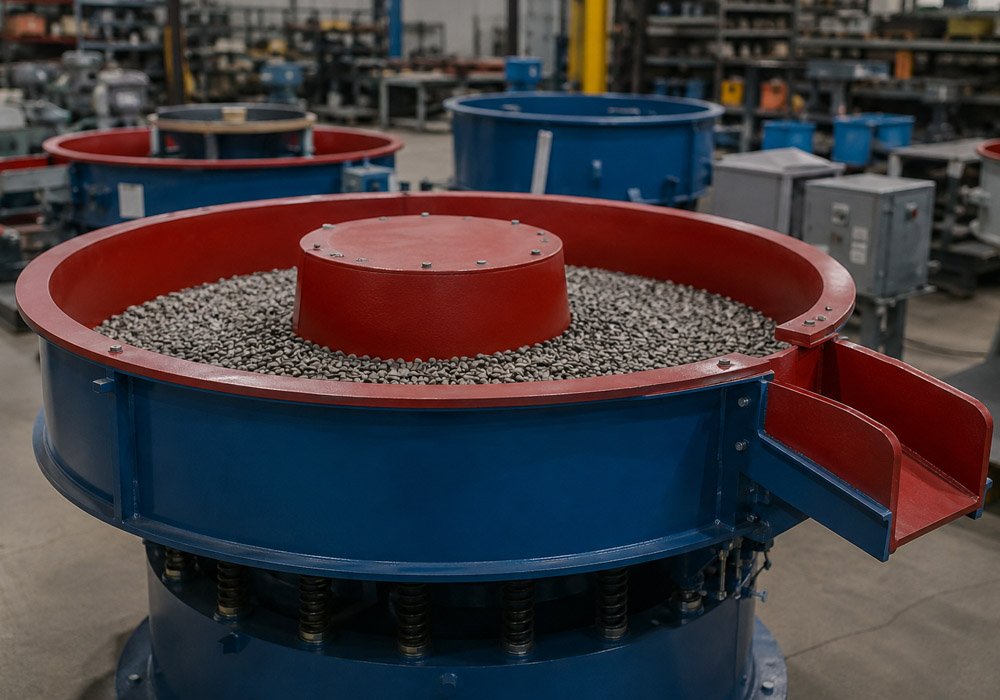
Vibratory processing equipment offers a versatile solution for a myriad of material handling challenges, particularly when dealing with bulk solids. The core principle of natural-frequency vibration, where the machine’s operating frequency matches its natural resonant frequency, allows for highly efficient material movement with minimal power consumption and reduced mechanical wear. This makes it ideal for applications where stable material flow is critical.
However, standard vibratory units often fall short when confronted with non-standard equipment requirements. For example, a facility might need to convey extremely hot, abrasive, or sticky materials, or require precise material distribution across a wide area with specific discharge points. This is where custom engineering shines. By tailoring the design to the exact properties of the material—its density, particle size, moisture content, and flow characteristics—and the specific process goals, manufacturers can create vibratory systems that perform optimally.
Consider the challenges of conveying materials like minerals, cement, biomass, or even sensitive battery materials. Each has unique characteristics that influence how it behaves under vibration. Custom vibratory equipment can be designed with specialized pan shapes, deck materials, and drive systems to ensure consistent flow, prevent degradation, and manage dust effectively. This precision engineering extends to applications in recycling, waste-to-energy, and sludge drying, where material consistency and throughput are paramount. When standard solutions prove inadequate for these intricate material handling needs, exploring custom-engineered vibratory equipment can provide the breakthrough needed for operational success.
Thermal Efficiency in Vibratory Processing Equipment and Fluid Bed Dryers
Beyond material handling, custom vibratory equipment plays a critical role in thermal processing, particularly through fluid bed dryers. These systems are engineered to achieve precise and uniform heat transfer, which is essential for processes requiring controlled drying, cooling, or heating of bulk materials. The vibratory action fluidizes the material, creating a permeable bed through which controlled airflow can pass. This ensures intimate contact between the material particles and the drying air, leading to highly efficient moisture removal and exceptional consistency in the final product.
For high-temperature applications, such as drying foundry sand or processing specialized chemicals, custom fluid bed dryers are designed with robust materials and precise temperature controls to withstand extreme conditions while maintaining process integrity. The ability to customize the airflow patterns, bed depth, and vibration characteristics allows for optimization across a wide range of materials, from fine powders to coarse granules.
The benefits of utilizing custom vibratory equipment for thermal processing are significant:
- Enhanced Moisture Consistency:Uniform drying across all particles, preventing over-drying or under-drying.
- Improved Energy Efficiency:Optimized heat transfer minimizes energy consumption, reducing operational costs.
- Reduced Product Degradation:Gentle fluidization prevents damage to delicate materials.
- Higher Throughput:Efficient drying cycles allow for greater processing volumes.
- Precise Temperature Control:Critical for sensitive materials and specific chemical reactions.
- Compact Footprint:Often more space-efficient than traditional drying methods.
- Versatility:Adaptable for drying, cooling, roasting, and other thermal treatments.
This level of thermal precision and efficiency is often unattainable with standard drying solutions, making custom vibratory fluid bed dryers an indispensable asset for industries demanding high-quality, consistent thermal processing.
Designing for Severe Duty and Abrasion Resistance
In many industrial environments, equipment faces relentless wear and tear from abrasive materials, extreme temperatures, and continuous operation. Designing custom vibratory equipment for severe duty and abrasion resistance is paramount to ensuring longevity, minimizing downtime, and maintaining operational efficiency.
This involves a meticulous approach to material selection and structural integrity. For instance, heavy-duty vibrating feeders, often used in mining or quarrying, must be constructed from specialized alloys or lined with wear-resistant materials like manganese steel or ceramic tiles. The choice of material depends on the specific abrasive properties of the product being handled—whether it’s sharp, heavy, or chemically reactive.
Beyond material selection, structural integrity is engineered to withstand continuous-duty operation. This includes reinforced frames, heavy-gauge steel construction, and strategically placed stiffeners to prevent fatigue and deformation over time. Welding processes are critical, with full penetration welds and stress-relieving treatments often employed to ensure joint strength. For applications involving corrosive chemicals or high sanitary standards, stainless steel and even reactive metals like titanium or zirconium might be selected, requiring specialized fabrication techniques. The goal is to create a machine that not only performs its function but also endures the harshest industrial environments for decades, providing a reliable and robust solution for heavy industrial processing.
Engineering Considerations for Thermal Processing and Bulk Material Flow
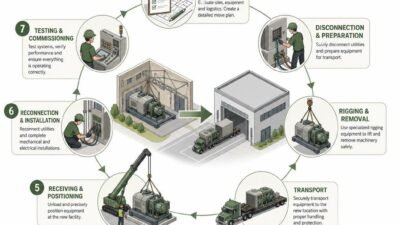
The journey from concept to a fully operational custom equipment solution is a complex one, requiring deep engineering expertise and a structured approach. The typical stages of the custom equipment manufacturing process begin with a thorough concept and requirements definition, where engineers collaborate closely with the client to understand their specific challenges, desired outcomes, and operational constraints. This initial phase involves detailed discussions on material properties, desired throughput, facility layout, and regulatory compliance.
Next comes design and engineering, where detailed CAD models and technical drawings are created. This phase includes mechanical design, electrical design, and often software development for control systems. Critical engineering and design considerations at this stage include:
- Ergonomics and User Experience:Ensuring the equipment is safe, easy to operate, and maintain.
- Safety Features:Integrating emergency stops, protective guards, and fail-safe mechanisms from the outset.
- Material Compatibility:Selecting appropriate construction materials that can withstand the process environment (e.g., temperature, corrosion, abrasion).
- Maintainability:Designing for easy access to components for routine maintenance and repairs.
- Scalability and Flexibility:Building in the ability to adapt to future production changes or increased capacity.
- Energy Efficiency:Optimizing designs to minimize power consumption and operational costs.
Following design, fabrication and assembly take place. This involves precision machining, welding, and component integration. A custom equipment manufacturer should possess a wide range of in-house capabilities, including:
- Machining:CNC milling, turning, and grinding for precise component creation.
- Welding:Expertise in various welding techniques (TIG, MIG, robotic) for different materials.
- Fabrication:Sheet metal work, bending, and forming.
- Assembly:Mechanical, electrical, and pneumatic assembly.
- Surface Finishing:Painting, coating, and polishing.
Finally, testing and validation are conducted to ensure the equipment meets all performance specifications and safety standards. This often includes factory acceptance testing (FAT) before delivery and site acceptance testing (SAT) after installation. The process culminates in delivery, installation, and commissioning, followed by ongoing support and maintenance.
The Importance of Laboratory Testing and Custom Engineering
In the realm of custom equipment manufacturing, particularly for vibratory and thermal processing, laboratory testing is an indispensable step. It serves as the bridge between theoretical design and real-world performance, significantly mitigating risks and ensuring the success of custom-designed systems.
Before committing to full-scale fabrication, application testing allows engineers to analyze material behavior under controlled conditions. This involves running small batches of the client’s actual product through scaled-down vibratory conveyors, fluid bed dryers, or other processing units. Key parameters such as feed rate, vibration amplitude, frequency, and temperature can be adjusted to observe their impact on material flow, drying rates, and product quality.
This lab testing provides crucial data for feasibility analysis and scaling parameters. It helps validate design assumptions, identify potential bottlenecks, and optimize process variables. For instance, testing might reveal that a material is more abrasive than initially thought, prompting a change in liner material, or that a specific vibration pattern improves drying efficiency by 15%. This empirical data is then used to refine the custom engineering, ensuring that the final equipment is perfectly tailored to the material’s unique characteristics and the client’s specific process goals. Without this rigorous testing phase, the development of custom equipment would be largely guesswork, leading to costly redesigns and operational inefficiencies down the line.
Integrating Systems for Continuous Duty Operations
For modern industrial operations, especially those involving bulk material flow and thermal processing, the ability to run continuously without interruption is paramount. This demands not just individual pieces of custom equipment, but fully integrated systems designed for continuous-duty operation. System integration involves seamlessly connecting various components—such as feeders, conveyors, dryers, coolers, and screening equipment—into a cohesive and automated production line.
The expertise of a custom equipment manufacturer extends beyond building individual machines; it encompasses the holistic design of the entire process flow. This includes selecting appropriate material handling solutions, ensuring compatibility between different equipment types, and developing sophisticated control systems. PLC (Programmable Logic Controller) integration is critical here, allowing for centralized control, real-time monitoring, and automated adjustments to maintain optimal process performance.
A comprehensive technical review during the design phase is crucial to identify potential interface issues and ensure smooth operation. This review considers factors like material transfer points, dust control, energy consumption across the entire system, and safety interlocks. By partnering with manufacturers who prioritize robust system integration, businesses can achieve unparalleled process reliability, maximize uptime, and ensure consistent product quality. This integrated approach, championed by experienced providers like Carrier Vibrating Equipment, transforms a collection of machines into a highly efficient and dependable production powerhouse, ready to meet the demands of July 2026 and beyond.
Ensuring Quality and Compliance in Custom Manufacturing
Quality control and compliance are non-negotiable pillars in custom equipment manufacturing. Given the specialized nature of these machines, often destined for critical processes in regulated industries, manufacturers must implement rigorous measures at every stage. This begins with the selection and inspection of raw materials, ensuring they meet specified grades, certifications, and tolerances.
Throughout the fabrication process, in-process inspections are conducted, including dimensional checks, weld quality assessments, and adherence to assembly procedures. For critical components, non-destructive testing (NDT) methods like X-ray, ultrasonic, or dye penetrant inspections are routinely employed to detect hidden flaws.
Compliance with industry standards is paramount. This includes adherence to:
- ASME (American Society of Mechanical Engineers) codesfor pressure vessels.
- FDA (Food and Drug Administration) and USDA (United States Department of Agriculture) guidelinesfor sanitary design in food and pharmaceutical equipment.
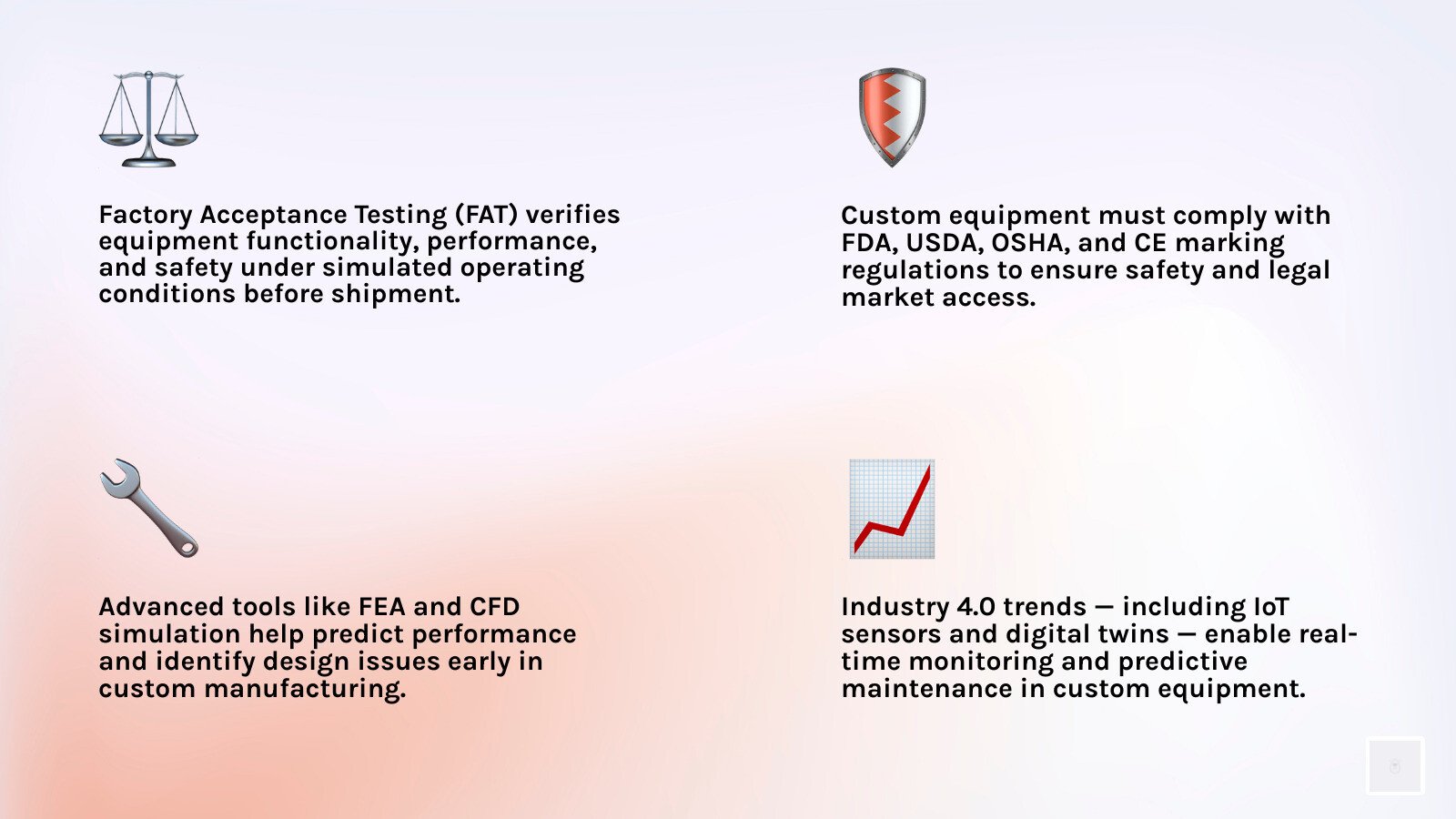
- OSHA (Occupational Safety and Health Administration) regulationsfor workplace safety.
- CE markingfor equipment sold in the European Economic Area.
Manufacturers also implement comprehensive Factory Acceptance Testing (FAT), where the completed equipment is run through its paces at the manufacturer’s facility under simulated operating conditions. This verifies functionality, performance, and safety before shipment. Documentation, including material certifications, test reports, and operation and maintenance manuals, is meticulously prepared to ensure traceability and support regulatory audits. By integrating these stringent quality and compliance protocols, custom equipment manufacturers deliver reliable, safe, and legally compliant solutions.
Challenges and Future Trends in Custom Equipment Manufacturing
Custom equipment manufacturing, while offering immense benefits, is not without its challenges. One of the primary hurdles is translating abstract client concepts into functional, manufacturable designs. This requires exceptional engineering creativity and problem-solving skills. Another significant challenge is managing project timelines and costs, as each custom build is unique and can encounter unforeseen complexities. Ensuring regulatory compliance across diverse industries and geographies also adds layers of difficulty. Furthermore, the industry often faces a shortage of skilled professionals in specialized engineering and fabrication roles.
Manufacturers overcome these challenges through:
- Close Collaboration:Maintaining open and continuous communication with clients to refine requirements and manage expectations.
- Advanced Simulation and Modeling:Utilizing tools like Finite Element Analysis (FEA) and Computational Fluid Dynamics (CFD) to predict performance and identify potential issues early.
- Modular Design Principles:Where possible, breaking down complex systems into smaller, manageable modules to streamline design and fabrication.
- Vertical Integration:Performing a wide range of capabilities in-house (e.g., machining, welding, assembly, testing) to maintain control over quality, schedule, and cost.
- Robust Project Management:Implementing rigorous project management methodologies to track progress, manage risks, and ensure on-time delivery.
- Continuous Training and Development:Investing in their workforce to build and maintain specialized skills.
Looking ahead, the future of custom equipment manufacturing is being shaped by several exciting trends and innovations:
- Automation and Robotics:Integrating robotic arms for assembly, welding, and material handling to improve precision, speed, and safety.
- Advanced Materials:The increasing use of lightweight composites, high-strength alloys, and smart materials with self-healing or adaptive properties.
- Additive Manufacturing (3D Printing):Employing 3D printing for rapid prototyping of complex parts, creating custom tooling, or even producing functional components with intricate geometries.
- IoT and Industry 4.0:Embedding sensors and connectivity into custom equipment for real-time performance monitoring, predictive maintenance, and remote diagnostics.
- Digital Twins:Creating virtual replicas of physical equipment to simulate performance, optimize operations, and test modifications before implementing them in the real world.
- Sustainable Manufacturing:A growing emphasis on designing equipment for energy efficiency, reduced waste, and the use of recyclable materials.
These trends are enabling custom equipment manufacturers to deliver even more sophisticated, efficient, and intelligent solutions, solidifying their role as key drivers of industrial innovation.
Conclusion
Custom equipment manufacturing is far more than just building machines; it’s about crafting precise solutions that unlock new levels of efficiency, productivity, and innovation for businesses across the globe. From the initial concept to final delivery, every stage of the process is meticulously engineered to meet unique operational demands that standard equipment simply cannot address.
We’ve explored the profound difference between custom and standard production, highlighting how tailored machinery provides critical benefits across diverse industries—from food processing and pharmaceuticals to mining and advanced materials. The journey involves rigorous engineering, comprehensive in-house capabilities, stringent quality control, and a constant eye on compliance.
As we look towards July 2026 and beyond, the industry continues to evolve, embracing automation, advanced materials, and digital integration. These trends promise even more intelligent and responsive custom solutions. For any business facing unique material handling, thermal processing, or specialized production challenges, partnering with a custom equipment manufacturer is not merely an option—it’s a strategic imperative for achieving operational excellence and maintaining a competitive edge.