Core Surgical Rejuvenation and Structural Procedures
The paradigm of facial rejuvenation has shifted from a two-dimensional focus on tightening skin to a three-dimensional emphasis on structural volume and support. Modern surgical techniques prioritize the preservation of blood supply and the repositioning of deep tissue layers, moving away from the “pulled” look of the past toward results that appear refreshed and structurally sound.
Evolution of Surgical Rejuvenation: Facelifts, Blepharoplasty, and Brow Lifts
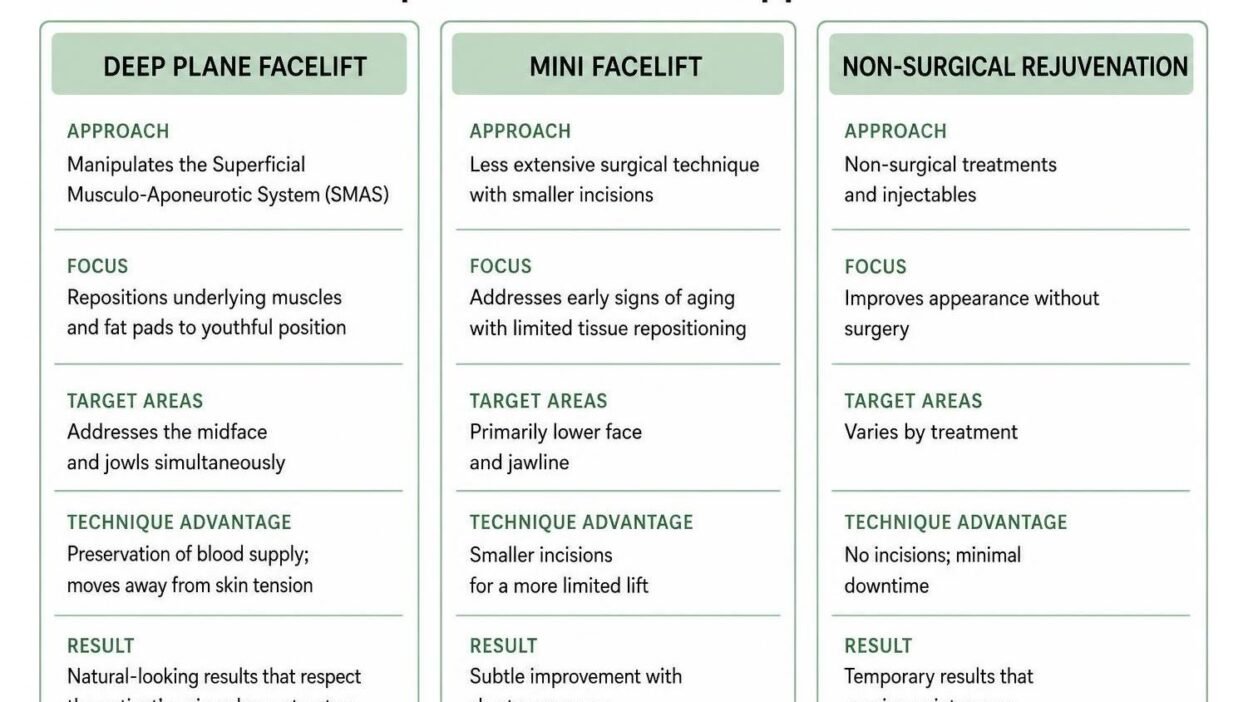
The gold standard for facial rejuvenation today is the deep-plane rhytidectomy. Unlike older techniques that relied on skin tension, this approach manipulates the Superficial Musculo-Aponeurotic System (SMAS), allowing the surgeon to reposition the underlying muscles and fat pads to their youthful anatomical position. By addressing the midface and jowls simultaneously, surgeons can achieve natural-looking facelifts that respect the patient’s unique bone structure.
Blepharoplasty, or eyelid surgery, has similarly evolved to prioritize volume preservation. Rather than simply removing fat, surgeons now often reposition it to fill the hollows beneath the eyes, preventing a “hollowed-out” appearance. Endoscopic brow lifts have also become a staple for those seeking a subtle, rejuvenated look with minimal scarring, as the procedure is performed through small incisions hidden behind the hairline.
Advanced Rhinoplasty and Structural Grafting
Rhinoplasty is perhaps the most technically demanding procedure in facial surgery. The modern approach emphasizes structural stability over aggressive resection. By utilizing autologous cartilage grafts—often harvested from the septum, ear, or rib—surgeons can reinforce the nasal framework, ensuring that the nose remains functional and aesthetic over the long term.
Technological integration has revolutionized this field. Surgeons now use ultrasonic osteotomes for precise, bone-preserving cuts, which minimize trauma to surrounding soft tissues. Furthermore, digital morphing and 3D imaging allow patients to visualize potential outcomes during the consultation phase, fostering a collaborative approach to achieving both aesthetic goals and improved nasal breathing.
Comprehensive Midface and Jaw Realignment
Skeletal harmony is the foundation of facial beauty. When the jawline or midface lacks proper projection, it can affect both the profile and the longevity of soft-tissue procedures. Orthognathic alignment and mandibular contouring are often integrated into broader reconstruction plans to ensure that the skeletal structure provides adequate support for the skin and muscles. For those experiencing issues related to bite alignment or significant bone loss, cosmetic dental reconstruction serves as a vital component in restoring both the smile and the structural integrity of the lower third of the face.
Restorative Techniques in Facial Cosmetic Reconstruction
Restorative surgery requires a meticulous balance between replacing missing tissue and maintaining the delicate function of facial nerves and muscles. Whether the goal is to repair damage from skin cancer resection or to address traumatic facial fractures, the focus remains on restoring the patient’s ability to express themselves fully.
Repairing Craniomaxillofacial Trauma and Fractures
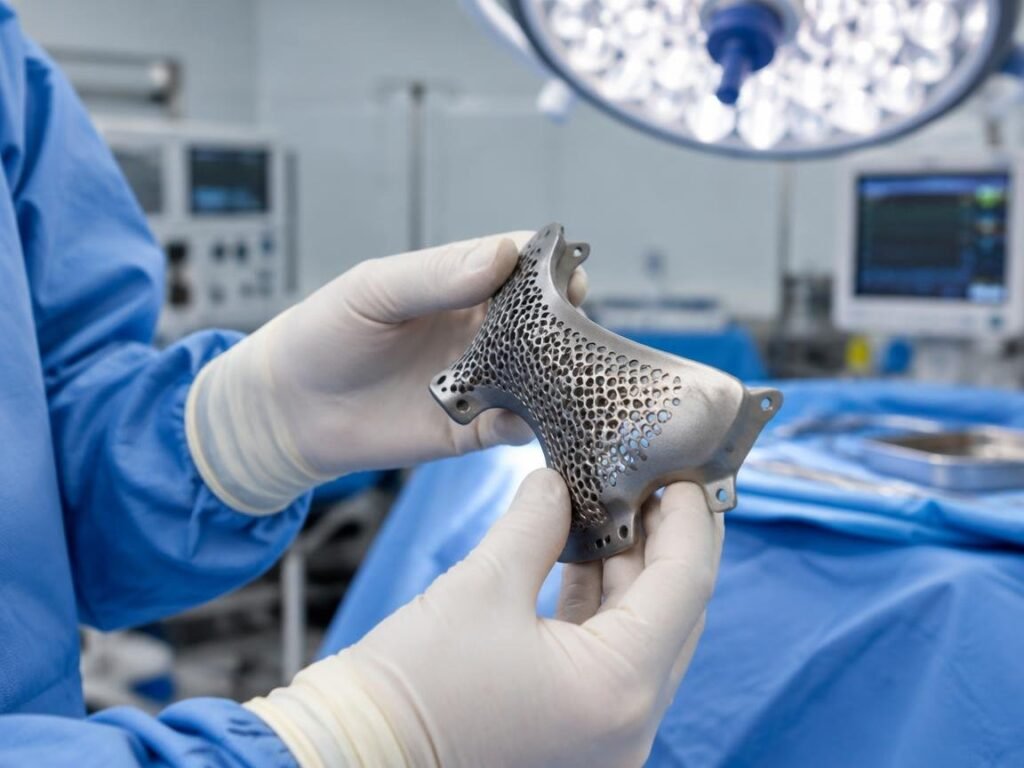
Facial fractures, particularly those involving the Zygomaticomaxillary complex (ZMC) or Le Fort patterns, require precise anatomical reduction. Modern surgical approaches favor the use of endoscopy, which allows surgeons to visualize and repair complex fractures through smaller, less invasive incisions. For significant bone loss, surgeons now utilize patient-specific 3D-printed titanium or silicone implants. These implants are pre-contoured based on CT scan data to fit the patient’s anatomy perfectly, reducing operative time and improving the accuracy of the reconstruction.
Facial Reanimation and Paralysis Management in Facial Cosmetic Reconstruction
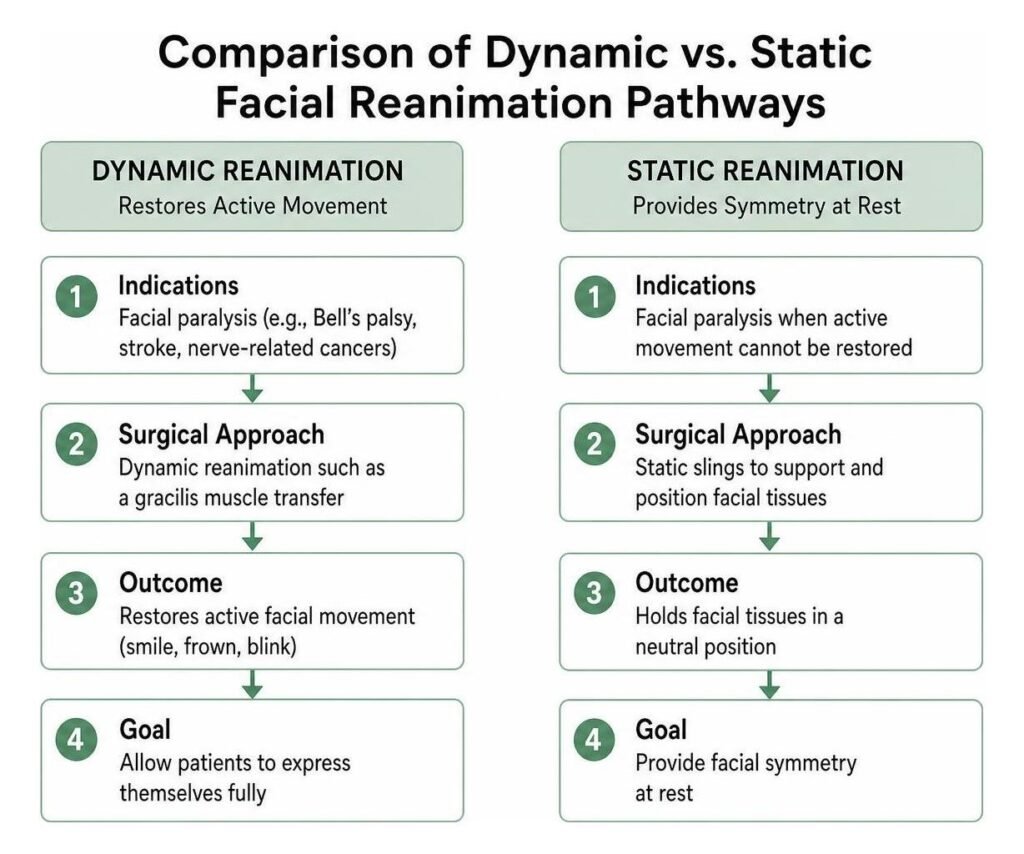
Treating facial paralysis—whether due to Bell’s palsy, stroke, or nerve-related cancers—is a highly specialized area of reconstruction. Surgeons distinguish between dynamic and static repairs. Dynamic reanimation, such as a gracilis muscle transfer, aims to restore active movement, allowing the patient to smile, frown, and blink. Static slings, by contrast, are used to hold facial tissues in a neutral position, providing symmetry when active movement cannot be restored.
Congenital Defect Repair and Pediatric Reconstruction
Reconstructing congenital deformities like microtia (ear malformation) requires a multi-stage approach that balances tissue expansion with structural framework placement. The current best practice often involves using costal (rib) cartilage to sculpt a natural ear shape, which is then placed under a pocket of expanded skin. Advances in vascularized flaps have also improved outcomes for cleft lip and palate repair, ensuring that the reconstructed tissues grow and mature alongside the child.
Non-Surgical Modalities and Multimodal Combination Therapies
The rise of non-surgical aesthetics has provided patients with more options than ever to maintain their results between surgical procedures or to address early signs of aging without the need for an operating room.
Injectables and Neuromodulators
Botulinum toxin remains the most frequently performed cosmetic procedure, effectively smoothing dynamic wrinkles for 2 to 6 months. However, the field has expanded significantly with the use of dermal fillers. Hyaluronic acid fillers provide immediate volume, while biostimulatory agents like Poly-L-Lactic Acid (PLLA) and Calcium Hydroxylapatite (CaHA) work over time to stimulate the body’s own collagen production. The choice between temporary and biostimulatory fillers depends on the patient’s desired longevity and the specific area being treated.
Energy-Based Resurfacing and Skin Quality
Laser resurfacing and chemical peels are essential for improving skin texture, tone, and surface-level imperfections. Fractional CO2 lasers, in particular, create microscopic treatment zones that trigger a healing response, effectively “resetting” the skin’s surface. These treatments are often used in conjunction with surgery to ensure that the quality of the skin matches the rejuvenated underlying structure.
Multimodal Combination Protocols
The most comprehensive results are often achieved through combination therapies. For instance, combining a deep-plane facelift with autologous fat grafting allows the surgeon to address both sagging tissues and volume loss simultaneously. By adding platelet-rich fibrin (PRF) to fat grafts, surgeons can improve graft survival, which traditionally ranges from 10% to 80% depending on the technique and the patient’s biological response.
Innovations in Regenerative Technologies and Wound Healing
The future of facial reconstruction lies in regenerative medicine, where the focus shifts from replacing tissue with foreign materials to encouraging the body to regrow its own.
Innovations in Regenerative Medicine and Facial Cosmetic Reconstruction
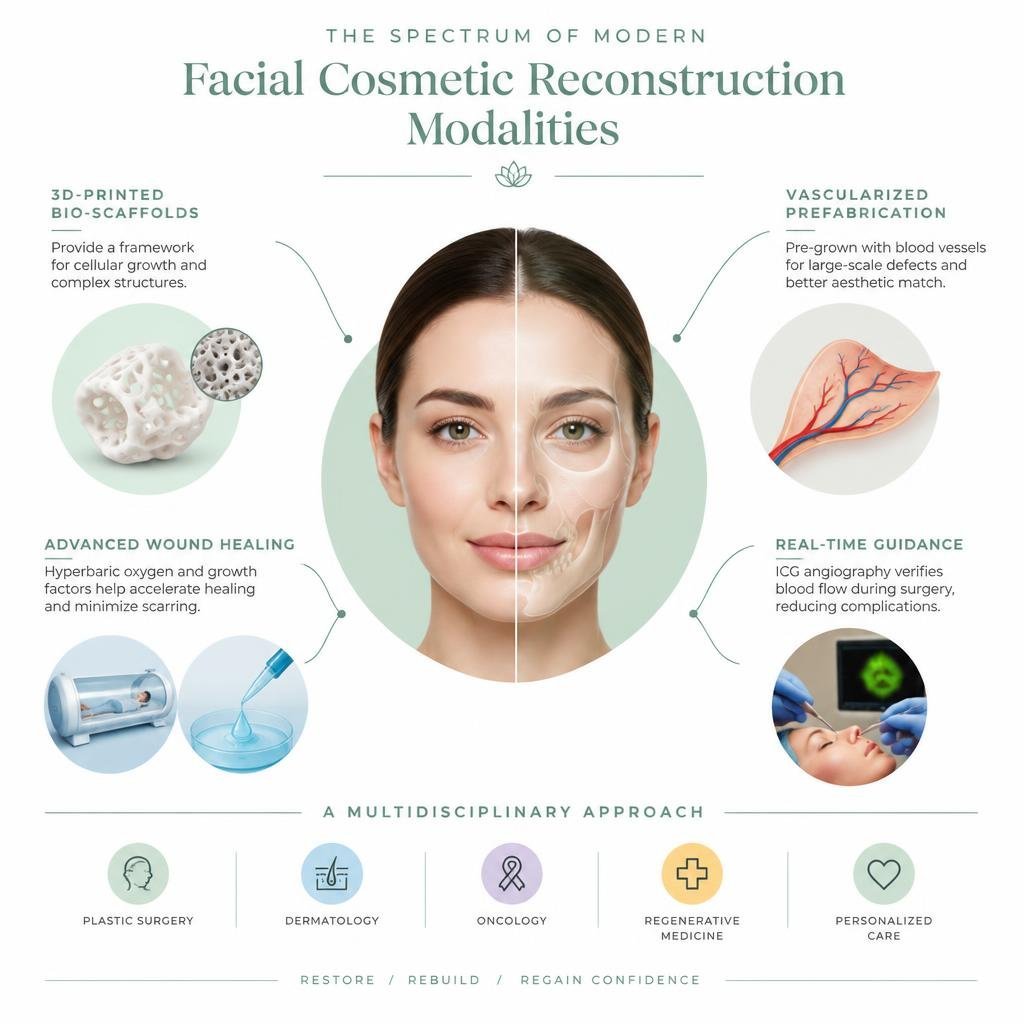
3D-printed bio-scaffolds are currently being researched to provide a framework for cellular growth, potentially allowing for the regeneration of complex structures like cartilage and bone. Vascularized prefabrication, where a flap is “pre-grown” with blood vessels before being moved to the face, is already changing how surgeons approach large-scale defects. These technologies promise to reduce the reliance on donor sites and improve the overall aesthetic match of the reconstructed tissue.
Advanced Wound Healing and Cellular Therapeutics
Optimizing the healing process is just as important as the surgery itself. Adjunctive treatments like hyperbaric oxygen therapy and the application of concentrated growth factors are increasingly used to accelerate healing and minimize scarring. Intra-operative Indocyanine Green (ICG) angiography has also become a critical tool, allowing surgeons to verify blood flow in real-time during complex flap transfers, significantly reducing the risk of postoperative complications.
Frequently Asked Questions about Facial Plastic and Reconstructive Surgery
How does a facial plastic surgeon differ from a general plastic surgeon?
A facial plastic surgeon is a specialist who has completed a residency in otolaryngology (head and neck surgery) or plastic surgery, followed by a dedicated fellowship in facial plastic and reconstructive surgery. This specialized training ensures they have an in-depth understanding of the complex anatomy of the face, neck, and scalp. Board certification by the American Board of Facial Plastic and Reconstructive Surgery (ABFPRS) signifies that the surgeon has met rigorous standards specific to this subspecialty.
What is the expected recovery timeline for complex facial reconstruction?
Recovery is highly individualized and depends on the complexity of the procedure. Generally, patients should expect a period of significant edema and bruising that subsides within the first two weeks. While social downtime may be relatively short, the underlying tissues continue to heal and settle for several months. Surgical stages, if required, are typically spaced out to allow for optimal tissue recovery and maturation.
How do surgeons minimize scarring in reconstructive facial procedures?
Surgeons utilize the principle of aesthetic subunits, placing incisions along natural skin creases or the borders of facial features to ensure that any resulting scars are as inconspicuous as possible. Techniques such as tension-free closure, V-Y advancement flaps, and layered suturing are employed to minimize tension on the skin. In cases where scarring is a concern, laser revision and topical treatments can be used post-operatively to further refine the area.
Conclusion
Facial cosmetic reconstruction is a field defined by constant innovation and a deep respect for the human form. By integrating multidisciplinary care—ranging from dermatology and oncology to advanced surgical techniques—practitioners can provide solutions that restore both function and confidence. As technologies like 3D printing and regenerative medicine continue to advance, the ability to achieve natural, durable, and highly personalized outcomes will only grow. For patients seeking to address trauma, congenital differences, or aesthetic goals, the modern era of facial surgery offers a pathway to feeling like oneself again, supported by the highest standards of medical precision.