Key Takeaways
- Put personal safety and immediate medical needs ahead of paperwork after an Indian Land collision.
- Call 911 when injuries, dangerous roadway conditions, or other emergencies require assistance.
- Exchange necessary driver, vehicle, and insurance information without arguing about fault at the scene.
- Document vehicle damage, roadway conditions, traffic signs, weather, witnesses, and other relevant details when it is safe to do so.
- Seek appropriate medical care for injuries or symptoms and keep records of treatment, prescriptions, bills, and follow-up appointments.
- Report the collision to the appropriate authorities and insurance company according to applicable requirements and policy terms.
- Keep police reports, photographs, medical records, repair estimates, insurance communications, receipts, and missed-work documentation organized.
- Avoid guessing about facts, minimizing symptoms, making rushed settlement decisions, or posting conclusions about the accident publicly.
- Consider legal guidance when injuries are serious, fault is disputed, multiple insurers are involved, or significant medical expenses and lost income are involved.
- Address potential deadlines early because the requirements can vary depending on the type of claim and the parties involved.
A collision can disrupt an ordinary drive through Indian Land, South Carolina, in seconds, whether it happens near a neighborhood entrance, on a busy commuter route, or in a parking lot. In the first confusing moments, a simple plan helps. A personal injury lawyer in Indian Land, SC, may be a useful resource when injuries, disputed facts, or insurance complications make the next steps harder to manage. The order matters. Protect people from immediate danger first, then preserve information, seek appropriate care, and keep records. This checklist is designed to help Indian Land drivers and passengers make calm, practical decisions without assuming that every crash will follow the same path.
Why the First Steps Matter After a Crash in Indian Land, SC
Early choices can affect safety, medical recovery, and the quality of information available later. Vehicle damage may be obvious, but pain, dizziness, stiffness, and other symptoms can take time to appear. Memories also fade quickly, especially after a stressful event. Drivers do not need to investigate a crash as professionals do. They do need to avoid creating more risk. Move carefully, cooperate with responding officers, exchange required information, and save details while they are still available.
What to Do in the First Hour of an Indian Land Accident
When a crash in Indian Land involves injuries, conflicting accounts, or a difficult insurance situation, speaking with an Indian Land car accident lawyer may help a person understand the documents, communications, and deadlines involved.
- Check for injuries. Look after yourself, passengers, and others who may need immediate help.
- Call 911 when needed. Request emergency assistance if someone is injured, traffic creates a danger, or the situation is otherwise unsafe.
- Get out of danger if it is safe. If vehicles can be moved without increasing risk, move them away from active traffic. Do not stand in a travel lane to take photographs.
- Remain at the scene. Stay unless emergency treatment or immediate safety requires otherwise.
- Exchange basic information. Obtain names, contact details, insurance information, vehicle descriptions, and license plate numbers.
- Do not argue about fault. Describe facts to law enforcement and insurers, but do not guess about speed, distance, or responsibility.
South Carolina law requires drivers involved in qualifying crashes to provide identifying information and render reasonable assistance to injured people. It also establishes reporting obligations for certain crashes, including crashes involving injury, death, or apparent property damage of at least $1,000 that were not investigated by law enforcement. Review the South Carolina rules for drivers involved in accidents rather than relying on assumptions about whether a report is necessary.
How to Document the Scene of Your Indian Land Collision
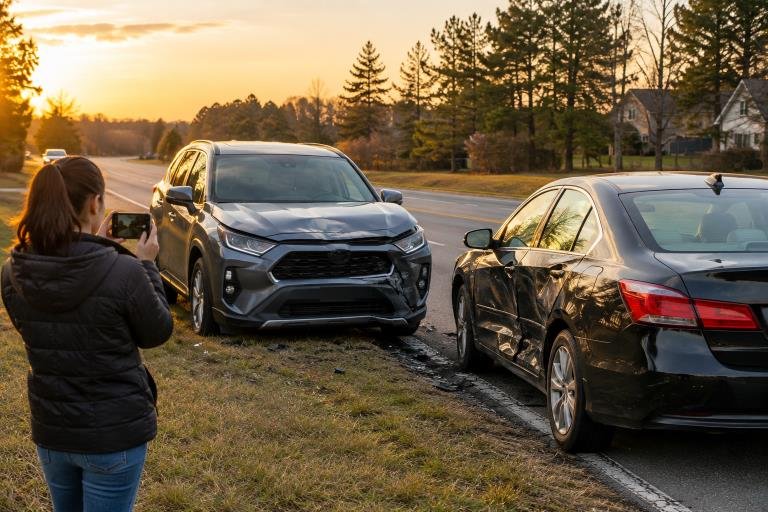
Once everyone is in a safer location, gather only the information you can collect safely. Take wide photos that show the overall setting, then closer images of vehicle damage, license plates, debris, traffic signs, lane markings, skid marks, lighting, weather conditions, and visible hazards. A photo of the surrounding roadway can provide context that a close-up of a dent cannot. If witnesses are willing, ask for their names and contact information. Write a short timeline in your phone or notebook: where you were going, the direction each vehicle traveled, what you saw, the time, and what was said. Do not alter images, delete messages, or repair the vehicle before documenting its condition.
When and Why to Seek Medical Care After an Indian Land Accident
Medical care should be based on symptoms and advice from qualified health professionals, not on how damaged a vehicle looks. Prompt evaluation can be important when pain, headaches, numbness, dizziness, confusion, nausea, or limited movement develop after a crash. Call emergency services for urgent symptoms or worsening conditions. Follow the recommended care plan, attend follow-up appointments, and keep discharge instructions, prescriptions, bills, and visit summaries. Medical records may help show when symptoms were reported, what treatment was recommended, and how recovery progressed. Avoid minimizing symptoms at an appointment, but do not exaggerate them either.
How to Handle Insurance Calls in Indian Land, South Carolina
Report the collision to your insurer within the time required by your policy. When speaking with an adjuster, provide truthful, straightforward information. It is reasonable to say that you do not know the answer rather than guessing, particularly if you are asked about fault, the full extent of injuries, or future treatment. Reporting a crash is not the same as accepting a settlement. Before signing a release or agreeing to a quick payment, make sure you understand what it covers. Keep a log with the claim number, adjuster’s name, phone calls, emails, requested documents, and stated deadlines.
Records and Evidence to Keep
Create a single paper folder or a secure digital folder for everything related to the collision. Save copies of:
- Police reports, incident numbers, and correspondence about reports
- Photos, videos, witness information, and personal notes
- Medical records, bills, prescription receipts, and treatment instructions
- Vehicle repair estimates, towing invoices, storage bills, and rental-car records
- Pay stubs, employer communications, and records of missed work
- Insurance letters, emails, text messages, and settlement paperwork
Common Mistakes That Can Hurt a Claim
Small decisions can create avoidable confusion. Common examples include leaving without exchanging information, posting opinions about injuries or fault on social media, failing to follow up on care without explanation, discarding damaged property, or accepting an informal cash arrangement without a written record. Another frequent problem is using a phone while driving away from the scene. If you need to contact family, an insurer, or a tow company, pull over and park first. The National Highway Traffic Safety Administration advises drivers to put the phone away before driving, a precaution that is especially important when a person is shaken after a collision.
When Additional Guidance May Help in Indian Land
Additional guidance may be useful when injuries are serious, fault is disputed, multiple vehicles or insurers are involved, or a person faces substantial missed work, long-term treatment, permanent limitations, or the death of a family member. Bring reports, photographs, medical documents, bills, insurance letters, and your notes to any consultation. Deadlines can depend on the type of claim and the parties involved. A general checklist cannot determine the deadline for a particular Indian Land crash, so it is wise to address questions early rather than wait until records are harder to obtain.
Frequently Asked Questions About Indian Land Accidents
Should police be called after a minor crash in Indian Land?
A report can create a useful record, but reporting requirements depend on the circumstances. Injuries, damage, roadway hazards, and whether officers investigate can all matter.
What if the other driver does not have insurance?
Notify your insurer and review your policy for uninsured or underinsured motorist coverage. Preserve all available evidence about the other vehicle and driver.
What if pain begins days later after an Indian Land accident?
Seek medical advice and make a clear note of when symptoms began, how they changed, and what care you received.
How long should accident records be kept?
Keep them until medical treatment, repairs, insurance questions, and any related claims are fully resolved.
Final Takeaway
After a crash in Indian Land, focus on people before paperwork. Get to safety, obtain appropriate medical care, document the collision and surrounding conditions when it is safe to do so, report the incident to the appropriate parties, and preserve every related record. Keep photographs, medical documents, repair estimates, insurance correspondence, witness information, and receipts organized in one place. Avoid guessing about details or making rushed statements before you have reviewed the available information. Keeping track of symptoms, treatment, expenses, missed work, and important conversations can also provide a clearer record as the situation develops. Those steady steps can reduce confusion, protect important information, and leave you better prepared if the insurance claim becomes more complicated or additional questions arise during the recovery process.