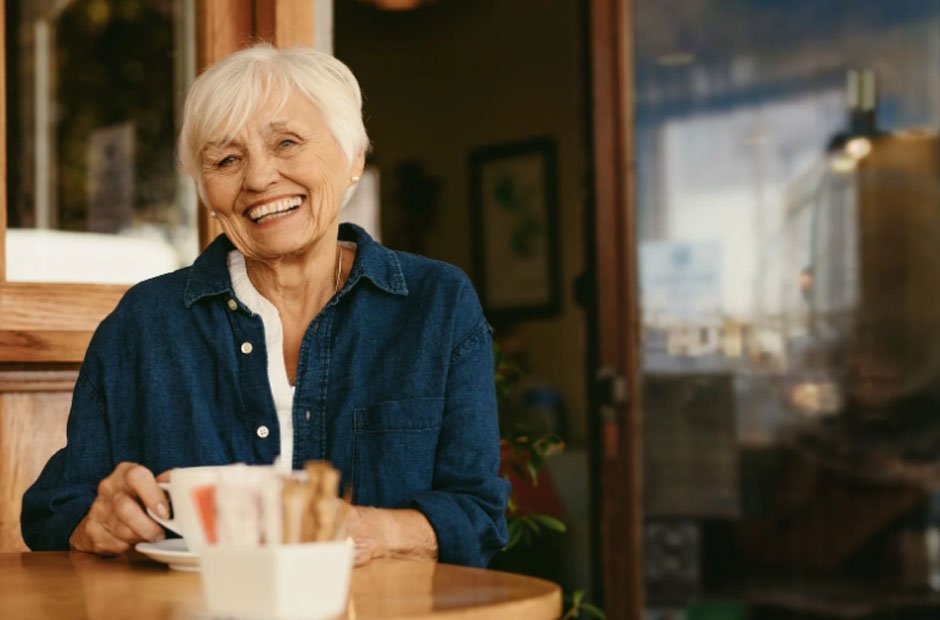
The majority of individuals might envision old age as a life phase where a person in their seventies seems to be in their sixties. However, in reality, graceful aging is about diminishing this phase of life – dedicating more time in the later years to health, intellectual activity, and social involvement, and less time to managing issues that could have been avoided.
The Mindset Shift That Changes Everything
The word for the alternative to graceful aging is reactive. You wait for something to break, then fix it. Most people operate this way by default, not because they’re lazy but because the culture around aging doesn’t give us a better framework.
A pro-aging mindset replaces the pursuit of youth with the pursuit of purpose. That sounds abstract, but it’s concrete in practice. It means staying curious, taking on new challenges, and treating personal growth as something that doesn’t expire at retirement. Neuroplasticity research confirms the brain continues forming new connections well into old age – the raw material for growth is there. What changes is whether we put it to use.
Ageism – the soft, pervasive assumption that older means lesser – makes this harder. It shapes how seniors see themselves. One of the quieter acts of aging well is refusing to internalize that assumption and building a life that reflects it.
Why Your Social Life Is A Health Variable
The Harvard Study of Adult Development found that how happy and healthy we are in our lifetime is directly related to the satisfaction of the levels of relationship in our life – more so than IQ, wealth, or social class. It’s such an important piece of research because it really reframes social connection from something that is a nice-to-have right to a health variable.
If we’re not in conversations we’re definitely not navigating relationships and we’re not part of a community. We’re using our cognitive capacity less. What you don’t use, you lose. The brain follows demand. Cut the demand and the reserve shrinks.
One of the leading causes of decline globally is social isolation. The community effect, the documented effect of maintaining our strong social ties on our longevity, is roughly equivalent to quitting smoking.
Environment Isn’t Passive – It Shapes Outcomes
The place and manner in which you live have an impact on your aging process. It’s not a theoretical statement. The daily stressors of a place – both structural (like stairs) and social (like isolation) – slowly degrade your resilience. Of course, you adapt. But adaptation requires energy. Energy you might prefer to spend elsewhere.
Choosing an environment with optimal support for where you are now and a bit of cushion for where you’re going isn’t dodging a challenge. It’s a smart decision about where to invest your energy. Senior living options in Minnesota for example, address this directly – they’re designed to reduce the logistical friction of daily life in a demanding climate while creating the conditions for real social engagement. The criteria for that are pretty simple:
- Optimize movement: You don’t have to go to the gym. But you should be able to move around easily at home and outdoors.
- Minimize isolation: Isolation accelerates almost every negative aspect of aging. An easy, nice way to see other people is non-negotiable.
- Eliminate daily hassles: Managing basic aspects of daily living is friction. Friction wears you out and doesn’t leave much time for joy.
Adaptive Fitness and Preventative Choices
Exercise is one of the activities for which there is the greatest amount of certain and consistent evidence. The point, in older age, is to shift from performance-based fitness to adaptive fitness – movement appropriate to current capabilities, designed to preserve function, not push preconceived boundaries.
Swimming, yoga, walking – these work because they are low impact, easily scalable forms of exercise that you can sustain over a lifetime. The aim is to put yourself in the right room and keep showing up. Not to push yourself to the brink, and then double the dose for good measure.
Preventative medicine is similar. The whole point about regular screens is that you are trying to catch ’em while they’re small, not let your body ferment a crisis. And then there’s diet. The emerging science of how food interacts with genetic aging processes (often loosely called nutrigenomics) should leave no doubt that the point is not just to manage your weight and your cholesterol count but your cellular function.
Technology As Infrastructure, Not Replacement
The advancement of health wearables, telehealth, and social platforms has transformed the concept of independent aging. For instance, a wearable device that can monitor heart irregularities or even detect a fall is filling the space between feeling independent and being actually unsafe. Telehealth practically eliminated the friction of the regular check-in. Video platforms are helping to maintain intergenerational relationships over years and miles.
None of this replaces physical community. But it reduces the cost of staying connected and monitored, which matters when mobility or location create barriers. The modern analog of aging gracefully is not about a low-tech, simple life. It’s about intentionally using tools that are there anyway – picking the ones that add a safety margin or meaningful connection without adding a layer of technology or a sense of dependence.
Aging well was always about choice, not luck. The difference now is we have a clearer view of what choices move the needle. Make those deliberately enough, and the numbers take care of themselves.