Key Takeaways
- A person may refuse an evidential breath test, but Ohio can impose an immediate administrative license suspension for refusal.
- A first refusal generally carries a one-year suspension, with longer suspensions for qualifying prior refusals or OVI convictions within ten years.
- Refusing a breath test does not prevent an OVI arrest or stop prosecutors from pursuing an impairment-based charge.
- In some circumstances, officers may seek a warrant for a blood sample instead of relying on a breath test.
- The notice of suspension, the court date, and the sworn report should be preserved and reviewed promptly.
Yes, a driver can refuse to provide a breath sample after an Ohio OVI arrest, but that decision can trigger immediate and serious consequences. A refusal is not a guaranteed way to avoid an OVI charge, and it may affect driving privileges, the evidence presented in court, and the options available later. Anyone facing this situation should promptly discuss the paperwork and deadlines with a DUI lawyer in Dayton, Ohio.
Ohio treats driving on public roads as implied consent to chemical testing after an OVI-related arrest. That does not mean every test request or suspension is automatically valid. It means that refusing a requested test can lead to an administrative license suspension even before the criminal case is resolved.
Know Which Breath Test Is Being Requested
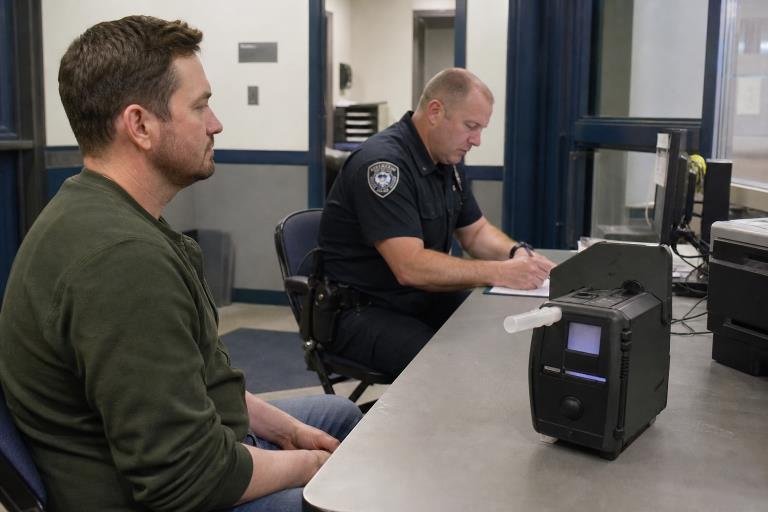
Not every roadside device is the same. An officer may ask a driver to blow into a portable breath-testing device during a stop, then later request an evidential breath test after an arrest. The evidential test is typically administered on approved equipment at a police station, jail, or other testing location. The legal consequences can depend heavily on the type of test, the timing of the request, and whether the driver was under arrest.
Drivers should remain calm, avoid physical resistance, and pay attention to what the officer says. A refusal can be based on words, conduct, silence, or an unsuccessful effort that officers reasonably interpret as an intentional failure to provide a usable sample. Medical issues that make a person unable to provide a sample may be important, but they should be documented rather than assumed to resolve the issue.
How Ohio Implied Consent Works
Under Ohio’s implied-consent law, a person arrested for OVI or certain related offenses is considered to have consented to a designated chemical test of breath, blood, urine, oral fluid, or another bodily substance. An officer must have reasonable grounds to believe the person was operating, or in some cases, in physical control of, a vehicle while impaired before requesting the designated test.
Before a standard test request, the officer generally must read a written warning explaining the consequences of testing or refusing. Ohio law requires that a person submit within 2 hours of the alleged violation. Failing to submit within that time can automatically be treated as a refusal. The warning also explains that a person who takes a test may obtain an independent chemical test at personal expense.
What Happens After a Refusal
A refusal can result in an immediate administrative license suspension, often called an ALS. The officer may seize the driver’s license and provide a notice of suspension and sworn report. This license action is separate from the eventual outcome of the OVI criminal charge.
Suspension Lengths for Refusal
- First qualifying refusal:one year.
- One qualifying prior refusal or OVI conviction within ten years:two years.
- Two qualifying prior refusals or OVI convictions within ten years:three years.
- Three or more qualifying prior refusals or OVI convictions within ten years:five years.
The Ohio Bureau of Motor Vehicles explains that a refusal-based ALS can affect an Ohio driver’s license, commercial license, permit, or a nonresident’s privilege to drive in Ohio. Reinstatement may also require insurance compliance and payment of applicable fees, so the suspension notice should not be ignored.
A Refusal Does Not End the OVI Case
Refusing a breath test does not stop an officer from making an arrest. Ohio can prosecute an impairment-based OVI allegation using other evidence, including driving behavior, officer observations, witness accounts, body-camera video, statements, and field sobriety testing.
A chemical result is not required for every OVI conviction. Conversely, a refusal does not prove that a person was impaired. The facts surrounding the stop, arrest, test request, warnings, and alleged refusal may all matter. A prior OVI conviction within twenty years can also result in increased penalties if a person is later convicted of a state OVI after refusing a chemical test.
Can Police Obtain a Blood Sample?
Refusing a breath test does not necessarily prevent chemical evidence from being collected. Depending on the circumstances, officers may seek a search warrant for a blood sample. Cases involving serious injury, death, or certain repeat-offense situations can raise additional issues. A person should not physically resist testing, even when disputing the legality of a request, because resistance may create separate legal problems.
Blood testing has its own procedures. Questions may include whether a warrant was obtained when required, whether the sample was properly collected and labeled, whether testing was conducted in a timely manner, and whether laboratory procedures were followed. These are fact-specific legal issues, not questions that can be answered solely by looking at a test result.
License Appeals and Limited Driving Privileges
An ALS may be appealed at the initial court appearance or within 30 days after that appearance. The appeal does not automatically pause the suspension. The court may review limited issues, such as whether there were reasonable grounds for the arrest, whether the officer requested the designated test, whether required warnings were given, and whether a refusal actually occurred.
Some drivers may be eligible to request limited driving privileges, but eligibility, waiting periods, and permitted destinations depend on the circumstances and prior record. Do not drive unless a court has granted written privileges and the person understands every restriction.
What to Do After an OVI Arrest
- Keep the citation, suspension notice, sworn report, and property receipt together.
- Write a private timeline covering the stop, arrest, warnings, testing request, and release.
- Record possible witnesses, medical conditions, medication use, and any difficulty breathing or providing a sample.
- Preserve relevant texts, receipts, photos, dashcam footage, and location information without editing them.
- Calendar the first court date and the ALS appeal deadline immediately.
- Avoid posting about the incident or trying to coordinate accounts with witnesses.
Frequently Asked Questions
Can I refuse a roadside breath test in Ohio?
Roadside portable breath tests and post-arrest evidential tests are different. The consequences of refusal may differ, so it is important to identify what was requested and when.
Will refusing a breathalyzer guarantee that I keep my license?
No. A refusal can lead to an immediate ALS, even if the OVI charge is later dismissed or results in a not-guilty finding.
Can I be charged with OVI without a breath-test result?
Yes. Ohio may pursue an OVI charge based on alleged impairment and other available evidence.
Is a refusal the same as a conviction?
No. A refusal is not itself an OVI conviction, but it can create separate license consequences and may affect a later OVI case.