Key Takeaways
- Sheave systems are pivotal in maintaining safe and efficient industrial operations.
- Modern materials science is driving greater durability and efficiency in sheave design.
- Industries benefit from technological integrations, such as real-time monitoring and the use of lightweight composites.
Reliability is the foundation of modern industrial operations, especially for critical components such as sheave systems. Sheave systems play an essential role in transmitting mechanical power in a variety of applications, from construction to renewable energy installations. Selecting the right system improves safety, efficiency, and productivity throughout a project’s lifecycle. For those seeking precision and enhanced performance in lifting and alignment tasks, specialized solutions such as fastline sheaves for crown block and drawworks alignment have become increasingly valuable to industry leaders.
As industries evolve, so do the demands on these systems. Understanding advancements in materials and engineering, combined with the adoption of smart technologies, can enhance productivity and mitigate risks from mechanical failures. Businesses striving for longevity and operational excellence invest in innovative sheave designs to remain competitive in the shifting industrial landscape.
Importance of Sheave Systems in Industry
Sheave systems, also known as pulleys, play a vital role in mechanical power transmission across various industries, affecting both productivity and safety. Malfunctions can lead to costly downtime and safety hazards. As industries seek greater efficiency and larger-scale operations, the dependability of sheaves in critical applications such as oil rigs and mining becomes essential for continuous functioning. In large-scale projects, the performance of a single sheave can impact deadlines and safety. Worldwide supply chains and projects with tight schedules require high-quality sheaves to reduce risks and maintain smooth operations. Recent innovations in pulley systems have boosted productivity in manufacturing and logistics.
Material Innovations in Sheave Design
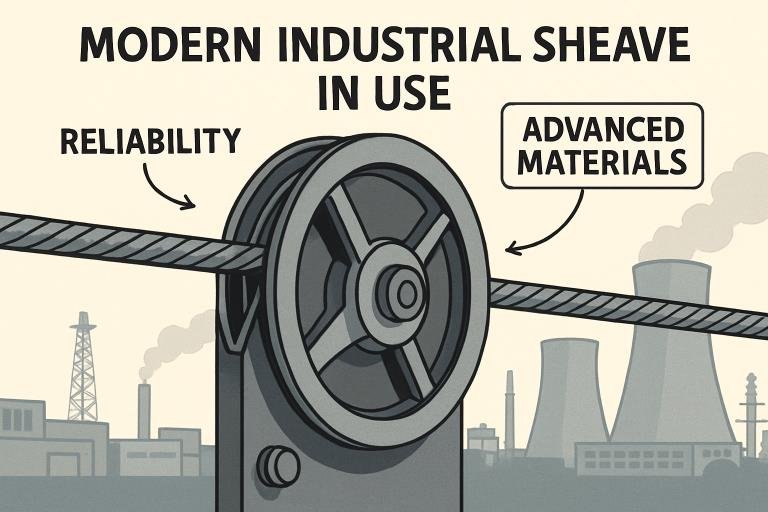
Materials science has significantly reshaped the landscape of sheave design in recent years. No longer limited to traditional metals, today’s sheaves utilize advanced engineered polymers, composites, and corrosion-resistant alloys that are customized for specialized industrial tasks. These new materials bring multiple advantages to the field. Engineered polymers, for example, create lightweight components that lower energy requirements for lifting and movement. They also introduce a new level of resilience, resisting corrosion and abrasion in hostile environments where metal components might otherwise degrade quickly.
Stainless steel remains a mainstay in scenarios where both strength and corrosion resistance are fundamental requirements. It is favored in marine operations, food processing, and chemical manufacturing for its ability to withstand extreme temperatures and exposure to corrosive agents. Companies pushing the boundaries in heavy industry and mining are also adopting wear-proof galvanization and sealed bearing assemblies inside their sheave units, extending the time between maintenance intervals and replacement cycles.
Real-World Applications of Sheave Systems
Construction, maritime, mining, and renewable energy sectors are particularly reliant on robust sheave technology. Each of these fields demands custom solutions to handle specific stressors and operational expectations:
- Construction:Sheave units are fundamental in high-rise lifts, cranes, and hoists. Faster lifts and smoother operations reduce project timelines and the risk of job-site accidents, both significant concerns amid today’s labor shortages and regulatory scrutiny.
- Maritime and Offshore:Sea vessels and offshore platforms require materials that withstand persistent exposure to saltwater and intense environmental conditions. Corrosion resistance and precise alignment are non-negotiable for anchoring and cargo operations.
- Mining and Heavy Industry:Conveyor systems and lift hoists inside mines encounter massive loads and abrasive particles. Reinforced sheave assemblies with sealed bearings and cutting-edge, wear-resistant alloys offer significant longevity improvements.
- Renewable Energy:Technicians rely on sheave systems in wind turbine maintenance and solar panel positioning. These systems must tackle challenges posed by outdoor environments, including severe temperature swings and moisture exposure.
Continual advancements are helping these industries meet stringent safety regulations, optimize operational schedules, and lower overall costs.
Advancements in Sheave Technology
Innovation in sheave systems today goes well beyond materials. Integration of digital technology and smart sensors allows engineers and operators to monitor load, alignment, and wear conditions in real time. Early detection of anomalies triggers predictive maintenance, eliminating the guesswork and reducing unexpected shutdowns. These integrated solutions empower teams to act proactively, extending equipment’s operating lifespan and ensuring compliance with safety regulations.
Additionally, the use of carbon fiber and other high-strength composites offers a compelling alternative to conventional materials. These lightweight options are not only easier to install and handle, but they also bring considerable energy and labor cost savings. Enhanced manufacturing processes and design optimization are leading to quieter systems, lower vibration levels, and improved load distribution, factors that elevate overall machine performance and user safety.
Conclusion
Reliable sheave systems are critical to the efficiency, safety, and operational continuity of modern industrial applications. By investing in advanced materials, adopting the latest design innovations, and leveraging smart monitoring technologies, industries can significantly improve the performance and service life of their mechanical systems. Continuous improvement in sheave engineering equates to better project outcomes and sustained competitive advantage in a rapidly changing industrial world.