

Key Takeaways
- Curiosity propels children to seek knowledge and explore their environment, enriching their learning experiences.
- Creativity cultivates critical thinking and innovative solutions, necessary abilities for future success.
- Play-based and open-ended learning approaches effectively promote both curiosity and creative expression.
- Supportive adults and thoughtfully designed environments are integral to sparking young imaginations.
Curiosity and creativity are the bedrock of lifelong learning and innovation, especially during a child’s formative years. By instilling these values from the early stages, educators and parents can empower children to become proactive, resourceful, and resilient learners. Exploring avenues such as private schools in Virginia can offer families unique educational environments designed to nurture curiosity and creativity through personalized learning experiences and robust curricular offerings.
As our world evolves rapidly, the ability to adapt, inquire, and imagine becomes increasingly vital. When young learners are encouraged to ask questions, experiment freely, and express their ideas, they develop not only a deeper understanding of academic concepts but also greater confidence and self-worth. Establishing strong foundations for curiosity and creativity in early education helps ensure children are better prepared for the challenges and opportunities of the future.
The Importance of Curiosity and Creativity in Early Education
Curiosity is the cornerstone of exploration. When children are encouraged to ask “why,” “how,” and “what if,” their intrinsic motivation to learn flourishes. Creativity, the companion trait, allows students to generate new ideas and solutions by connecting observations and experiences in novel ways. Together, these traits enhance cognitive development and emotional intelligence, setting the stage for both academic and personal growth.
Research highlights that students equipped with strong curiosity and creative skills excel not only academically but also socially and emotionally. According to Edutopia, fostering curiosity helps students stay engaged and develop a thirst for lifelong learning, a critical advantage in today’s dynamic world.
The Role of Play-Based Learning
Play-based learning drives exploration, collaboration, and critical thinking in early education settings. Through play, children encounter situations that require experimentation, improvisation, and evaluation of consequences. This approach embraces experiential and inquiry-based frameworks, blending practical hands-on activities with theoretical concepts to nurture well-rounded student growth. The value of play is evident in its power to make learning engaging and memorable, as highlighted by NAEYC (National Association for the Education of Young Children), which underscores the undeniable link between play and cognitive and emotional development.
Creating Stimulating Environments
Children’s learning is greatly influenced by the spaces they inhabit. A stimulating environment features sensory-rich materials, interactive displays, and flexible seating arrangements that support movement and collaborative work. Importantly, these settings prioritize safety, inclusivity, and openness to experimentation. When children feel secure and valued, they are more likely to engage confidently in creative risk-taking and thoughtful inquiry.
Encouraging Open-Ended Play
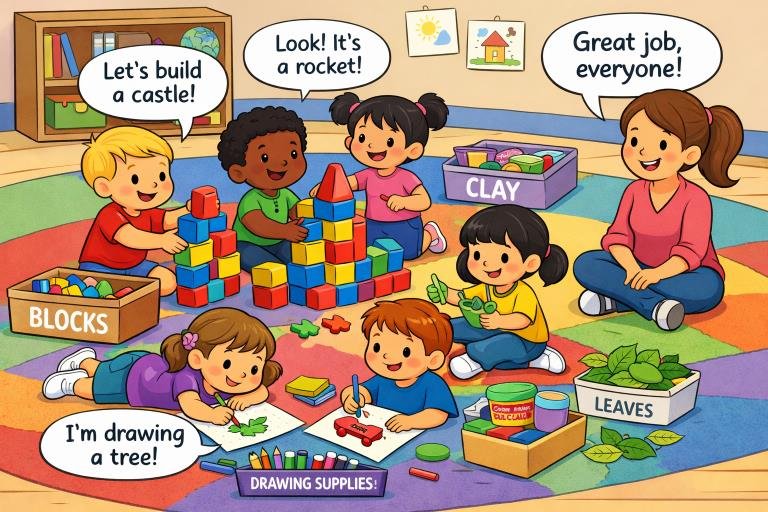
Open-ended play materials, such as stackable blocks, clay, art supplies, and natural objects like leaves or stones, invite children to experiment and create without specific rules or predetermined outcomes. This type of play empowers children to think creatively, adapt to changing scenarios, and develop fine motor and cognitive skills. Open-ended play also fosters collaboration as children discuss, plan, and revise projects with peers or adults.
Fostering a Culture of Inquiry
Classrooms and homes can cultivate curiosity by welcoming questions, celebrating wonder, and modeling investigative behavior. Simple initiatives like a “Wonder Wall” where students post questions encourage open-ended thinking and shared discovery. Teachers and parents who embrace mistakes as learning opportunities further promote an environment where curiosity feels rewarding and safe.
Activities to Spark Curiosity and Creativity
Incorporating activities that invite exploration and personal expression is vital. Art projects let children experiment with color, texture, and form, enhancing their ability to innovate visually and conceptually. Science experiments, such as mixing baking soda and vinegar or observing plant growth, offer hands-on experiences that teach the value of observation and hypothesis testing. Short storytelling or drama exercises also spark creative thinking and expand vocabulary.
For more ideas on fostering creativity at home or in the classroom, visit resources such as PBS Parents’ Guide to Creative Kids, which offers practical tips for families and educators alike.
The Role of Educators and Parents
Educators and families are central to nurturing children’s curiosity and creativity. Their attitudes toward exploration, questioning, and creative expression directly influence a child’s willingness to venture into new intellectual and emotional territory. Adults can support this growth by asking open-ended questions, providing access to diverse resources, and encouraging risk-taking and independent thinking. Positive reinforcement and patient listening further build a child’s confidence in their abilities and ideas.
Collaborating with teachers, caregivers, and community programs strengthens the bridge between formal education and at-home learning. Regular communication and shared goals help maintain a consistent and supportive atmosphere, encouraging children to embrace their curiosity and creativity in all areas of life.
Conclusion
Early education is a critical time to plant the seeds of curiosity and creativity. Encouraging play, designing engaging environments, and fostering a culture of inquiry can lay robust foundations for a child’s academic success and lifelong fulfillment. Through active partnership between schools, families, and communities, every child can be equipped with the skills to adapt, invent, and lead in an ever-evolving world.


