
Understanding Real Estate and Relocation Programs
Moving to a new location, whether for a job or personal reasons, can be one of life’s biggest challenges. When a company needs to relocate employees, the process becomes even more complex. Managing real estate transitions and corporate relocations effectively is vital for both businesses and their transferring staff. A smooth move can ensure employee satisfaction and continued productivity.
In this extensive guide, we will explore the ins and outs of real estate and relocation. We will examine top-rated relocation companies and their services, and discuss how they help with home sales, purchases, and mortgages. We will also clarify the differences between preferred and out-of-network real estate agents, including fees and benefits.
Understanding the services relocation specialists provide, for both domestic and international moves, is key for supporting families. We’ll guide you through the process of buying a home from a relocation company, highlighting its pros and cons. Furthermore, we will look at the essential certifications for relocation real estate agents and their impact on the relocation experience. Finally, we will offer valuable considerations for HR professionals and relocating employees when selecting a relocation partner or agent.
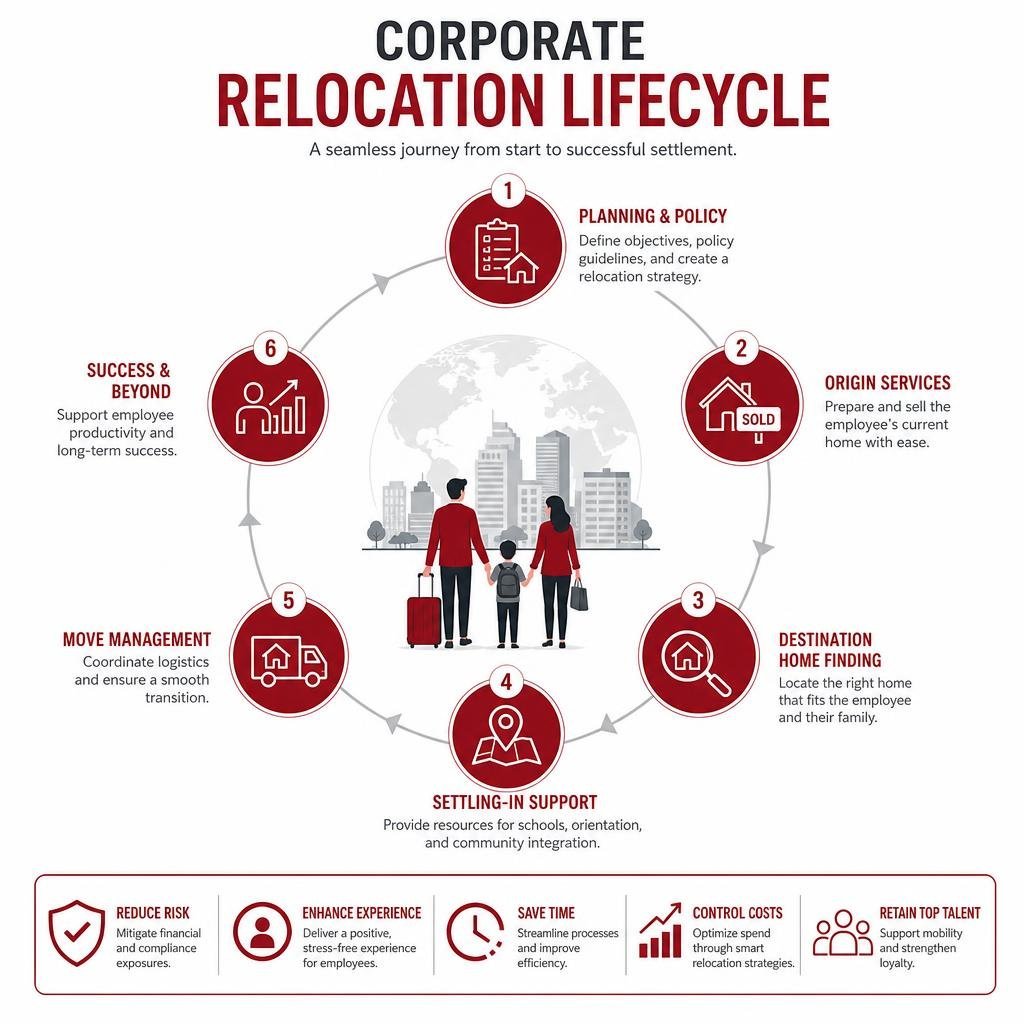
Corporate relocation programs are designed to facilitate seamless employee transfers, ensuring that valuable talent can move to new locations with minimal disruption. These programs encompass a broad spectrum of services, from managing the sale of an employee’s current home to helping them settle into a new community. The goal is to reduce stress for the relocating employee and their family, allowing them to focus on their new role.

At their core, real estate and relocation programs address the significant logistical and financial challenges associated with employee mobility. This often includes sophisticated home sale programs, comprehensive destination services, and strategies to mitigate tax implications, such as tax gross-ups. Companies like Weichert Workforce Mobility, with over 55 years of experience, boast a 97% client satisfaction rate and have consistently received industry-high satisfaction ratings from relocating employees for twelve consecutive years. This level of satisfaction underscores the importance of well-structured programs.
While our focus is on residential relocation, understanding the broader corporate real estate landscape, including MacFarlane Houston commercial real estate, often provides essential context for comprehensive corporate mobility strategies. Commercial real estate considerations can intersect with relocation planning, particularly for businesses establishing new offices or expanding operations in conjunction with employee transfers.
The Mechanics of Corporate Home Sale Programs
One of the most critical components of a corporate relocation package is the home sale program. These programs are designed to expedite the sale of an employee’s existing home, removing the burden and financial risk from the relocating individual. Two common approaches are the Buyer Value Option (BVO) and Guaranteed Buyout (GBO).
In a BVO program, the employee’s home is listed on the open market, and the relocation management company (RMC) offers to purchase the home from the employee at a price determined by an independent appraisal, usually once a bona fide offer is received from an outside buyer. This structure allows the employee to benefit from market appreciation while still having the security of a corporate buyout if the market sale doesn’t materialize quickly.
A GBO program, on the other hand, provides the employee with an offer from the RMC to purchase their home outright, typically based on an average of two or more independent appraisals. This offers maximum security and a swift transaction, as the employee knows exactly what they will receive and when.
A key benefit of these programs is tax mitigation. Relocation management companies often create two separate transactions when purchasing employee homes. This structure allows them to avoid taxable reimbursements of commissions and closing costs, eliminating the need for tax assistance or gross-ups for the employee. Companies like Sirva offer “RiskGuard” solutions, where they assume home ownership and associated risks, further streamlining the process and reducing administrative burden for the employer. This risk transfer mechanism is a significant advantage, particularly in fluctuating real estate markets.
Destination Services and Settling-In Support
Once the home sale at the origin location is underway, the focus shifts to the destination. Destination services are crucial for helping employees and their families find a new home and integrate into their new community. These services are often tailored to individual needs and can include:
- Home Finding:Relocation specialists work with employees to understand their housing preferences, budget, and family needs. They then connect them with qualified real estate agents in the new location who can assist with purchasing a home or finding suitable rental properties. For example, NRI Relocation emphasizes that their agents go beyond transactions, acting as consultants and advocates.
- Rental Assistance:For employees who prefer to rent initially or whose policy dictates it, relocation companies provide support in identifying rental options, coordinating property tours, and assisting with lease negotiations. This can include both furnished and unfurnished options, as highlighted by NRI.
- School Search:Families with children often prioritize finding the right schools. Relocation specialists can provide information on school districts, enrollment procedures, and even arrange school tours.
- Area Orientation:This involves providing detailed information about the new city or town, including neighborhoods, amenities, transportation, and local culture. This support is particularly valuable for international assignees who may be navigating a completely new environment.
- Community Tours:Specialists can arrange guided tours of potential neighborhoods, allowing employees and their families to get a feel for the community before making a decision. This personalized approach helps ensure a comfortable and successful transition, making the new location feel like a “warm welcome rather than a transaction,” as emphasized by GO Real Estate Services.
Preferred vs. Out-of-Network Real Estate Agents
When relocating for work, employees often face a choice: use a real estate agent from their company’s preferred network or opt for an agent outside this network. This decision can have significant implications for fees, benefits, and the overall relocation experience. Preferred networks consist of vetted agents who meet specific performance standards and are familiar with corporate relocation policies.
Benefits of Using a Preferred Real Estate and Relocation Agent
Utilizing a preferred relocation real estate agent offers numerous advantages, primarily due to their specialized training and alignment with corporate policies.
- Policy Alignment:Preferred agents are deeply familiar with the nuances of corporate relocation policies, including home sale benefits, expense reimbursement guidelines, and timelines. This expertise ensures that the employee maximizes their benefits and avoids potential pitfalls.
- Specialized Training:Agents in preferred networks often hold specific certifications like Certified Relocation Professional (CRP) or Military Relocation Professional (MRP), indicating advanced training in relocation processes, tax implications, and unique client needs. Sirva, for instance, requires agents in its network to have a minimum of three years of full-time real estate experience, two years of corporate relocation experience, and a proven track record of closed transactions, including corporate referrals.
- Broker Market Analysis (BMA):Relocation agents are adept at preparing detailed Broker Market Analyses (BMAs), which are more comprehensive than standard Comparative Market Analyses (CMAs). These reports provide a predictive assessment of a home’s value, considering multiple market drivers to ensure accurate pricing and a quicker sale, crucial for meeting relocation timelines.
- Streamlined Communication:Preferred agents act as a single point of contact, coordinating with the relocation management company, the employer, and all parties involved in the transaction. This streamlined communication reduces administrative burden and ensures everyone is on the same page, leading to a smoother process. They are also accustomed to providing regular reports to third-party relocation companies.
The Hidden Costs of Out-of-Network Agents
While the idea of using a familiar agent, perhaps a friend or family member, might seem appealing, opting for an out-of-network agent can introduce several hidden costs and complications.
- Referral Recovery Fees:Many relocation companies impose sizable “out-of-network” or “referral recovery” fees when an employee chooses an agent outside their vetted network. These fees can significantly diminish the financial benefits of a relocation package.
- Benefit Reduction:Using an agent not affiliated with the relocation program may lead to a reduction or loss of specialized home sale benefits, such as closing cost assistance or guaranteed buyout options, which are often tied to using the company’s preferred partners.
- Administrative Delays:An out-of-network agent may not be familiar with the specific paperwork, timelines, and reporting requirements of corporate relocation programs. This lack of familiarity can lead to delays, errors, and increased administrative work for both the employee and the HR department.
- Policy Friction:Discrepancies between the agent’s standard practices and the company’s relocation policy can create friction, potentially causing frustration and additional stress for the relocating employee. The agent may not understand the urgency or the unique financial structures involved in corporate transfers.
Buying a Home From a Relocation Management Company
When an employee is transferred, their company often uses a relocation management company (RMC) to facilitate the sale of their current home. In many cases, the RMC will purchase the home directly from the employee, taking on the ownership and then reselling it on the open market. This creates a unique buying opportunity for consumers looking for a home.

These properties, often referred to as “relocation homes” or “inventory homes,” are typically owned by the RMC (or a corporate entity they represent) rather than an individual seller. The RMC acts as a middleman, prioritizing a quick and efficient sale over maximizing the sale price. This often means these homes are priced competitively and come with compressed timelines for offers and closings. For those awaiting their permanent residence or exploring options, solutions like Executive relocation housing can bridge the gap, ensuring comfort during transition.
The Purchase Process for Relocation Properties
The process of buying a home from a relocation company differs from a traditional home sale in several key ways:
- Corporate Ownership:The home is owned by a corporate entity, not an individual. This means the emotional attachment often found in traditional sales is absent, and decisions are driven by financial and logistical efficiency.
- Standardized Contracts and Riders:Relocation sales often involve additional corporate riders and disclaimers in the purchase agreement. These documents typically protect the RMC from certain liabilities and streamline the process. Buyers and their agents must review these carefully.
- Disclosure Exemptions:Since the RMC has never occupied the property, they may be exempt from providing certain seller disclosures that would be required from an individual homeowner. This places a greater emphasis on the buyer’s due diligence, including a thorough home inspection.
- “As-Is” Sales:Relocation homes are frequently sold “as is,” meaning the RMC is unlikely to perform repairs or offer significant concessions based on inspection findings. While inspections are still crucial for buyer awareness, the leverage for negotiation on repairs is often limited.
- Quick Closings:RMCs aim for fast transactions. Timelines might be compressed to 30 days or less, making these properties ideal for buyers who are pre-approved for a mortgage and can make quick decisions.
Pros and Cons of Buying Relocation Inventory
Feature Relocation Inventory Purchase Traditional Home Purchase Seller Motivation High motivation for a quick sale; RMC prioritizes efficiency over maximizing profit. Varies widely; individual sellers may be less motivated by speed, more by price. Pricing Often competitively priced to facilitate a fast sale; fair market value is common. Can be influenced by seller’s emotional attachment, market trends, and negotiation. Negotiation Limited flexibility on repairs and price; focus on concessions that expedite the process (e.g., closing cost help). More room for negotiation on price, repairs, and contingencies. Condition Typically sold “as is”; RMC has limited knowledge of property history. Seller provides disclosures and may be more open to repairs based on inspection. Timeline Compressed timelines, often 30 days or less for closing. Ideal for quick decision-makers. More flexible timelines, typically 30-60 days, allowing for more contingencies. Due Diligence Critical for buyers to conduct thorough inspections and review all corporate riders. Standard inspections and due diligence, with more seller disclosure. Risk Can be risky if due diligence is not thorough, due to “as-is” nature and limited disclosures. Generally lower risk due to more seller transparency and negotiation leverage. Agent Expertise Needed Highly advisable to use an agent well-versed in relocation or corporate sales. Standard real estate agent experience is usually sufficient. Pre-approval Essential to demonstrate seriousness and facilitate quick offers. Recommended, but not always as critical for initial offers. Professional Certifications for Real Estate and Relocation Specialists
The real estate landscape for relocation is highly specialized, demanding agents with expertise beyond typical residential transactions. Professional certifications ensure that relocation real estate agents meet industry standards, engage in continuing education, and possess the specific knowledge required for workforce mobility. These specialized credentials significantly impact the quality of the relocation experience.
Certified Relocation Professional (CRP) Requirements
The Certified Relocation Professional (CRP) designation is a prestigious credential awarded by the Worldwide Employee Relocation Council (Worldwide ERC), the global authority on workforce mobility. To earn the CRP certification, real estate professionals must demonstrate a comprehensive understanding of the relocation industry. This includes:
- Policy Development:Knowledge of how corporate relocation policies are designed, implemented, and managed.
- Tax Compliance:Expertise in the complex tax implications of relocation for both employees and employers, including understanding non-taxable benefits and gross-up calculations.
- Relocation Appraisal:Proficiency in specialized appraisal techniques used for relocation properties, such as Broker Market Analyses (BMAs), which provide predictive assessments crucial for corporate home sale programs.
- Program Management:A deep understanding of all facets of a relocation program, from pre-decision services and departure assistance to destination services and post-arrival support.
Agents with CRP certification are equipped to handle the intricacies of corporate moves, ensuring compliance, efficiency, and a positive experience for transferring employees. They are often the preferred choice for companies seeking a high level of service and expertise.
Military Relocation Professional (MRP) Training
Another vital certification, particularly in countries with a significant military presence, is the Military Relocation Professional (MRP) certification, offered by the National Association of Realtors (NAR). This training is specifically designed to educate real estate agents on the unique needs and challenges faced by military service members and veterans during relocation.
The MRP certification involves a specialized course that covers:
- VA Financing:In-depth knowledge of VA loans and other financing options available to military personnel.
- Permanent Change of Station (PCS):Understanding the PCS orders process, including timelines, entitlements, and the specific pressures military families face.
- Military Benefits:Familiarity with various military benefits related to housing, moving, and family support.
- Timeline Management:Expertise in navigating compressed timelines and frequent moves common in military life.
MRP-certified agents are trained to assist military families with finding suitable housing, navigating the often complex government procedures, and making smooth transitions during a Permanent Change of Station (PCS) move. They understand the “extra red tape” and can provide crucial emotional support during what can be a highly stressful period.
Selecting the Right Relocation Partner
Choosing the right relocation partner is a critical decision for both HR professionals managing corporate mobility programs and employees embarking on a new chapter. The ideal partner offers more than just transactional services; they provide comprehensive support, program customization, and financial stability.
Key Considerations for HR Professionals
For HR and mobility teams, the selection of a relocation partner impacts everything from budget to employee morale. Key considerations include:
- Policy Benchmarking and Customization:A strong partner can offer insights into industry best practices, helping to design or refine relocation policies that are competitive and cost-effective. Companies like Cartus specialize in policy consulting and benchmarking, ensuring programs are tailored to specific organizational needs, whether for 50 or 5,000 employees annually.
- Cost Management and Risk Mitigation:Look for partners who can demonstrate clear strategies for cost avoidance and risk transfer. Sirva’s RiskGuard solutions, for example, assume home ownership risks from the company. Weichert Workforce Mobility highlights its financial stability and independent ownership, allowing it to focus on client satisfaction without shareholder pressure, often leading to competitive rates and cost management strategies. Clients report a 97% satisfaction rate with their service team, policy recommendations, and cost management strategies.
- Compliance Tracking:Especially for international moves, ensuring compliance with tax, immigration, and labor laws is paramount. Partners offering robust technology solutions, like Weichert’s SMARTRIP for global compliance, can significantly reduce risks.
- Transferee Satisfaction and Support:The success of a relocation program hinges on the employee’s experience. Partners should offer comprehensive support, including personalized counseling, destination services, and a network of vetted professionals. Weichert’s consistent highest net satisfaction rating from relocating employees for twelve consecutive years speaks to the importance of this aspect.
Key Considerations for Relocating Employees
For employees, the relocation partner is their guide through a potentially overwhelming process. When evaluating the support offered, employees should consider:
- Temporary Housing Solutions:If there’s a gap between selling one home and moving into another, or if the new home isn’t immediately ready, access to comfortable and convenient temporary housing is essential.
- Mortgage Assistance:Dedicated mortgage specialists can streamline the financing process for a new home purchase, offering competitive rates and guidance tailored to relocation scenarios.
- Household Goods Shipment:Assistance with packing, transportation, and unpacking of household goods significantly reduces physical and logistical burdens. Some RMCs, like Weichert, even own international household goods shipping companies.
- Family Transition Support:Beyond housing, support for spouses seeking employment, school searches for children, and cultural orientation for international moves are invaluable for a smooth family transition. NRI Relocation emphasizes prioritizing quickly settling families into new homes as the first goal.
Frequently Asked Questions About Real Estate and Relocation
How do relocation home sale programs help avoid tax complications?
Relocation home sale programs, particularly those involving a Buyer Value Option (BVO) or Guaranteed Buyout (GBO), are structured to minimize the tax burden on relocating employees. The key mechanism involves the relocation management company (RMC) purchasing the employee’s home directly. This creates two separate transactions: first, the employee sells their home to the RMC, and second, the RMC sells the home to an external buyer. By doing so, the RMC, rather than the employee, incurs the costs associated with the sale, such as real estate commissions and closing costs. This eliminates the need for the employer to reimburse these expenses to the employee, which would typically be considered taxable income. This approach ensures that the employee receives a tax-free reimbursement for their home sale costs, aligning with IRS compliance regulations and simplifying the financial aspect of the move.
What is the difference between a standard CMA and a Broker Market Analysis (BMA)?
While both a Comparative Market Analysis (CMA) and a Broker Market Analysis (BMA) aim to determine a property’s value, a BMA is a more specialized and in-depth report specifically used in corporate relocation. A standard CMA provides an estimate of a home’s value based on recent sales of comparable properties in the area. It’s often used by real estate agents for individual sellers.
A BMA, on the other hand, is prepared by a relocation specialist and is designed for a corporate client. It goes beyond a simple comparison of past sales, incorporating predictive forecasting and analyzing various market drivers to assess a property’s likely sale price within a specific timeframe, often considering the need for a quick sale. BMAs often include more detailed property condition assessments, market trend analysis, and a recommended marketing strategy tailored to relocation timelines. This comprehensive relocation appraisal helps the RMC and employer make informed decisions regarding home purchase offers and marketing strategies.
Can buyers negotiate repairs when purchasing a home from a relocation company?
Negotiating repairs when buying a home from a relocation company is typically more limited compared to a traditional home purchase. Relocation companies prioritize speed and efficiency in their transactions. Homes are often sold “as is,” meaning the RMC is generally unwilling to undertake repairs or offer significant credits for issues discovered during an inspection. While buyers should always conduct a thorough home inspection to understand the property’s condition, their leverage for demanding repairs is reduced.
Negotiations, if any, tend to focus on concessions that expedite the process, such as assistance with closing costs or the inclusion of appliances or furniture, rather than structural or cosmetic repairs. The compressed timelines inherent in relocation sales mean that extensive repair negotiations can slow down the deal, which is precisely what the RMC aims to avoid. Therefore, buyers interested in relocation properties should be prepared for an “as-is” purchase and factor potential repair costs into their offer.
Conclusion
Navigating the complexities of real estate and relocation demands a strategic and informed approach. For companies, a well-structured relocation program is an investment in talent mobility, ensuring orderly transitions and successful employee placement. For individuals, leveraging specialized services and understanding the nuances of the process can significantly reduce stress and facilitate a smoother move.
From comprehensive home sale programs that mitigate tax complications to dedicated destination services that help families settle into new communities, the right relocation partners and agents are indispensable. By embracing professional certifications, understanding the unique aspects of buying relocation properties, and carefully selecting partners based on financial stability and proven expertise, we can transform potentially daunting transitions into successful, stress-reduced experiences. The goal is always to align corporate objectives with individual needs, ensuring that every relocation leads to a positive new beginning.