Many ecommerce teams consider design to be a problem they need to solve at the time of launch. They build it, ship it, and then the design process is complete. However, successful stores that have real repeat customers view design as an ongoing dialogue with their customers – one that prevents disruption long before customers become aware of it. This changes your entire approach to building things.
Visual Hierarchy Does The Selling Before The Copy Does
Customers don’t actually read all the details on a product page. They quickly glance over them. Visual hierarchy means structuring all the elements in a way that guides the customer’s eyes to what’s most important: the product image, the price, and the ‘add to cart’ button. When the customer can easily find these items, their decision to buy is quicker.
Many online stores also miss out on the use of progressive disclosure. You don’t need to display all the information straight away. Important details such as size and pricing should be visible immediately, while technical specs and other lengthy information can be hidden under tabs or an ‘expand’ option. This way, all the necessary information is available to customers who need it, without overwhelming every visitor with everything.
The Persistent Cart Acknowledges How People Actually Shop
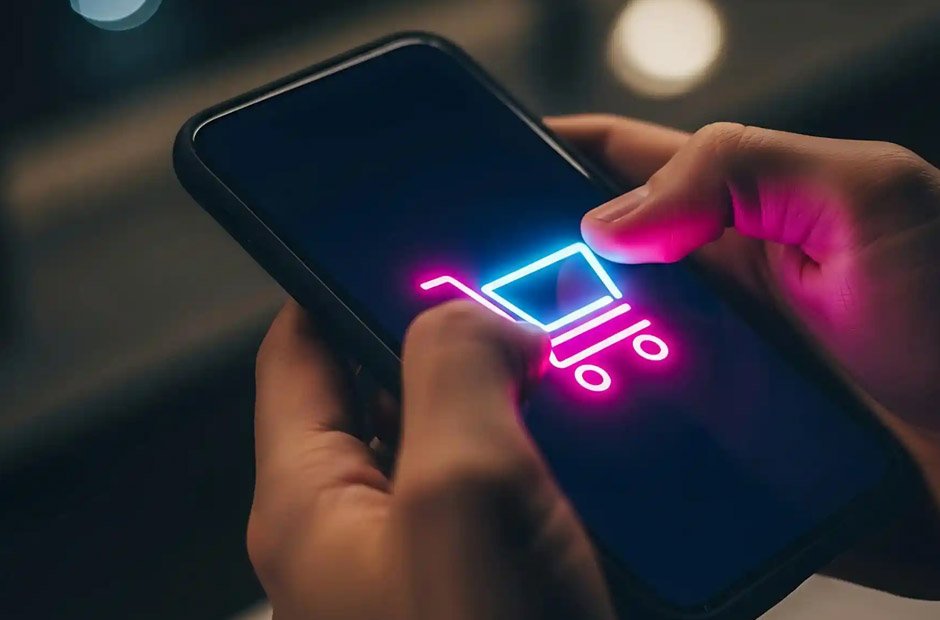
Typically, people do not look through what’s available and make a purchase all in one day on the same device – instead, they’ll put things in their cart on their phone over lunch, and then switch to their laptop to complete the transaction later that evening. If your store’s cart isn’t remembered from one session to the next like this, then in a sense, you’re just telling that potential buyer to forget about it – and a significant percentage of them will.
Cross-device cart persistence is actually just one area where fast-growth brands gain an advantage from the kind of Shopify eCommerce design and development teams work on, because several of the high-impact features like predictive search, personalized upsell modules, and session-aware carts aren’t available in out-of-the-box themes, and can’t be modified by any but the most experienced developers.
Checkout Is Where Design Failures Become Revenue Failures
According to the Baymard Institute, the average cart abandonment rate is 70.19%, and a large percentage of those are due to a checkout process being too long or complicated. That’s not people being on the fence. It’s taking design out of the way in every possible location but the one where it counts the most.
Frictionless checkout means fewer required fields, defaulting to guest checkout, and address auto-complete. It doesn’t mean asking for a phone number when you’re not going to call. Every field is a small cognitive tax. Add enough of them and the purchase doesn’t make sense to the customer’s brain, even if they really, really want the product.
Trust Signals Aren’t Decoration
Anxious buyers are not a marketing issue. They’re a design issue. If a shopper doesn’t feel certain your store is safe, all the best ad targeting in the world won’t get them through checkout. And it certainly won’t make them a repeat customer. Trust signals are the design decisions your customers register subconsciously before they ever consider making a purchase. Is this store legitimate? Is my credit card information safe here? Will the product be as it appears on my screen?
Some of these (like the presence of SSL in your URL) are talked about so often they’re no longer subconscious. But others are less remarked upon. Issuing professionally designed product photos, for instance. Or ensuring your no-questions-asked return policy isn’t buried at the very bottom of a pages-long terms of service page.
Customer reviews are a type of trust signal, and where you place those reviews matters. For instance, displaying your product’s star rating directly beneath the product’s title performs better than having it under the fold, where a customer has to scroll multiple times to read it. Relatively few companies do the latter and earnestly believe what they’re signaling is, “Our products often get a collective shrug.”
Speed Is A Design Decision
Slow loading time of webpages is frequently considered something that developers should take care of. However, this issue should be addressed during the design stage. For instance, using large, uncompressed hero images, and loading heavy custom fonts from various sources, as well as placing an auto-playing video on the top part of the page, are design decisions that can impact loading times.
The optimal Largest Contentful Paint score should be less than 2.5 seconds, at that point the content above the fold reaches the shopper. If you fail to meet that goal, the bounce rates will grow significantly, particularly for mobile users. Designing for mobile first implies that the mobile user doesn’t receive a diluted experience of the desktop. The design for mobile should be the main consideration, the desktop version should be created based on it.
Post-Purchase Design Is The Repeat Customer Engine
Most of the design thinking for ecommerce focuses on getting people to buy for the first time. But when you look at a business as more than just a single transaction, the priorities start to look rather different. Lifetime Value comes from getting someone to come back and buy a second time. And so, generally speaking, the businesses making the most money aren’t the ones with the clever product or the most compelling one-time offer. They’re the ones who have solved the problem of repeat purchase.
Which is really just to say that when it comes to a brand’s differentiating advantage, competing on customer experience is where everyone is looking. And where customers come for the experience will always be the sum of a thousand little decisions the design allowed them to make.
These don’t happen during the welcome mat phase. Or in the cart. Or at checkout. It happens next. When all the dopamine hits of anticipation have faded but the product hasn’t yet arrived. That’s when they actually decide if they’re making a return trip.