Key Takeaways
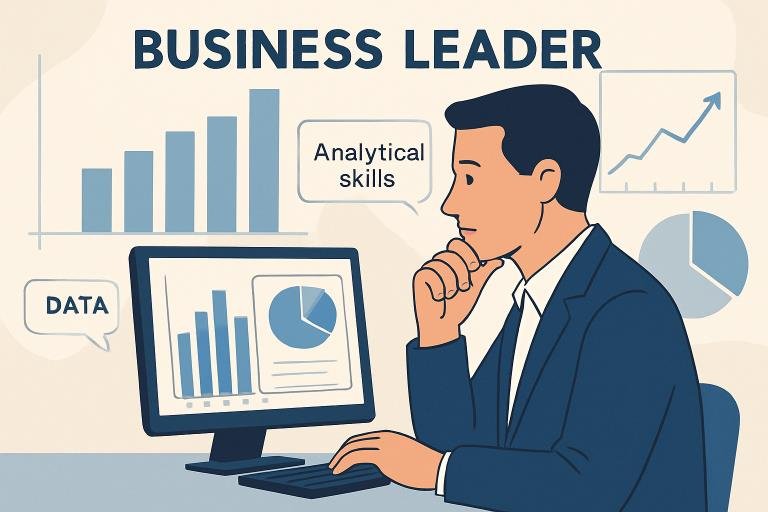
Employers identify analytical thinking as a core skill for future business leaders.
- Strong analytical skills enhance strategic planning, problem-solving, and decision-making.
- The consistent, practical application of analytical tools and continuous learning are critical for growth.
In today’s rapidly evolving business environment, the ability to interpret complex data and make informed decisions has become a cornerstone of effective leadership. Future business leaders are increasingly expected to combine strategic thinking with analytical insight, enabling them to anticipate challenges, identify opportunities, and drive organizational growth. Analytical skills allow professionals to evaluate market trends, assess financial performance, and optimize operational efficiency, providing a strong foundation for sound decision-making across all areas of business.
For those aiming to strengthen these capabilities, pursuing an MBA in business analytics online can provide a structured pathway to mastering data-driven strategies. Such programs emphasize critical thinking, statistical analysis, and predictive modeling, equipping leaders with the tools to translate data into actionable insights. By integrating analytical proficiency with strategic leadership, emerging business professionals can confidently navigate complex business landscapes and foster innovation that aligns with both organizational goals and market demands.
The Importance of Analytical Skills in Leadership
Strong leadership today requires more than charisma and vision. Analytical skills are rapidly defining what it means to be an effective leader in the digital age. According to the World Economic Forum’s 2025 report, 69% of employers consider analytical thinking a top priority. Leaders must be able to interpret information, evaluate risks, and identify opportunities in fast-paced environments. Analytical thinking helps leaders recognize patterns, use logical reasoning, and strategically plan for the future, making it indispensable for anyone aspiring to guide organizations confidently.
Developing Analytical Competencies
To excel as a modern business leader, you must purposefully strengthen your analytical capabilities. Here are some practical strategies:
- Commit to ongoing learning through formal coursework, such as business analytics or data science classes, and hands-on workshops.
- Get comfortable with analytical tools such as Microsoft Excel, Tableau, and Google Analytics to visualize and interpret large datasets.
- Create a work environment that encourages curiosity and challenges assumptions, making evidence-based decision-making part of your team’s culture.
Building these competencies takes consistency and dedication. Empirical thinking should become a habit, not just an occasional tactic.
Practical Applications in Various Industries
Business leaders across every sector benefit from sharp analytical skills:
- Finance:Financial managers and analysts rely on data-driven forecasting to assess investments and manage risk in volatile markets.
- Marketing:Strategic marketers draw on data about customer behavior, campaign results, and market trends to develop targeted campaigns and maximize ROI.
- Operations:Operations managers leverage analytics to streamline supply chains and improve internal processes for greater efficiency and cost savings.
In each field, a leader’s ability to gather, interpret, and act on information is directly linked to organizational performance.
Enhancing Decision-Making and Problem-Solving
Effective leaders use analytical skills to approach decision-making and problem-solving with clarity and rigor. This includes:
- Dividing complex issues into smaller, more manageable elements
- Comparing possible solutions and preparing for unintended consequences
- Relying on credible data to validate decisions and align outcomes with organizational goals
This methodical way of thinking increases objectivity and minimizes the risks of impulsive or biased decisions.
The Role of Technology in Analytical Thinking
Technology’s rapid advancement has transformed the expectations for today’s business leaders, who need to be adept at leveraging digital tools and harnessing big data. Artificial intelligence, predictive analytics, and automation have all emerged as critical enablers of better business decisions. Leaders who can interpret these technological outputs and convert them into actionable plans will help drive their organizations’ success. A recent study emphasizes that digital tools not only boost analytical ability but also cultivate creative thinking skills, which are fundamental for leaders aiming for continuous innovation.
Continuous Learning and Adaptation
The pace of change in business underscores the need for lifelong learning. Adaptable leaders regularly seek knowledge about emerging trends, assess new technologies, and remain open to feedback. Fostering a culture of growth within your team and supporting others’ skill development encourages innovation and resilience. Lifelong learning is not just about keeping up; it is about setting the pace and anticipating change before it happens.
Conclusion
Analytical skills are not optional for future business leaders—they are foundational. When you prioritize analytical thinking, you strengthen your ability to solve problems, make sound strategic choices, and guide your organization toward lasting success. Continue to build these skills through consistent practice, education, and curiosity, and you will be ready to lead your team with confidence in an ever-evolving business environment.