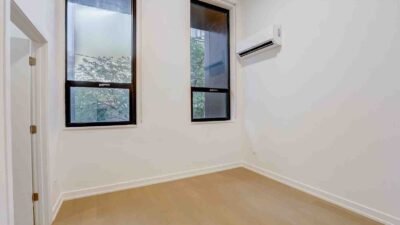
Visiting a property in person gives you the opportunity to experience firsthand what it would be like to live there. You can better understand the layout, see the condition of the home, and also the neighborhood it’s in. This can help you decide whether it’s a place you’d like to live.
Use your senses before you use your checklist
Most people take a walkthrough admiring the finishes. Smart people take the walkthrough looking for what the finishes might be hiding. Before you open a single cabinet, just stand in the doorway of each room and take it in. Does the floor look level? Are there shadows along the baseboard that suggest the wall has shifted? Does anything smell musty or chemical – like someone cleaned aggressively right before your visit?
Your nose is a surprisingly valuable tool here. A musty aroma in a basement, crawlspace, or even under a kitchen sink indicates an active leak or persistent moisture problem. That smell doesn’t come from a one-time spill. It comes from water that has been sitting long enough to grow mold or saturate wood. That’s the kind of problem that runs into tens of thousands of dollars to remediate properly.
Uneven floors and sticking doors aren’t just annoyances
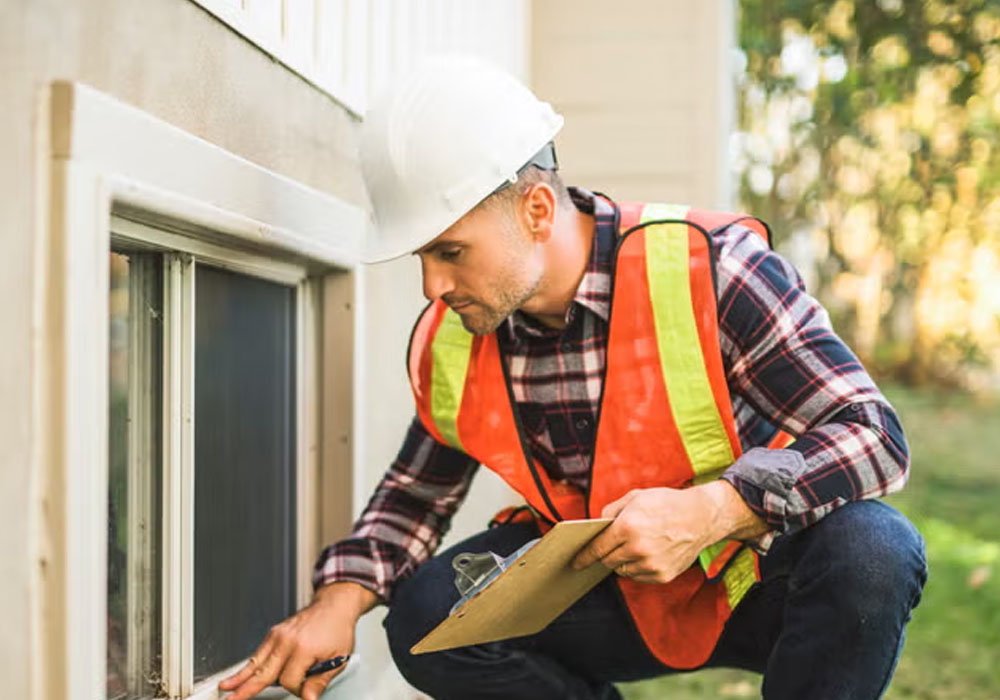
Pay attention to doors that don’t latch well or that allow you to see light under a door that should be sealed. Doors and windows that stick or that won’t close nicely are often the first visible indicators that the house has started to settle. As the foundation moves, frames also shift out of square, and the doors and windows let you know of this issue before the cracks appear.
Horizontal cracks on the foundation wall are more severe than the vertical ones. The latter is usually related to regular settling. The horizontal ones may indicate lateral soil pressure, and that is a serious structural problem. If you can, run your hand along the foundation. Inspect for stair-step cracks in the block or brick. These are not necessarily reasons to reject the house out of hand, but they aren’t just superficial.
Spot the quick-fix cover-ups
Fresh paint on a single wall is one of the most reliable tells in real estate. If the rest of the room hasn’t been touched but one wall or a patch of ceiling has a bright new coat, someone was hiding something. Water stains are the most common culprit. A seller might repaint a ceiling after fixing a roof leak – or they might repaint it without fixing anything at all.
Strategic staging can do the same work. A rug placed in an unusual spot in the middle of a room, furniture pushed against a specific wall, boxes stacked in front of a utility closet – all of these deserve a second look. Ask to move things. A seller who has nothing to hide won’t object to you looking at the floor under that rug or opening that closet door.
Check the age of major systems
You can find the manufacture date of water heaters and HVAC units on the label, which is usually affixed to the side of the unit. So, just pull out your phone and check. A water heater that’s older than 10-12 years is probably at the end of its life. The same goes for an HVAC system that’s over 15 years old. Replacing either unit right after you’ve closed on a house can cost $3,000 to $12,000 depending on the system, and you definitely won’t have that money if you didn’t plan for it.
While you have your phone in hand, snap a quick pic of the electrical panel. Insurers won’t cover panels that are too old – and many brands were pronounced duds leading to breaker fires. If you look at the panel in a mid-century house and think it’s never been replaced, that’s a conversation starter to have during the walk-through.
Exterior grading and the roofline
Go outside, and look at the ground around the foundation. It should slope away from the house – water needs somewhere to go that isn’t toward the structure. If the grade is flat or, worse, tilts toward the foundation, you can expect water intrusion problems over time. This is particularly true in climates with heavy monsoon seasons or expansive clay soils.
Look up at the roof from the street. Sagging lines, curling shingles, or patches where the roofline dips between rafters are worth noting. You won’t be able to evaluate a roof fully from the ground, but you can get a sense of whether it’s been maintained.
This is where working with a local realtor pays off in ways a general checklist can’t replicate. Regional factors matter. In areas with adobe construction, stucco exteriors, and expansive desert soils, the failure modes are different from what you’d see in a humid climate. A realtor who knows the local building stock knows what to look for and what to ask the seller’s agent.
Use what you find as leverage, not a reason to panic
An 86% majority of home inspections identify at least one problem. And you know you’ll find many additional red flags at those numerous open houses you have coming up. Most won’t be early exit cues. Instead, they are opportunities to help cover necessary work with the seller’s money or in the reduction of the asking price. The inspection phase is also the time to obtain quotes from professionals regarding how much their services will cost.
The walkthrough is a screening tool. Use it like one.