Every year, homeowners invest money into renovation projects that really don’t do much in terms of adding value to their homes. It’s not that they aren’t putting in the work – they’re just not focusing their efforts in the right places. Effort spent on projects designed purely around personal preferences won’t get compensated in your property’s value. Effort spent on solving problems that everyone has will pay back tenfold.
Start With The Envelope, Not The Aesthetics
First, long before you touch a countertop, look at your roof, windows and insulation. These are the first things a home inspector points to, and a bad report in that department can kill a sale faster than any dated kitchen.
Even though a new insulated roof, siding or replacement windows may not be as appealing as a contemporary kitchen, they’re what will win the buyer over. Lenders won’t even consider a home equity loan or mortgage refinance if you don’t have the structure to their liking; buyers looking to purchase will automatically lowball you to account for those costs or pass entirely.
The Case For A Mid-Range Kitchen Remodel
It is not a smart financial decision for a homeowner to do a full gut renovation of their kitchen. The costs of those projects are significantly higher than the remodeling of the existing structure and are much less likely to be recouped at the time of sale. You might get tired of the current look, but if all still works, it is much smarter to paint or wallpaper or update with new fixtures, faucets, etc. in the existing cabinetry. Keep it simple if you want to optimize your resale costs.
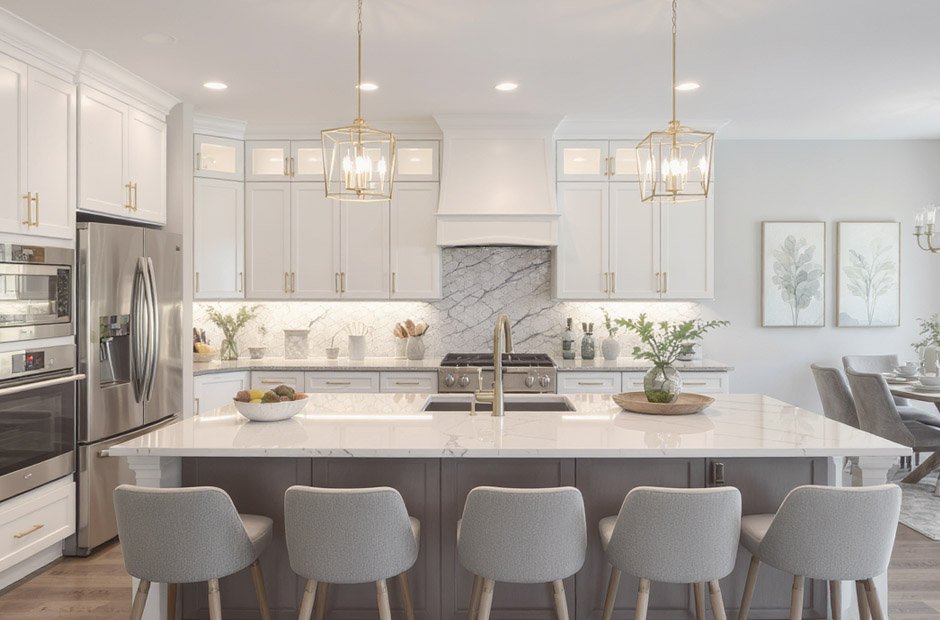
The smarter play is working with what’s there. Cabinets that are structurally sound but visually tired can be painted, refaced, or fitted with new hardware for a fraction of replacement cost. Swapping out a dated faucet, updating the lighting, or adding a new splashback can shift the feel of a kitchen dramatically without touching a single cabinet carcass. These aren’t compromise solutions – they’re targeted ones. You’re fixing what’s actually wrong rather than replacing what isn’t.
Where mid-range remodels really earn their keep is in the details that buyers notice without knowing why. A cohesive finish across the cabinets, handles that feel solid, worktops that aren’t visibly worn – these things read as quality without requiring a full overhaul. Buyers aren’t valuing your kitchen by the invoice. They’re forming an impression in the first thirty seconds. A well-executed refresh creates the same impression as a full renovation at a third of the cost, and when it comes time to sell, that’s the number that actually matters.
Convert Transition Spaces Into Functional Ones
Most houses feature at least one unused “in-between” space – a messy entry, a garage nook, a partly-complete laundry room. These areas are often the highest return-on-investment square footage in the home. They’re easy (and relatively inexpensive) to upgrade, and they solve an everyday issue.
Utilizing a mudroom can keep your house clean, as it catches dirt, coats, and mess before it all hits your living areas – and that’s what customers with children, pets, or cold climates are specifically looking to buy. An efficient entrance ensures that a house is a useful part of everyday life.
The same goes for laundry suites, garage storage, and finished basements. You’re introducing functional, inhabitable square footage without expanding the home’s footprint.
Curb Appeal Is Still Doing Real Work
A properly maintained outdoor area can increase the value of the home in the eye of the beholder. Studies out of the industry show that professional landscaping and exterior lighting can together add up to 7% to a home’s value – plus, unlike a kitchen remodel, much of that can be enjoyed long before the “For Sale” sign ever goes up, and for a small slice of the cost.
Fresh mulch, trimmed hedges, and pathway lighting aren’t glamorous. But they’re what neighbors, appraisers, and buyers see first. Buyers form an impression at the curb before they see a single interior photo. That first impression affects how they interpret everything inside.
In a world where buyers will cast aside a listing based on the first listing photo, curb appeal reigns supreme. Researchers have long known that the first look at a property sets the tone for the whole buyer experience. It’ll determine how “nicely kept” your home looks compared with others they suddenly feel compelled to check out in the next few days.
Design For More Than Your Current Buyer Profile
Most homeowners lose money on their renovation. This is because they renovate for themselves, in the style and to the extent that’s personal or necessary for them at the time. The mistake is that they fail to also consider future owners.
Ten or fifteen years may seem like a long time down the track, but it’s not. You’ll be there before you know it. And you want to make as much on your home as possible when you sell, right?
What’s a universal design feature? One that anyone can use or access, no matter how old, young, tall, small, able-bodied, or infirm. They are part of the design, not added on, after the fact. They ride the lifestyle trends, and for good reason. The aging-in-place sector is significant and growing fast.
Pet lovers, allergy sufferers, and age-group buyers find these features attractive, and when they open their wallet, you will too. Furniture-style vanities, towel warming drawers, high-efficiency flush toilets, and hard surface flooring like LVP – upgrades that don’t break the bank to add, but buyers can’t resist paying a premium for.
Build Equity By Solving Problems, Not Chasing Trends
The improvements that appreciate are all alike in one way: they solve problems most people face, not preferences some people hold. Energy expenses, storage, flow, maintenance fear, mobility – these do not become dated. Waterfall countertop edges and barn doors do.
Think of your renovation wallet as an equity investment, not a decorating budget. Will that upgrade be just as meaningful to a buyer a decade from now as it is to you today? If yes, do it. If it relies on someone else valuing the very same quirks in your taste, use the money elsewhere.