Strategic Framework for Industrial Equipment Manufacturing and Relocation
Moving an entire industrial operation, or even just a single piece of heavy machinery, is one of the most complex undertakings a manufacturing facility can face. In August 2026, with production demands higher than ever, the stakes for such projects are immense. Every hour of lost production can cost thousands of dollars, making flawless execution not just a goal, but a necessity for business continuity and growth.
We understand that industrial equipment manufacturing and relocation is far more than just “lift and shift.” It demands meticulous planning, specialized expertise, and a deep understanding of multi-trade integration. Without these, companies risk not only significant financial losses from downtime but also costly equipment damage, safety incidents, and prolonged operational delays.
In this extensive guide, we will explore the critical strategies for optimizing your next industrial equipment relocation. We will cover everything from comprehensive pre-move planning and site assessment, to the specialized equipment and techniques used in heavy machinery rigging and precision reinstallation. We’ll also delve into crucial aspects like minimizing downtime, the value of professional project management, and how to navigate the complexities of manufacturing equipment, including specialized units like thermal drying equipment. Our aim is to provide actionable insights to ensure your next move is executed safely, efficiently, and with minimal disruption to your operations.
The success of any industrial equipment relocation hinges on a robust strategic framework that accounts for every variable, from the physical layout of facilities to the intricate coordination of multiple specialized trades. This foundational planning prevents costly oversights and ensures a smooth transition.
Comprehensive Site Assessment and Infrastructure Mapping
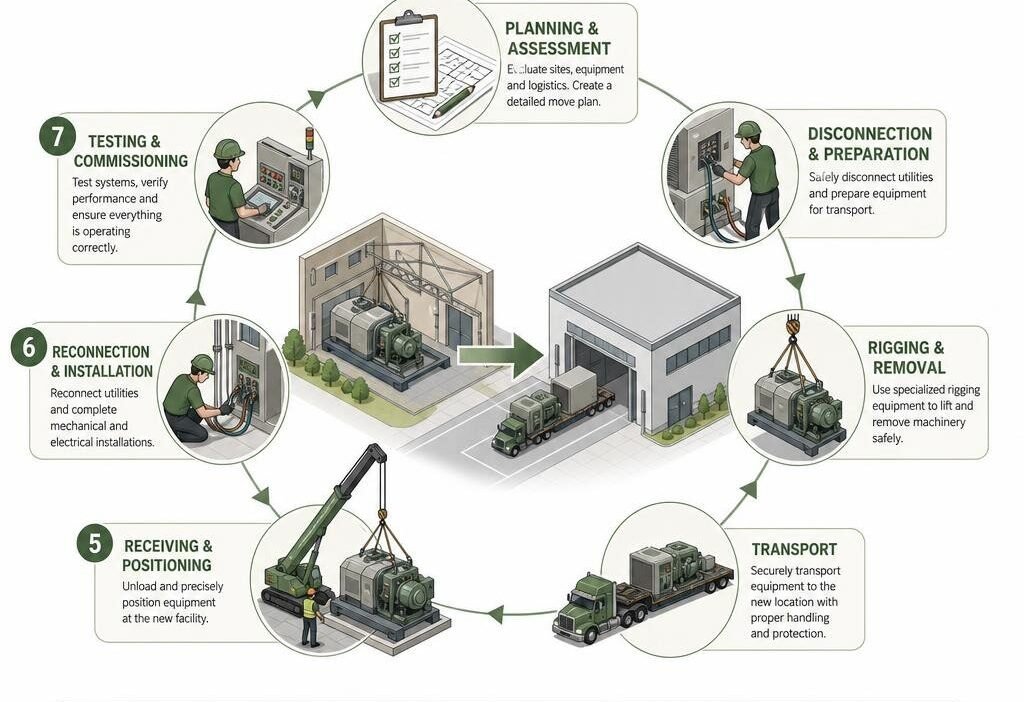
Before any equipment is disconnected or even touched, a comprehensive pre-move planning and site assessment is paramount. This involves a meticulous evaluation of both the origin and destination facilities to identify potential challenges and opportunities. The goal is to create a detailed blueprint that guides every subsequent step.
Our process begins with an in-depth site survey, evaluating critical factors such as:
- Floor Capacity and Structural Barriers: We assess the load-bearing capacity of floors at both facilities to ensure they can support heavy machinery during transit and final placement. Structural barriers, including doorways, columns, mezzanines, and ceiling heights, are mapped to plan clear pathways and identify any necessary modifications or temporary removals. This prevents damage to both the equipment and the facility.
- Utility Routing and Connection Points: A detailed mapping of all utility connections—electrical, compressed air, gas, water, and data lines—is crucial. We document existing layouts and plan for seamless reconnection at the new site, ensuring that the new facility has the necessary infrastructure in place. This includes identifying power requirements, voltage, and amperage for each piece of equipment.
- Entry/Exit Points and Obstruction Analysis: Every potential entry and exit point for machinery, from loading docks to internal corridors, is analyzed. We identify any obstructions that might impede movement and devise strategies to overcome them, which could involve temporary structural alterations or the use of specialized compact lifting equipment.
- Foundation and Pad Sequencing: For heavy or vibration-sensitive machinery, specialized foundations or concrete pads may be required. Our assessment includes planning for the preparation and curing of these foundations well in advance of equipment arrival, ensuring they are ready for precision reinstallation.
This detailed planning phase is critical for identifying potential bottlenecks and risks, allowing us to develop proactive solutions. It also informs the development of engineered lift plans and ensures that the receiving facility is fully prepared for day one of reinstallation.
Here is a list of essential site assessment prerequisites:
- Full Equipment Inventory: A complete list of all machinery, including dimensions, weight, utility requirements, and baseline operational conditions.
- As-Built Drawings: Up-to-date architectural, structural, electrical, and mechanical drawings for both facilities.
- Floor Load Maps: Documented floor load capacities for all areas where heavy equipment will be moved or placed.
- Clearance Diagrams: Detailed measurements of all doorways, hallways, ceiling heights, and other potential obstructions.
- Utility Schematics: Comprehensive diagrams of all electrical, plumbing, HVAC, and data lines.
- Risk Assessment: Identification of potential hazards and development of mitigation strategies.
- Timeline and Budget Constraints: Clear understanding of project deadlines and financial parameters.
Multi-Trade Integration in Industrial Equipment Manufacturing and Relocation
A complex industrial relocation is rarely a single-trade job; it requires the seamless coordination of multiple disciplines. Why is multi-trade integration (rigging, electrical, mechanical, foundations) critical for a successful relocation? Because without it, scope gaps, delays, and costly errors are almost inevitable.
Our approach emphasizes a single-source accountability model, where all trades are coordinated under one project management umbrella. This ensures a cohesive strategy from start to finish, covering:
- Electrical Disconnection and Reconnection: Certified electricians handle the safe disconnection, tagging, and air-gapping of all electrical systems. At the new facility, they meticulously reconnect and test power supplies, ensuring compliance with all local codes and operational requirements.
- Mechanical Piping and Utility Integration: Mechanical experts manage the disconnection and reinstallation of process piping, compressed air lines, gas lines, and water systems. This often involves custom fabrication, welding, and pressure testing to ensure leak-free and efficient operation. For specialized processing machinery, such as sophisticated drying systems, the precision of these connections is paramount.
- Civil Engineering and Foundation Work: When new foundations or structural modifications are needed, civil engineers ensure that the design and execution meet stringent industrial standards. This includes preparing concrete pads, anchoring systems, and any necessary structural supports for heavy machinery.
- Match-Tagging and Documentation: A critical step in multi-trade integration is the systematic match-tagging of all connections—electrical, hydraulic, pneumatic, and mechanical—during disassembly. This meticulous documentation, often supplemented by 3D scanning, ensures that each component is reinstalled correctly and efficiently at the new location, significantly reducing reassembly time and potential errors.
- Utility Air-Gapping: Prior to any physical movement, a crucial safety step involves “air-gapping” all utilities. This means ensuring that electrical power, pneumatic pressure, and hydraulic fluid lines are not just shut off, but physically disconnected and verified as safe, preventing accidental energization during the relocation process. This is especially vital for complex manufacturing equipment.
By integrating these trades from the outset, we eliminate the common pitfalls of managing multiple independent contractors, such as conflicting schedules, communication breakdowns, and accountability gaps. This integrated approach is a cornerstone of minimizing downtime and ensuring a predictable project outcome.
Advanced Rigging, Transport, and Precision Reinstallation
Moving industrial equipment, particularly heavy machinery, requires more than just brute force. It demands specialized equipment, advanced techniques, and a deep understanding of physics and engineering to ensure safety, prevent damage, and facilitate precise reinstallation.
Rigging Technology for Industrial Equipment Manufacturing and Relocation
The specialized equipment and techniques used for heavy machinery rigging and transport are designed to handle immense weights, navigate tight spaces, and protect sensitive components. Our fleet includes a diverse range of tools tailored for various challenges:
- Hydraulic Gantries: These modular lifting systems are ideal for heavy loads in areas with limited overhead clearance. They can lift and walk equipment into position with extreme precision, often replacing cranes in indoor environments.
- Versa-Lifts and Rigging Forklifts: These specialized forklifts are equipped with telescoping booms and counterweights, providing exceptional lifting capacity and maneuverability for complex rigging tasks, including lifting over internal obstacles.
- Air Skates and Trilifters: For moving heavy equipment across flat, finished floors without causing damage, air skates use compressed air to create a thin film, allowing machinery to float. Trilifters offer precise, omni-directional movement for heavy loads within confined spaces.
- Goldhofer Transporters and Heavy-Haul Trailers: For over-the-road transport of oversized and overweight loads, we utilize specialized multi-axle Goldhofer trailers and heavy-haul truck fleets capable of handling hundreds of tons. Route planning, permitting, and escorts are integral to these operations.
- Engineered Lift Plans: Every major lift is preceded by a meticulously engineered lift plan. This plan details the equipment’s weight, center of gravity, rigging points, clearances, crane selection, load path, and safety protocols. It’s a critical document for ensuring safe and efficient execution.
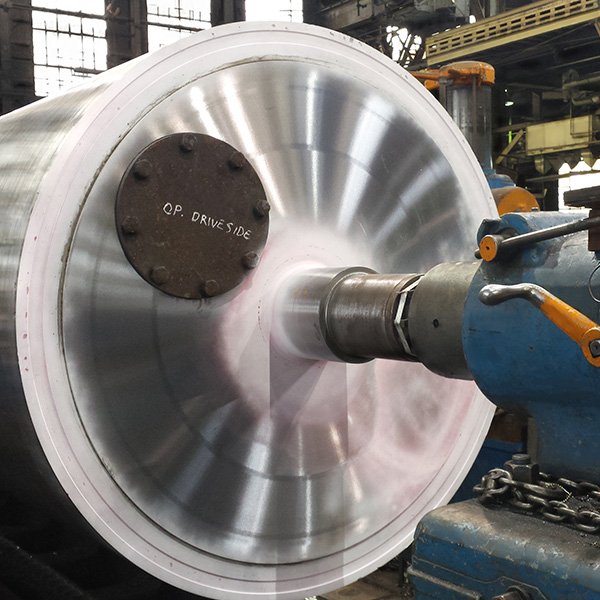
- Friction Reduction and Protection: During sliding or maneuvering, we often employ methods to reduce friction and protect surfaces. This can involve using specialized materials or applying high-performance substances. For example, when moving massive components, applying high-quality specialty graphite lubricantscan significantly reduce friction and wear, ensuring smooth, controlled movement and preventing damage to critical surfaces. This attention to detail is crucial for safeguarding valuable assets.
These technologies, combined with highly trained and certified rigging crews, allow us to execute moves that would be impossible with conventional equipment, ensuring the integrity of your machinery throughout the relocation process.
Precision Realignment and System Recommissioning
Ensuring precision reinstallation and realignment of equipment at the new facility is non-negotiable for maintaining operational efficiency and product quality. Even a few millimeters of misalignment can lead to costly operational downtime, increased wear and tear, and compromised product specifications. Our process includes:
- Laser Alignment and Optical Leveling: We use state-of-the-art laser alignment and optical leveling tools to achieve exact positioning for all machinery. This is particularly critical for rotating equipment, CNC machines, and production lines where tight tolerances are essential. These tools allow for real-time adjustments and verification of precision.
- Foundation Anchor Bolts and Grouting: Equipment is securely anchored to its new foundation using precision-drilled anchor bolts. Non-shrink grout is often applied to fill any gaps between the machine base and the foundation, providing a solid, stable, and vibration-resistant mounting.
- Vibration Control: For sensitive machinery, vibration isolation pads or custom mounting solutions are implemented to minimize the transmission of external vibrations and protect internal components.
- OEM Recalibration and Testing: Following reinstallation, we coordinate closely with Original Equipment Manufacturers (OEMs) to perform necessary recalibrations, functional testing, and commissioning. This ensures that all equipment operates to its original specifications and is ready for production. This phase also includes comprehensive safety checks and system integration tests.
- Documentation and As-Builts: Upon successful reinstallation and commissioning, we provide updated “as-built” documentation, including final equipment layouts, utility connections, and alignment reports, which are invaluable for future maintenance and modifications.
This meticulous approach to reinstallation is what differentiates a successful relocation from one plagued by post-move operational issues.
Minimizing Downtime: Execution Strategies and Risk Mitigation
Minimizing production downtime is often the single most critical objective in any industrial equipment relocation. Every hour of lost production can translate into thousands of dollars in lost revenue and missed deadlines. We employ strategic execution methods and rigorous risk mitigation to keep your operations running smoothly.
Phased Moves vs. Full Cutover Execution
The choice between a phased move and a full cutover depends on several factors, including production demands, equipment interdependencies, and available resources.
- Phased Move: This strategy involves relocating equipment in stages, often department by department or production line by production line, while other parts of the facility remain operational. It’s designed to maintain parallel manufacturing, ensuring continuous, albeit potentially reduced, production throughout the relocation.
- When to Use: Ideal for companies that cannot afford a complete shutdown, have redundant production lines, or can temporarily scale back output. It allows for testing and troubleshooting of relocated equipment before the next phase begins.
- Advantages: Minimizes overall production downtime, spreads out costs, and reduces risk.
- Disadvantages: Can extend the project timeline and may require duplicate staffing or temporary equipment.
- Full Cutover: This involves shutting down the entire operation at the origin facility, moving all equipment, and bringing the new facility online as a single event.
- When to Use: Suitable for facilities with highly integrated production processes, where partial shutdowns are impractical, or when a rapid, complete transition is feasible. Often planned during scheduled plant shutdowns or holiday periods.
- Advantages: Shorter overall project duration, potentially lower direct labor costs for the move, and a clean break from the old facility.
- Disadvantages: High-risk, high-impact approach; any delays can result in significant downtime and financial losses. Requires extensive pre-planning and preparation to ensure the new facility is 100% ready.
Regardless of the chosen strategy, production sequencing and downtime optimization are paramount. This involves scheduling lifts and machinery moves around plant shift schedules, power shutdowns, and site traffic, often utilizing night and weekend operations to minimize disruptions. Parallel site preparation, where the new facility is readied concurrently with operations at the old site, is a key enabler for reducing downtime by as much as 40% compared to traditional methods.
Here’s a comparison of phased moves and full cutover strategies:
Feature Phased Move Full Cutover Downtime Impact Minimal, continuous production (reduced capacity) Significant, complete production halt Project Duration Longer overall timeline Shorter, intense timeline Risk Profile Lower, spread out Higher, concentrated Flexibility High, allows for adjustments Lower, rigid schedule Resource Needs Potentially duplicate resources for a period All resources focused on one event Ideal Scenarios Continuous production required, redundant lines Integrated processes, planned shutdowns Professional Contracting vs. DIY In-House Relocation
When should you call in a professional rigging and contracting company versus attempting a DIY move? The answer lies in assessing risk, complexity, and specialized capabilities.
- The 1000lb Threshold: As a general rule, any equipment weighing over 1,000 lbs, or machinery with complex electronic, hydraulic, or electrical systems, warrants professional handling. DIY moves for such assets carry immense risks.
- Risks of DIY Moves:
- Equipment Damage: Improper lifting methods, inadequate rigging gear, and lack of specialized knowledge can lead to catastrophic damage to multi-million dollar assets. Unskilled handling can cause structural damage, dropped loads, and precision misalignments.
- Safety Hazards: Industrial machinery moves are inherently dangerous. DIY attempts significantly increase the risk of worker injuries, ranging from strains to severe accidents, due to improper techniques or lack of certified safety protocols.
- Prolonged Downtime: Without expert planning and execution, DIY moves often encounter unforeseen challenges, leading to extended downtime that far outweighs any perceived cost savings.
- Financial Liability: In-house moves mean your company bears the full financial liability for any damage, injuries, or delays. Professional companies carry comprehensive insurance and transfer this risk.
- Benefits of Professional Contracting:
- Expert Heavy Machinery Relocation: Professional rigging and contracting companies possess the specialized equipment, certified personnel, and extensive experience to handle complex moves safely and efficiently. They develop engineered lift plans, manage heavy-haul logistics, and ensure OSHA compliance. If your business requires expert heavy machinery relocationservices, partnering with seasoned professionals can mitigate risks and streamline the entire process.
- Reduced Downtime: Professionals minimize downtime by employing strategic planning, phased execution, and efficient reinstallation techniques.
- Precision Reinstallation: They use advanced alignment tools to ensure machinery is reinstalled to exact specifications, preventing post-move operational issues.
- Comprehensive Project Management: A professional partner provides dedicated project management, coordinating all trades, schedules, and communications, offering a single point of accountability.
- Safety and Compliance: Adherence to stringent safety standards (e.g., OSHA, CDM) and regulatory requirements is built into their processes, protecting your employees and your business.
While managing heavy equipment moving in-house might seem like a cost-saver, the hidden risks and costs—equipment damage, worker injury, prolonged downtime, and complete financial liability—stack up quickly. For high-value assets and complex operations, engaging a professional industrial relocation specialist is not just a convenience, but a critical investment in operational continuity and asset protection.
Frequently Asked Questions
Navigating an industrial equipment relocation often brings a host of questions to the forefront. Here, we address some of the most common concerns manufacturers have.
How do manufacturers avoid costly production downtime during relocations?
Avoiding costly production downtime is the primary goal for most manufacturers undertaking a relocation. This is achieved through a multi-faceted approach centered on meticulous planning and efficient execution:
- Phased Scheduling: Implementing a phased move strategy, where equipment or production lines are relocated in stages, allows for continuous operation of other parts of the facility. This minimizes the overall impact on production output.
- Parallel Facility Preparation: Preparing the new facility concurrently with operations at the old site is crucial. This includes completing foundations, utility rough-ins, and infrastructure setup before equipment even arrives, preventing bottlenecks.
- Off-Peak Execution: Scheduling the actual physical movement and reinstallation of equipment during off-hours, such as nights, weekends, or planned holiday shutdowns, significantly reduces interference with regular production schedules.
- Integrated Project Management: A dedicated project manager coordinates all aspects of the move—from rigging and transport to electrical and mechanical reconnections. This single point of accountability ensures seamless integration of all activities, proactively addressing potential delays and keeping the project on track. By leveraging these strategies, companies can reduce downtime by as much as 40% compared to traditional, less coordinated relocation methods.
What are the biggest risks of using standard in-house forklifts for machinery moves?
While in-house forklifts are indispensable for daily operations, relying on them for complex or oversized machinery moves presents significant risks:
- Tipping Hazards: Standard forklifts are not designed for the unique weight distribution or center of gravity of many industrial machines. This can lead to instability, increasing the risk of the forklift tipping over, causing severe equipment damage or worker injury.
- Load Imbalances: Industrial machinery often has uneven weight distribution. Without specialized rigging attachments and expertise, a standard forklift can improperly balance the load, leading to uncontrolled swings or drops.
- Floor Structural Damage: The concentrated weight of heavy machinery, especially when moved by a standard forklift not designed for precision, can exceed floor load limits. This can result in costly damage to the facility’s structural integrity, including cracked concrete or compromised subflooring.
- Component Misalignment: Attempting to maneuver heavy, sensitive equipment with a standard forklift lacks the precision required for delicate placement. This can cause components to shift or become misaligned, leading to operational issues upon reinstallation and requiring extensive, costly recalibration.
- Inadequate Capacity and Reach: Standard forklifts often lack the lifting capacity, reach, or specialized attachments (like boom extensions or hydraulic gantries) needed to safely handle large or awkwardly shaped industrial equipment, particularly in tight spaces or when lifting over obstacles.
These risks underscore why professional rigging companies, equipped with specialized machinery and trained personnel, are essential for safe and efficient industrial equipment relocation.
What does a comprehensive pre-move equipment audit involve?
A comprehensive pre-move equipment audit is a foundational step that ensures accuracy, efficiency, and safety throughout the relocation process. It involves:
- Asset Tagging and Inventory Control: Every piece of equipment is systematically tagged with unique identifiers. A detailed inventory is created, documenting serial numbers, model information, and specific requirements for each asset. This prevents loss, misplacement, and ensures proper identification at the new site.
- Baseline Condition Reports: Before disassembly, the operational and physical condition of each machine is thoroughly documented, often with photographs and videos. This “baseline” serves as a reference point to verify the equipment’s condition upon reinstallation and commissioning, helping to identify any transit-related damage.
- Electrical Schematics and Disconnection Plans: Detailed electrical schematics are reviewed, and specific disconnection plans are developed for each machine. This includes identifying all power, control, and data cables, ensuring they are properly labeled, disconnected, and secured for transport.
- Mechanical Disconnection Plans: Similar to electrical, comprehensive plans are created for the disconnection of all mechanical components, including hydraulic lines, pneumatic hoses, process piping, and structural supports. This ensures that all connections are properly identified, capped, and protected.
- Utility Requirements: A precise record of all utility requirements (voltage, amperage, air pressure, water connections, data ports) for each machine is compiled. This informs the infrastructure planning at the new facility.
- Dimensions and Weight Verification: Accurate measurements of height, width, length, and weight for each piece of equipment are verified. This data is critical for planning transport logistics, rigging methods, and ensuring compliance with load limits.
This detailed audit minimizes surprises, streamlines the disconnection and reconnection processes, and provides a clear roadmap for a successful relocation.
Conclusion
Optimizing industrial equipment manufacturing and relocation is a multifaceted challenge that demands strategic execution, specialized expertise, and unwavering attention to detail. As manufacturing continues to evolve, the ability to efficiently and safely move high-value assets becomes an increasingly critical competitive advantage.
By prioritizing comprehensive pre-move planning, embracing multi-trade integration, leveraging advanced rigging technologies, and committing to precision reinstallation, we can significantly mitigate the inherent risks of such complex projects. Choosing professional partners over risky DIY attempts ensures not only the protection of your valuable assets but also the continuity of your operations. The goal is always a seamless operational restart, minimizing downtime and maximizing efficiency, allowing your business to thrive in the dynamic industrial landscape of August 2026 and beyond.