

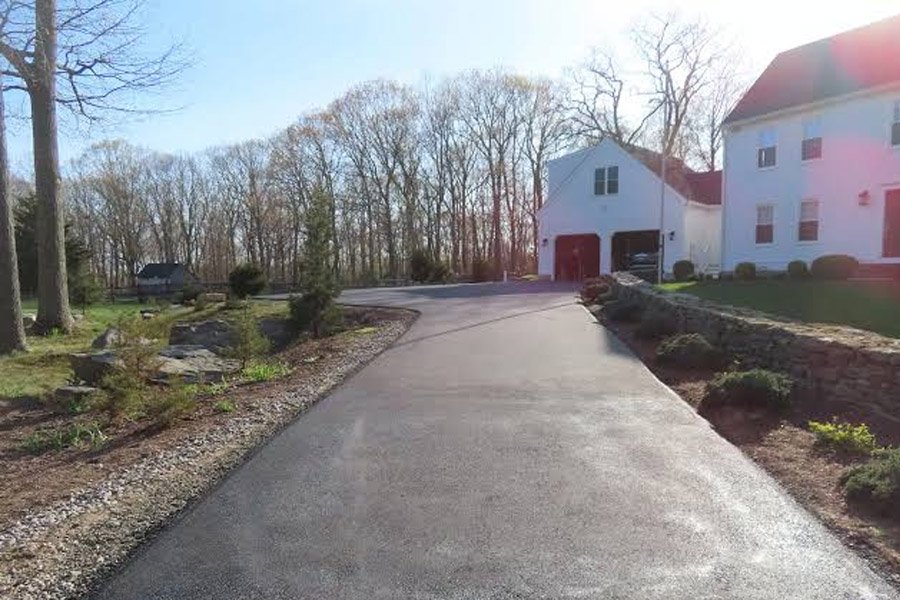
A driveway’s surface gets the attention, but the layers underneath often decide how long it stays smooth and stable. Beneath an asphalt driveway, contractors build a base that spreads vehicle loads, controls movement, and helps water leave the pavement structure. Different sites call for different materials, so soil conditions, drainage, traffic, and local construction practices all influence what belongs below the asphalt.
Crushed Stone Creates a Strong, Drainable Foundation
Crushed stone is one of the most common base materials because its sharp, angular pieces lock together under compaction. Unlike rounded gravel, those edges create friction that helps the layer resist shifting as cars, trucks, and weather place pressure on the driveway. That interlock also gives compacting equipment a predictable working surface.
Properly graded stone usually contains several particle sizes rather than one uniform size. Smaller fragments fill spaces between larger pieces, producing a dense base while still allowing enough drainage to reduce trapped moisture beneath the pavement. This support helps the pavement resist shallow ruts near tires.
Dense-Graded Aggregate Adds Stability Under Daily Traffic
Dense-graded aggregate blends crushed rock, stone dust, and fine particles into a material that compacts into a firm platform. Contractors often choose it where the driveway needs dependable support without leaving large voids that could allow the upper pavement to settle unevenly.
Compaction matters as much as the material itself because loose aggregate can move after construction. Heavy rollers or plate compactors press the particles together in controlled lifts, creating a base that can better handle repeated wheel loads over time.
Recycled Concrete Can Serve as a Practical Base Layer
Recycled concrete aggregate comes from crushed and processed concrete removed from older pavements, slabs, or structures. Once contaminants and oversized pieces are removed, the material can provide a hard, stable base for certain driveway projects while giving demolition material another useful purpose.
Performance depends on proper processing and gradation, so contractors check particle size, cleanliness, and compaction behavior before using it. Homeowners comparing concrete companies near me may also encounter recycled concrete as a base option for both asphalt and concrete paving work.
Why Is Gravel Sometimes Used Beneath Asphalt?
Gravel can work beneath pavement when the selected blend compacts well and suits the site’s drainage needs. Angular gravel generally performs better as structural support than smooth river gravel because irregular surfaces grip neighboring particles instead of rolling against them.
Drainage is one reason gravel remains useful on properties with moisture concerns. Well-built gravel can help prevent water from lingering directly under the asphalt, reducing the chance that saturated material will weaken during heavy traffic, freeze-thaw cycles, or long periods of wet weather.
Soil Conditions Decide How Much Base Material Is Needed
Native soil sits below the constructed base and can change the entire pavement design. Sandy soil may drain quickly, while clay can hold moisture and expand or soften, which means two similar driveways may need very different excavation depths and base thicknesses.
Testing or field evaluation helps contractors identify weak ground before expensive paving begins. Soft areas may require additional excavation, geotextile fabric, thicker aggregate, or other stabilization methods so the finished surface does not sink into unstable subgrade.
Geotextile Fabric Helps Separate Weak Soil From Aggregate
Geotextile fabric is not a stone base, yet it can play an important supporting role between soil and aggregate. The fabric helps keep fine subgrade particles from migrating upward into the base, where they could contaminate the stone and reduce its ability to carry loads.
Separation becomes especially useful over soft, wet, or silty soils that tend to mix with aggregate under pressure. Crews may combine fabric with crushed stone to create a cleaner boundary and preserve the designed thickness of the structural base.
How Do Contractors Choose the Right Base for the Site?
Experienced crews look beyond the surface material and evaluate slope, soil strength, water movement, expected traffic, and access for construction equipment. Those factors help determine whether crushed stone, recycled aggregate, gravel, stabilization fabric, or a combination will provide the most reliable support.
Property owners searching for concrete contractors near me may find that the same site preparation questions apply to both concrete and asphalt projects, even though the finished surfaces behave differently. Pros LLC can assess existing ground conditions, drainage, intended use, and pavement requirements to help property owners select an appropriate base system for asphalt or concrete work without treating either material as the automatic choice.


