

Strategic Planning for Exterior Home Renovations
Your home’s exterior makes the first impression. It reflects your style and protects your investment. Beyond just looks, a well-planned exterior renovation offers crucial benefits. It can significantly boost your home’s curb appeal and market value.
In September 2026, strategic exterior upgrades are more than cosmetic. They are smart investments. These projects enhance your home’s appearance. They also ensure its structural health and financial worth. Many exterior renovations offer excellent returns, especially when selling.
This comprehensive guide will help you plan your next exterior home renovation. We will explore how AI tools can visualize changes. We will also cover typical costs and returns on investment for major projects. We’ll discuss everything from choosing materials to integrating outdoor living spaces. For comprehensive projects, consulting a qualified exterior home contractor is often a wise first step.
Our goal is to give you the knowledge to make informed choices. This includes anticipating hidden issues and selecting durable materials. With careful planning, your renovation will add both beauty and lasting value to your home.
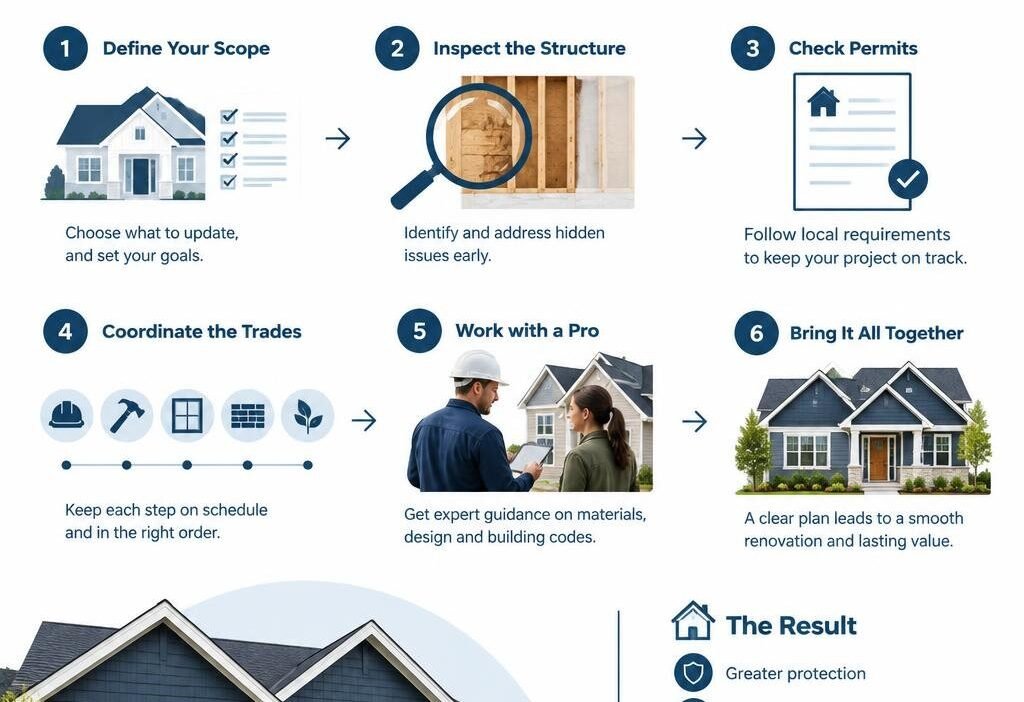
Embarking on an exterior home renovation requires meticulous strategic planning to ensure a successful outcome. This initial phase defines the project’s scope, identifies potential challenges, and lays the groundwork for a smooth execution. Without a clear plan, even the most ambitious visions can encounter costly delays and unexpected complications.
The first step involves a comprehensive scope definition. This means clearly outlining what aspects of your home’s exterior you intend to modify or upgrade. Will it be a complete overhaul, addressing everything from the roof to the foundation, or a more focused update on specific elements like siding or windows? Understanding your objectives is paramount. This includes considering not just aesthetic improvements but also functional upgrades like enhanced weather resistance, improved thermal performance, and increased energy efficiency.
Crucially, structural inspections should be an early priority. Before any cosmetic changes begin, assess the integrity of your home’s underlying structure. This can reveal issues such as water damage, rotting wood, or pest infestations that need to be addressed proactively. Ignoring these foundational problems can undermine the longevity and safety of any new exterior components.
Permitting requirements are another critical consideration. Most significant exterior renovations, especially those involving structural changes, additions, or alterations to the building envelope, will require permits from your local municipality. Failing to secure the necessary permits can lead to fines, project stoppages, and even the forced removal of completed work. We recommend researching these requirements early in your planning process.
When planning, consider the sequencing of trades. A full exterior renovation involves various specialists—roofers, siding installers, window technicians, masons, and landscapers. Coordinating their work efficiently is key to avoiding bottlenecks and ensuring each component is installed correctly, without interfering with subsequent stages. For instance, roofing typically precedes siding, and siding often comes before window and door trim.
Engaging a qualified exterior home contractor is invaluable during this phase. They can provide expert guidance on material selection, design compatibility, and navigating local building codes. Their experience helps translate your vision into a practical, actionable plan, ensuring that all elements of your project, from the building envelope to architectural cohesion, are considered.
Deciding between a full exterior remodel and a phased approach is a common dilemma. A full remodel, while a larger initial investment, can often be more cost-effective in the long run by bundling labor and materials, reducing duplicate demolition, and ensuring a cohesive design. However, a phased approach allows homeowners to spread costs over time and prioritize urgent repairs or high-impact cosmetic upgrades.
Feature Full Exterior Remodel Phased Approach Scope Comprehensive, simultaneous updates to multiple elements Segmented, sequential updates to specific components Cost Higher upfront investment, potential long-term savings Lower initial outlay, spread over time Efficiency Streamlined labor, coordinated material delivery Flexible scheduling, less disruption at any one time Cohesion Ensures unified aesthetic and structural integrity Risk of disjointed appearance if not well-planned Disruption More intense, shorter duration Less intense, longer overall duration Hidden Issues Easier to address comprehensively May uncover new issues with each phase The best approach depends on your budget, timeline, and the current condition of your home. A professional assessment can help you weigh these factors and make an informed decision.
Utilizing AI Visualization for Exterior Home Renovations
In September 2026, technology has revolutionized the way we plan home improvements, and exterior renovations are no exception. AI visualization tools, like the one we’re discussing, have emerged as game-changers, making the renovation planning process faster, less costly, and significantly more accessible for homeowners.
These innovative platforms allow you to upload a clear exterior photo of your home – even a smartphone image with good lighting works well. Once uploaded, the AI gets to work, transforming your current facade into a digital canvas. You can then experiment with a myriad of design options without committing to any physical changes or incurring design fees.
The power of AI lies in its ability to generate realistic architectural renderings in seconds. You can select a renovation style – perhaps modern, rustic, or colonial – and then specify desired material changes. Imagine seeing your home with new siding, different window styles, a fresh paint color, or even a completely new roofing material. These tools allow for detailed material simulation, letting you visualize brick, stucco, fiber cement, or various wood claddings. You can even try out different trim colors or add stone accents.
Beyond just materials, AI tools can help you experiment with architectural elements. Want to see how a new portico would look? Or perhaps black trim around your windows? The AI can integrate these features into your digital preview. This capability extends to landscape integration, allowing you to see how new plantings, a redesigned walkway, or even an outdoor living space might complement your home’s updated facade.
These digital previews serve as an invaluable communication tool. Once you’ve refined your design, you can download the high-resolution images and share them directly with contractors. This eliminates much of the guesswork and potential miscommunication that can occur when trying to describe a vision. Contractors can clearly see your preferences, which aids in accurate quoting and ensures everyone is aligned on the project goals. While these tools don’t directly provide cost estimates, the detailed visualizations can certainly inform budgeting discussions with your chosen professionals. For those with North American homes, many AI models are specifically optimized for typical architectural styles found in the region, ensuring highly relevant and accurate results.
Anticipating Hidden Structural Damage and Concealed Costs
One of the most critical aspects of exterior home renovation planning is anticipating the potential for hidden structural damage and the associated concealed costs. While cosmetic upgrades are exciting, neglecting underlying issues can lead to far greater expenses down the line, compromising the integrity and longevity of your entire renovation.
During the initial assessment, or once demolition begins, it’s common to uncover problems that were not visible from the surface. Water intrusion is a prime culprit, often leading to sheathing rot, damaged insulation, and even compromised structural framing. This can be caused by faulty flashing around windows and doors, inadequate roof drainage, or cracks in the existing cladding. Similarly, pest damage from termites, carpenter ants, or rodents can weaken wood components, necessitating extensive repairs before new materials can be installed.
These discoveries highlight the importance of budgeting for a contingency reserve. For straightforward projects, a 10% contingency is often recommended. However, for older homes or properties with known deferred maintenance, increasing this to 15-20% is a prudent measure. This reserve acts as a financial buffer to absorb the cost of unforeseen repairs, preventing your project from grinding to a halt or forcing you to compromise on quality.
Proper flashing repair is non-negotiable. Flashing, typically made of metal or synthetic materials, is installed at vulnerable points like window and door openings, roof-to-wall intersections, and along the foundation to divert water away from the building envelope. If existing flashing is faulty or missing, it must be replaced or installed correctly to prevent future water damage. This is an area where cutting corners will inevitably lead to expensive problems later.
Furthermore, building codes are continually updated, and what was acceptable decades ago may not meet current standards. During a renovation, especially if structural elements are exposed, you may be required to bring certain components up to code. This could involve upgrading insulation, reinforcing framing, or ensuring proper ventilation. While these requirements add to the cost, they contribute significantly to your home’s safety, energy efficiency, and long-term value.
Understanding that a low bid might not always be the cheapest option is crucial. Contractors who provide significantly lower quotes might be making different assumptions about the extent of hidden damage or the quality of materials and labor. A bid that thoroughly accounts for potential issues and includes allowances for unforeseen repairs, while seemingly higher upfront, can often save you money and stress by preventing costly rework. Investing in a thorough inspection and choosing a contractor known for transparency and quality workmanship can mitigate many of these risks.
High-Impact Building Envelope and Facade Upgrades
The building envelope—comprising your home’s roof, walls, windows, and foundation—is its primary defense against the elements. Upgrading these components during an exterior renovation offers more than just aesthetic appeal; it significantly enhances weather resistance, improves thermal performance, and boosts energy efficiency. These functional benefits, combined with a refreshed look, collectively contribute to substantial curb appeal.
Investing in a robust building envelope means your home will be better protected from rain, wind, snow, and extreme temperatures. This protection translates into a more comfortable interior environment and can lead to noticeable reductions in heating and cooling costs. Modern materials and installation techniques are designed to create a tighter, more insulated shell, minimizing air leaks and thermal bridging.
Beyond the practical advantages, the facade of your home is its public face. High-impact upgrades to siding, windows, and entryways can dramatically transform its appearance, reflecting contemporary design trends or restoring classic charm. This transformation is not merely superficial; it signals a well-maintained and cared-for property, which is a key factor in increasing its market value.
When considering these upgrades, we look for materials and designs that offer a balance of durability, low maintenance, and aesthetic excellence. The goal is to create a harmonious exterior that is both beautiful and built to last, providing long-term value and protection for your investment.
Siding Materials: Fiber Cement, Vinyl, and Engineered Wood
Choosing the right siding material is one of the most impactful decisions in an exterior renovation, affecting your home’s appearance, durability, and long-term maintenance. Among the most popular options available in September 2026 are fiber cement, vinyl, and engineered wood, each offering distinct advantages.
Fiber Cement Siding: Renowned for its exceptional durability, fiber cement siding is a composite material made from cement, sand, and cellulose fibers. It is highly resistant to fire, pests, rot, and impact damage, making it an excellent choice for longevity. Fiber cement can mimic the look of wood, stucco, or masonry, offering a wide range of aesthetic possibilities, from traditional clapboard to modern board-and-batten styles. It holds paint exceptionally well, allowing for vibrant, long-lasting colors. While its initial installation cost can be higher than vinyl, its minimal maintenance requirements and robust protection often make it a worthwhile investment. It also provides excellent moisture barriers and can contribute to a more insulated home.
Vinyl Siding: A perennially popular choice, vinyl siding offers an attractive combination of affordability, versatility, and low maintenance. Made from PVC (polyvinyl chloride) resin, it comes in a vast array of colors, profiles (e.g., Dutchlap, clapboard, shakes), and textures. Vinyl is resistant to rot, insects, and moisture, and it never needs painting, significantly reducing long-term upkeep. Modern vinyl siding is engineered for greater rigidity and fade resistance than older generations. It can be installed with insulation backing, further enhancing its thermal performance and contributing to energy savings. Its ease of installation often translates to quicker project timelines.
Engineered Wood Siding: This option provides the classic aesthetic of natural wood without many of its drawbacks. Engineered wood siding is manufactured by combining wood fibers with resins and waxes, then compressing them under high heat. The result is a product that is more durable and stable than traditional wood, offering enhanced resistance to moisture, rot, and pests. It comes pre-primed or pre-finished, making installation faster and reducing on-site painting. Engineered wood offers a wide range of styles, including lap siding, panels, and shakes, allowing for a warm, natural look that can be customized with paint or stain. While it requires more maintenance than vinyl or fiber cement (typically repainting every 10-15 years), it is generally less demanding than solid wood.
When selecting siding, consider your local climate, desired aesthetic, budget, and long-term maintenance preferences. Each material offers unique benefits for protecting your home and enhancing its curb appeal.
Windows, Entryways, and Architectural Roofing
Beyond siding, upgrading your windows, entryways, and roofing are crucial components of a high-impact exterior renovation. These elements not only contribute significantly to your home’s aesthetic but also play vital roles in its energy efficiency, security, and overall protection.
Windows: Replacing outdated windows with modern, energy-efficient models is a smart investment. Insulated glass, often double or triple-paned with low-emissivity (Low-E) coatings and inert gas fills (like argon), dramatically improves thermal performance. This reduces heat transfer, keeping your home warmer in winter and cooler in summer, leading to lower energy bills. Beyond efficiency, new windows enhance curb appeal with updated styles, frame materials (vinyl, fiberglass, wood, aluminum), and grid patterns. They also improve sound insulation and security. Large picture windows can transform interior spaces by maximizing natural light and offering expansive views, seamlessly connecting indoor and outdoor environments.
Entryways: Your front door is a focal point of your home’s facade, offering a direct invitation to visitors. Upgrading to a new steel or fiberglass door provides superior security, durability, and energy efficiency compared to older wood doors. Steel doors are robust and offer excellent insulation, while fiberglass doors can mimic the look of real wood with less maintenance and greater resistance to warping or rotting. Beyond the door itself, consider adding a grand entrance with sidelights and a transom window to create a more welcoming and impressive entry point. Paired with modern hardware and integrated lighting, a new entryway can significantly boost curb appeal and make a strong first impression.
Architectural Roofing: The roof is your home’s first line of defense against the elements. Upgrading to architectural shingles or a standing seam metal roof offers enhanced protection and a distinct aesthetic. Architectural shingles, also known as laminate or dimensional shingles, are heavier and more durable than traditional 3-tab shingles, offering a multi-dimensional look that resembles natural wood shakes or slate. They typically come with longer warranties and better wind resistance. Standing seam metal roofs, increasingly popular for their modern, clean lines and exceptional longevity, are highly durable, fire-resistant, and energy-efficient. They can last 40-70 years and are an excellent choice for contemporary or modern farmhouse designs. For added architectural flair, consider integrating a portico addition, which not only creates a sheltered entryway but also adds visual depth and a touch of elegance to your home’s facade. These roofing choices provide weather resistance and contribute to the overall architectural integrity and value of your property.
Integrating Outdoor Living, Hardscaping, and Landscaping
A truly comprehensive exterior renovation extends beyond the immediate structure of your home to encompass the surrounding outdoor spaces. Integrating outdoor living areas, hardscaping, and thoughtful landscaping can dramatically enhance your property’s functionality, aesthetic appeal, and overall lifestyle value. These elements work in concert to create a seamless transition between your home’s interior and exterior, transforming your yard into an extension of your living space.
Outdoor living spaces, such as decks, patios, and screened porches, provide dedicated areas for relaxation, dining, and entertainment. They expand your usable square footage and offer opportunities to enjoy the outdoors in comfort. The design of these spaces should harmonize with your home’s architectural style and material palette, creating a cohesive environment.
Hardscaping, which includes elements like walkways, driveways, retaining walls, and fire features, provides structure and definition to your outdoor areas. It enhances accessibility, manages water flow, and adds visual interest. Thoughtful hardscaping can guide visitors, delineate different zones within your yard, and create focal points.
Architectural lighting plays a crucial role in both safety and ambiance. Strategically placed lighting can illuminate pathways, highlight architectural features, and create a warm, inviting glow for evening gatherings. It extends the usability of your outdoor spaces well into the night.
Finally, landscaping ties everything together. The careful selection and placement of plants, trees, and shrubs can soften hardscape lines, provide shade, privacy, and seasonal color. Boundary fencing not only defines your property lines but also contributes to privacy and security, completing the integrated outdoor design.
When these elements are planned and executed together, they create a holistic exterior environment that is both beautiful and highly functional, significantly boosting your home’s curb appeal and enhancing your quality of life.
Curb Appeal Enhancements: Driveways, Lighting, and Greenery
The immediate surroundings of your home play a pivotal role in its curb appeal, influencing first impressions and overall perceived value. Enhancing elements like driveways, outdoor lighting, and greenery can provide significant visual returns without necessarily requiring a full structural overhaul.
Driveway Restoration: Your driveway is often one of the largest hardscape features on your property and a prominent visual element. An old, cracked, or stained driveway can detract from even the most beautiful home. Restoration can involve repairing cracks, resurfacing with fresh asphalt or concrete, or completely replacing it with new materials like pavers or decorative concrete. Beyond repair, consider enhancing its appearance through professional cleaning, sealing, or even adding decorative borders. For those seeking durable and aesthetically pleasing solutions for their paved surfaces, exploring options for quality paving and seal coating can make a remarkable difference in both appearance and longevity. A well-maintained driveway not only looks better but also improves safety and functionality.
Outdoor Lighting: Thoughtful outdoor lighting serves multiple purposes: it enhances safety, improves security, and creates ambiance. Low-voltage landscape lighting can highlight key architectural features of your home, illuminate pathways, and draw attention to specimen plants. Entryway lighting, such as sconces flanking the front door or recessed lights in a portico, ensures a welcoming and well-lit approach. Solar garden lights offer a budget-friendly option for adding subtle illumination to garden beds or along walkways. Beyond aesthetics, proper lighting deters intruders and makes navigating your property at night much safer.
Greenery and Landscaping: The power of well-executed landscaping cannot be overstated. Fresh, vibrant greenery instantly elevates curb appeal. This involves more than just mowing the lawn; it encompasses strategic planting, mulching, and maintenance. Consider native plantings that thrive in your local climate, reducing water usage and maintenance. Adding colorful annuals or perennials near the entrance creates an inviting pop of color. Trimming overgrown shrubs and trees, planting new, mature specimens, and ensuring healthy, green grass all contribute to a polished look. Even simple updates like fresh mulch in garden beds can make a significant difference. Combining these elements with upgraded entryway hardware, such as new house numbers, a stylish mailbox, or a decorative door knocker, completes the picture of a meticulously cared-for home.
These enhancements, though seemingly minor individually, collectively create a powerful visual statement that significantly boosts your home’s curb appeal and leaves a lasting positive impression.
Expanding Functional Space with Decks, Patios, and Structures
Modern homeowners increasingly value outdoor living spaces as extensions of their interior environments. Expanding your functional space with well-designed decks, patios, and other outdoor structures significantly enhances your home’s livability and can be a major draw for potential buyers. These additions cater to a desire for connection with nature and provide versatile areas for entertainment, relaxation, and recreation.
Decks: A well-built deck can transform an unused backyard into a vibrant social hub. Whether constructed from natural wood (like cedar or redwood) or low-maintenance composite materials, decks offer elevated platforms perfect for outdoor dining, lounging, and entertaining. Multi-level decks can create distinct zones for different activities, while integrated seating and planters add functionality and aesthetic appeal. The design should consider sun exposure, views, and seamless access from your home’s interior.
Patios: Patios, typically at ground level, offer a robust and versatile outdoor surface. They can be constructed from a variety of materials, including concrete, natural stone, brick, or pavers, allowing for diverse aesthetic expressions. Paver patios are particularly popular for their durability, design flexibility, and ease of repair. They can be shaped to fit any landscape and integrated with features like fire pits, sitting walls, and built-in planters. Patios are excellent for creating intimate gathering spots or expansive entertainment areas.
Covered Porches and Screened Porches: For those seeking protection from the elements, covered porches and screened porches are ideal. A covered porch provides shade from the sun and shelter from rain, extending your outdoor season. A screened porch takes this a step further, offering protection from insects while allowing fresh air to circulate. These structures create comfortable, semi-outdoor rooms that can be enjoyed almost year-round, adding significant lifestyle value.
Outdoor Kitchens and Fire Features: To elevate the outdoor living experience, consider incorporating an outdoor kitchen or fire features. An outdoor kitchen, complete with a grill, sink, and perhaps a refrigerator, transforms al fresco dining into a gourmet experience. Fire pits or outdoor fireplaces provide warmth, ambiance, and a natural gathering point for family and friends, extending the usability of your outdoor spaces into cooler evenings.
These expansions of functional outdoor space not only enhance your enjoyment of your home but also represent a tangible increase in its overall value, making it more appealing to a wider range of buyers.
Budgeting, Costs, and Return on Investment
Understanding the financial implications of an exterior renovation is crucial for successful planning. While we won’t delve into specific pricing, it’s important to grasp the concepts of cost versus value, market resale impact, potential energy savings, and how these projects can influence appraisal value and overall project ROI (Return on Investment).
Exterior renovations are consistently cited as some of the most impactful home improvements for boosting resale value. Unlike interior remodels that cater to specific tastes, exterior upgrades appeal to a broader audience by improving curb appeal and protecting the home’s structural integrity.
The “cost vs. value” ratio is a key metric. This compares the average cost of a particular renovation project to the value it retains at resale. Projects with high ROI mean you recoup a significant portion, or even more, of your investment when you sell. For instance, certain exterior projects, like garage door replacements or new entry doors, frequently show very high returns, sometimes exceeding 100% of the initial outlay.
Beyond direct resale value, exterior renovations can lead to substantial energy savings. Upgrading to energy-efficient windows, doors, and siding with improved insulation can significantly reduce your heating and cooling costs over time. These operational savings contribute to the overall financial benefit of the renovation.
Furthermore, a well-executed exterior renovation can positively influence your home’s appraisal impact. Appraisers consider the condition, quality, and aesthetic appeal of a home’s exterior when determining its market value. A fresh, well-maintained exterior signals a home that has been cared for, which can lead to a higher appraised value. Conversely, deferred exterior maintenance can lead to a lower appraisal.
When planning, consider these financial aspects comprehensively. The goal is not just to spend money, but to invest it wisely in upgrades that enhance your home’s beauty, functionality, and long-term financial health.
Budgeting and Phasing Exterior Home Renovations
Effective budgeting and strategic phasing are paramount to managing the financial aspects of an exterior home renovation. Without a clear financial roadmap, projects can quickly spiral out of control.
One key strategy is component grouping. When possible, combining overlapping projects, such as replacing windows and siding simultaneously, can lead to significant savings. This is because both tasks often require similar preparation, scaffolding, and demolition, reducing duplicate labor costs. Similarly, coordinating roof replacement with gutter and fascia upgrades makes logical and economic sense.
Understanding cost tiers helps in setting realistic expectations. Exterior renovations typically fall into different tiers:
- Light updates: Focus on cosmetic improvements like painting, landscaping, or minor repairs.
- Focused remodels: Target specific areas like a new roof, siding, or window replacement.
- Major whole-house exteriors: Involve comprehensive upgrades to most, if not all, exterior elements.
- Complex renovations: Include structural changes, additions, or high-end custom finishes.
The scope of your project will dictate which tier your budget falls into.
Allowance reserves are critical for managing unforeseen expenses. As discussed earlier, hidden damage (like rot or pest issues) is a common discovery during exterior demolition. We recommend setting aside a contingency fund—typically 10-20% of the project’s estimated cost—to cover these unexpected repairs without derailing your budget or timeline.
Lifecycle management involves considering the long-term costs and benefits of material choices. While some materials might have a higher upfront cost, their superior durability, lower maintenance requirements, and longer lifespan can make them more cost-effective over decades. For example, fiber cement siding might cost more than vinyl initially but offers greater longevity and resistance to elements, reducing future repair or replacement needs.
Finally, obtaining detailed contractor quotes is essential. Ensure that each quote clearly outlines the scope of work, materials to be used, labor costs, and any allowances for unforeseen issues. Comparing multiple, itemized quotes allows you to understand what’s included and identify potential discrepancies, helping you choose the best value for your investment. Don’t let a finished exterior hide a budget problem; careful planning ensures your renovation is a financial success.
Frequently Asked Questions About Exterior Home Remodeling
Homeowners often have many questions when considering exterior renovations. Here, we address some of the most common inquiries to help you navigate your project with confidence.
What exterior home upgrades offer the highest return on investment?
When selling a home, certain exterior upgrades consistently yield a high return on investment (ROI). Among the top performers are garage door replacements and new entry doors. These projects offer a significant boost to curb appeal and perceived value for a relatively modest investment, often recouping a very high percentage of their cost. Fiber cement siding replacement also ranks highly, providing excellent durability, aesthetic appeal, and protection, which buyers value. While roof replacement is a substantial investment, it’s often considered a necessary upgrade that prevents a negative impact on resale value rather than a direct ROI booster. Upgrades that enhance both aesthetics and the structural integrity of the home tend to offer the best returns.
How do I determine if my home needs a full exterior overhaul or cosmetic updates?
The decision between a full exterior overhaul and cosmetic updates hinges on the underlying condition of your home. A full exterior overhaul is typically warranted if there are significant issues with the building envelope, such as widespread water damage, rotting sheathing, compromised structural integrity, or severely deteriorated siding, windows, or roof. These issues indicate a need for comprehensive intervention to protect your home. Conversely, cosmetic updates are suitable if the home’s structural integrity and building envelope are sound, but its appearance is dated or tired. This might include fresh paint, updated landscaping, new light fixtures, or minor repairs. A professional inspection can help assess the extent of any hidden damage and guide your decision.
Is it more cost-effective to replace siding and windows at the same time?
Generally, yes, it is often more cost-effective to replace siding and windows concurrently. This approach offers several advantages. Both projects utilize the same wall areas, meaning that scaffolding, demolition, and site preparation costs can be shared, reducing duplicate labor. Crucially, replacing both at once allows for integrated flashing and moisture protection. When new windows are installed, the existing siding is often disturbed, making it an ideal time to ensure proper sealing and flashing for both components. This coordinated effort ensures a continuous, robust building envelope, enhancing moisture protection and energy efficiency. Attempting these projects separately can lead to additional costs for re-demolition, re-flashing, and potential gaps in your home’s weather barrier.
Conclusion
Embarking on an exterior home renovation is a significant undertaking, but with careful planning and informed decisions, it can yield immense rewards. From boosting curb appeal and enhancing property value to improving structural protection and energy efficiency, the benefits are far-reaching.
We’ve explored how strategic planning, including scope definition and anticipating hidden costs, forms the bedrock of a successful project. The advent of AI visualization tools empowers homeowners to experiment with designs and materials, streamlining communication with contractors. We’ve also highlighted the impact of high-quality building envelope upgrades—siding, windows, entryways, and roofing—which protect your home while transforming its aesthetic. Furthermore, integrating outdoor living spaces, hardscaping, and thoughtful landscaping extends your home’s functionality and charm.
The goal is to create long-term value through design cohesion and structural protection. By prioritizing planning diligence, understanding the cost-benefit of various upgrades, and engaging qualified professionals, you can ensure your exterior renovation is a wise investment that brings lasting beauty and comfort to your home for years to come.


