Essential Guidelines for Safe Swimming and Aquatic Experiences
Water offers immense joy and unforgettable experiences. From the refreshing splash of a backyard pool to the exhilarating vastness of lakes and oceans, aquatic environments are a cherished part of life. However, these moments of fun come with significant responsibilities.
The reality is stark: drowning is the leading cause of death for children aged 1 to 4. For those between 5 and 14, it’s the second leading cause of unintentional injury death. Alarmingly, over half of U.S. adults have never taken a swimming lesson, leaving many vulnerable. Furthermore, for every child who dies from drowning, seven more receive emergency care for non-fatal incidents, which can have lasting impacts.
Ensuring safe swimming and aquatic experiences requires constant vigilance and preparation. This extensive guide will equip you with the knowledge and strategies to protect yourself and your loved ones. We will explore essential safety tips for natural waters like lakes, rivers, and oceans, and highlight key differences from swimming in pools. We’ll also cover vital equipment, effective supervision techniques, and how to prevent waterborne illnesses. Our aim is to foster a culture of water competence, combining skill, knowledge, and proactive safety measures. Learning to swim is a critical first step for all ages, and formal instruction can provide a strong foundation for lifelong water safety. For those looking to build fundamental skills, year-round indoor swim lessons are an excellent resource for developing confidence and competence in the water. We are dedicated to helping you enjoy every aquatic adventure safely and responsibly.
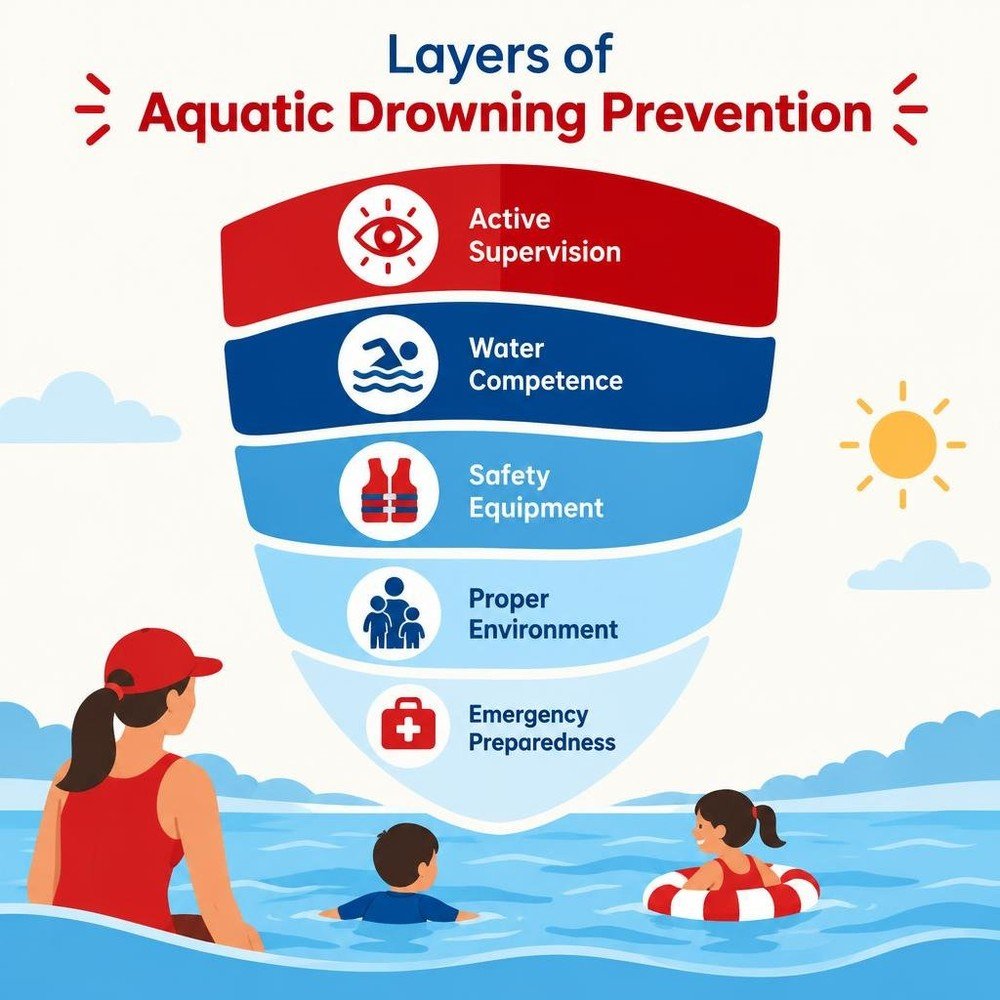
Active supervision is the cornerstone of water safety, particularly for children and inexperienced swimmers. Drowning can happen silently and quickly, often within mere minutes, even when adults are nearby. This is why a layered approach to protection is so crucial, with supervision forming the most critical layer. We must always remember that even a moment of distraction can have tragic consequences; statistics show that many child drownings occur when they are out of sight for less than five minutes.
To truly ensure safety around water, consider these active supervision rules:
- Constant Visual Supervision: This means maintaining an uninterrupted line of sight to all swimmers, especially children. Your eyes should be on the water at all times, scanning for any signs of distress. This vigilance is paramount, as drowning does not always involve splashing or yelling; it can be a quiet, subtle event.
- Touch Supervision: For infants, toddlers, and non-swimmers, supervision must be even closer. An adult should be within arm’s reach, able to physically assist them immediately if needed. This “touch supervision” is non-negotiable for young children in or near the water.
- Designated Water Watchers: In group settings, assign a specific adult to be the “Water Watcher.” This person’s sole responsibility is to watch the water, free from distractions. They should wear a designated badge or hat to signify their role, and the responsibility should be rotated among adults to prevent fatigue. This ensures that there is always a fresh, focused pair of eyes on the swimmers.
- Eliminate Distractions: Put away phones, books, and any other potential distractions. Avoid consuming alcohol or drugs when supervising children near water, as these can impair judgment and reaction time. Your full attention is the most powerful safety tool you possess.
- Never Rely Solely on Lifeguards: While lifeguards are highly trained professionals, their presence does not absolve parents and caregivers of their supervision responsibilities. Lifeguards have a wide area to cover, and your child is your primary responsibility.
- Be Prepared for Emergencies: Have a fully charged phone readily available to call for help, and know how to perform CPR. Immediate action in an emergency can make a life-saving difference.
By adhering to these stringent supervision guidelines, we can significantly reduce the risk of accidents and ensure that aquatic environments remain places of joy and safety.
Building Water Competence for Safe Swimming and Aquatic Experiences
Water competence encompasses more than just the ability to swim; it involves a combination of skills, knowledge, and confidence that enables individuals to prevent and respond to aquatic emergencies. This holistic approach is vital for all ages, from infants to adults.
Early swimming lessons are a critical step in building this competence. Children can begin learning water safety skills and basic swimming techniques at a young age, which has been shown to significantly reduce drowning risk. These lessons typically cover survival floating, which teaches children to stay afloat on their back, and fundamental stroke mechanics that allow them to propel themselves to safety. Beyond the physical skills, structured swimming education also instills a crucial sense of water safety confidence, teaching children to respect the water and understand its potential dangers.
It’s never too late to learn to swim. With over half of U.S. adults having never taken a swimming lesson, there’s a significant opportunity to improve water safety across the population. Adult swim instruction can provide invaluable skills and confidence, empowering individuals to enjoy aquatic activities safely and to be better prepared to assist others in an emergency. Many facilities offer comprehensive swim programs tailored for adults, focusing on comfort, technique, and endurance. Investing in structured swimming education is an investment in lifelong safety and enjoyment of water.
Life Jackets and Flotation Equipment Standards
When it comes to staying safe in and around water, especially in natural environments or during boating activities, the right equipment can be a lifesaver. However, it’s crucial to distinguish between genuinely protective gear and items that can create a false sense of security.
The gold standard for personal flotation devices (PFDs) is U.S. Coast Guard approval. These life jackets are rigorously tested to ensure they provide adequate buoyancy and will keep a person’s head above water. Proper fit testing is equally important; a life jacket should fit snugly, not ride up around the ears or chin. It’s essential to check the weight and chest size recommendations on the label and ensure it’s appropriate for the wearer. Both foam-filled and inflatable vests are available, with foam vests offering inherent buoyancy and inflatable vests requiring activation (manual or automatic). For boating safety compliance, wearing a Coast Guard-approved life jacket is often legally required and always recommended. Alarmingly, approximately 85% of people who drowned while boating in 2022 were not wearing a life jacket, highlighting the critical importance of this simple safety measure.
Conversely, many popular flotation aids, such as inflatable “floaties,” arm bands, or even “puddle jumpers,” are not designed to be life-saving devices. They can give children and parents a dangerous, false sense of security. These items can deflate, slip off, or position a child incorrectly in the water, making them ineffective in an emergency. Our unique insight suggests that floaties can slip off faster than you can say ‘splash!’, underscoring their unreliability. While they might aid in learning or play under direct, arm’s-length supervision, they should never be considered substitutes for a U.S. Coast Guard-approved life jacket or for constant adult supervision. Prioritize certified, properly fitted life jackets for true safety in aquatic environments.
Comparing Pools and Natural Water Environments
While both pools and natural bodies of water offer refreshing experiences, the risks and safety considerations associated with each are distinctly different. Understanding these differences is paramount for ensuring safe swimming and aquatic experiences.
Here’s a comparison to highlight the key distinctions:
| Feature | Swimming Pools | Natural Water Environments (Lakes, Rivers, Oceans) |
|---|---|---|
| Depth & Visibility | Consistent, often shallow ends, clear visibility. | Unpredictable, sudden drop-offs, murky or unclear water. |
| Underwater Hazards | Primarily man-made (drains, steps, toys), typically visible. | Rocks, logs, plants, marine life, debris, strong currents, uneven bottom. |
| Water Temperature | Often controlled, relatively stable and comfortable. | Highly variable, can be dangerously cold, leading to cold water shock. |
| Currents & Tides | None (except for artificial wave pools). | Strong currents, undertows, rip currents, tidal changes. |
| Entry/Exit Points | Clearly defined steps, ladders, shallow entry. | Often uneven, slippery banks, steep drop-offs, difficult access. |
| Water Quality | Chemically treated, monitored for pathogens. | Variable, susceptible to pollution, bacteria, algae blooms. |
| Supervision/Lifeguards | Often present in public pools, controlled environment. | Less common, often only in designated areas, or seasonal. |
| Weather Impact | Minimal, except for lightning. | Significant: storms, lightning, wind, waves, fog, flash floods. |
The controlled environment of a pool offers predictable conditions, making it easier to manage risks. However, natural bodies of water introduce a host of unpredictable elements that demand a higher level of awareness and preparedness. The National Park Service emphasizes that swimming in natural waters is profoundly different from swimming in a pool, necessitating thorough preparation to stay safe.
Natural Water Safety for Safe Swimming and Aquatic Experiences
Swimming in natural waters like lakes, rivers, and oceans presents unique challenges that require specific knowledge and precautions. Unlike the controlled environment of a pool, these settings are dynamic and can change rapidly.
One of the most critical hazards in natural waters is currents. In oceans, rip currents are powerful channels of water flowing away from the shore. If caught in a rip current, the crucial advice is not to fight against it. Instead, swim parallel to the shore until you are out of the current, then swim back to land. In rivers, undertows can pull swimmers down, and the current itself can be deceptively strong. If caught in a river current, the best strategy is to swim across the current, angling towards the nearest shore, rather than trying to swim directly against it.
Tides in coastal areas also play a significant role. High and low tides can drastically alter water depth, expose hidden hazards, and create strong currents. Always check local tide schedules before entering the ocean, and be aware of how rapidly conditions can change.
Changing weather conditions are another major factor. Thunderstorms, lightning, and flash flooding pose immediate dangers and swimming should be avoided entirely during such events. Always monitor local weather forecasts and park alerts before and during your visit. Cold water shock is also a significant risk, even on warm days. Sudden immersion in water below 70°F (21°C) can cause involuntary gasping, hyperventilation, and even cardiac arrest. Enter cold water gradually to allow your body to adjust.
When exploring the vastness of the ocean, especially through activities like ocean tours and snorkeling, choose reputable operators who prioritize safety. They will be knowledgeable about local conditions, currents, and marine life, providing a much safer experience. Always follow their instructions and wear appropriate safety gear.
Finding Designated Public and Park Swimming Areas
For families and individuals seeking safe and enjoyable aquatic experiences in natural settings, identifying designated public and park swimming areas is a crucial first step. These locations often come with enhanced safety measures and resources, making them a more secure choice than venturing into unmonitored waters.
When planning a visit to a national park or other public recreational area, always check the park’s official website or contact them directly. Look for sections titled “Plan Your Visit” or “Things to Do” to find specific information on national park swimming rules and designated swimming zones. Not all bodies of water within parks are safe or permitted for swimming, and some may have seasonal restrictions or closures due to water quality or hazardous conditions.
Many designated swimming areas, particularly during peak seasons, will feature lifeguard stations. While lifeguards provide an invaluable layer of protection, their presence does not replace the need for constant, active supervision, especially for children. It’s also wise to inquire about water quality advisories. Local health departments and park services often monitor water for bacteria or other contaminants and issue alerts when levels are unsafe.
A helpful resource in some parks and public beaches are life jacket loaner stations. These allow visitors who may not own a U.S. Coast Guard-approved life jacket to borrow one for the day, ensuring proper flotation for everyone. Always look for and adhere to park safety signage, which provides critical information on local hazards, regulations, and emergency procedures. By utilizing these resources and choosing well-managed locations, we can significantly enhance the safety of our natural water adventures.
Maintaining Healthy Pool Environments and Preventing Illness
For pool owners, ensuring a safe and healthy environment goes beyond just preventing drowning; it also involves diligent maintenance to prevent injuries and the spread of recreational water illnesses (RWIs). A pool can be a source of immense enjoyment, but without proper care, it can also pose significant health risks.
One of the most effective ways to prevent drowning in a home pool is through four-sided isolation fencing. This barrier should be at least four feet high, completely enclosing the pool and separating it from the house and yard. Crucially, the fence must have self-closing and self-latching gates that are out of a child’s reach. This prevents unsupervised access, especially during non-swim times, when many child drownings in home pools occur. Additionally, ensure that pool drains are compliant with modern safety standards to prevent drain entrapment, a serious hazard.
Proper chemical storage safety is another vital aspect. Pool chemicals, while essential for sanitation, can be dangerous if mishandled. Approximately 4,500 U.S. emergency department visits each year are due to pool chemical injuries, with over a third involving children or teens. Always read and follow product label directions carefully. Wear appropriate personal protective equipment (PPE), such as masks, gloves, and goggles, when handling chemicals. Store them securely in a cool, dry, well-ventilated area, away from children and pets, and never mix different chemicals unless explicitly instructed by the manufacturer. Remove all toys and attractants from the pool area when it’s not in use to avoid enticing children to enter unsupervised.
By implementing these measures, pool owners can create a much safer environment, protecting swimmers from both physical hazards and chemical-related incidents.
Water Sanitation and Recreational Water Illness Prevention
Beyond the physical safety measures, maintaining excellent water sanitation is paramount to preventing recreational water illnesses (RWIs) in both pools and natural waters. These illnesses are caused by germs spread by swallowing, breathing, or having contact with contaminated water.
In pools, the effectiveness of disinfectants like chlorine and bromine is crucial. Pool owners should test the free chlorine maintenance level and pH balance at least twice a day, and more frequently during heavy use. The recommended ranges are 1-4 parts per million (ppm) for chlorine (or 3-8 ppm for bromine) and a pH between 7.0-7.8. Maintaining these levels is vital because chlorine’s effectiveness is significantly reduced when mixed with sweat, urine, and feces.
One particularly resilient germ is Cryptosporidium, which can survive in properly treated water for more than 7 days. This highlights the importance of personal hygiene in preventing its spread. Swimmers should practice pre-swim showering for at least one minute before entering the pool. This removes dirt, sweat, and other contaminants that react with chlorine, making it less effective.
Other key hygiene practices include:
- Diarrheal Illness Prevention: Never swim when you have diarrhea, as a single diarrheal incident can release millions of germs into the water. Children with diarrhea should also be kept out of the pool. Ensure that diaper changes occur away from the poolside to prevent contamination.
- Avoid Swallowing Water: Remind everyone, especially children, not to swallow pool water.
- Ear Drying Practices: After swimming, thoroughly dry ears to prevent “swimmer’s ear” (otitis externa), an infection often caused by moisture trapped in the ear canal.
While natural waters are not chemically treated, understanding local water quality advisories is crucial. These alerts indicate potential contamination from bacteria like E. coli, often after heavy rainfall or due to agricultural runoff. By combining diligent pool maintenance with responsible personal hygiene, we can significantly reduce the risk of RWIs and ensure healthier aquatic experiences for everyone.
Frequently Asked Questions
How do swimming risks differ between open water and backyard pools?
The risks associated with swimming vary significantly between open water environments and backyard pools, primarily due to differences in control and predictability. Backyard pools offer a highly controlled environment with consistent depth, clear visibility, and chemical treatment to manage water quality. Risks typically involve inadequate supervision, lack of barriers, or improper chemical handling. In contrast, open water presents a dynamic and often unpredictable set of challenges. This includes unpredictable currents like rip currents in oceans or undertows in rivers, fluctuating depths with sudden drop-offs, and underwater hazards such as rocks, logs, or marine life that are often invisible. Additionally, visibility differences can make it difficult to spot distress or hazards, and water quality can be compromised by natural factors or pollution. While pools have physical barriers like fences, open water usually lacks such defined boundaries, requiring greater personal vigilance and awareness of environmental conditions.
What is the most effective way to supervise young children around water?
The most effective way to supervise young children around water is through constant, active, and undistracted vigilance, often referred to as “touch supervision” for the youngest children. This means an adult must be within arm’s reach of infants, toddlers, and non-swimmers at all times, ready to provide immediate assistance. In group settings, establishing a dedicated water watcher role ensures that one adult is solely responsible for monitoring the water, free from other duties or conversations. Crucially, this involves zero phone distractions or any other activities that divert attention from the water. Being prepared with emergency action readiness, including knowing CPR and having a phone nearby to call for help, further enhances effective supervision. Never rely on flotation devices or lifeguards as a substitute for direct adult supervision.
Why are inflatable floaties not recommended for non-swimmers?
Inflatable floaties, arm bands, and similar toys are generally not recommended for non-swimmers because they can provide a false sense of security to both the child and the supervising adult. These devices are not designed as life-saving equipment and lack the safety standards of U.S. Coast Guard-approved life jackets. They pose several hazards, including deflation risks, which can happen unexpectedly, and slip-off risks, where the device can easily come off a child’s arms or body, leaving them vulnerable. Instead of providing genuine safety, they can hinder a child’s natural ability to learn water skills and can create a dangerous reliance. For non-swimmers, certified life jacket alternatives that are properly fitted and Coast Guard-approved are the only safe choice for flotation, always used in conjunction with constant adult supervision.
Conclusion
As we navigate the exhilarating world of aquatic experiences, our collective commitment to safety must be as deep as our desire for enjoyment. The insights shared throughout this guide underscore the critical importance of a layered aquatic protection strategy. This means combining essential elements such as robust supervision, effective equipment, and comprehensive water competence for all ages.
The statistics on drowning, particularly among children, serve as a powerful reminder of the need for continuous supervision vigilance. Whether in a backyard pool or the vastness of natural waters, an attentive eye and immediate proximity are non-negotiable. Furthermore, equipping ourselves with life-saving skills like CPR emergency preparedness can mean the difference between life and death in those critical moments.
Fostering lifelong water safety habits is a responsibility we all share. From enrolling in structured swimming education to understanding the unique challenges of different aquatic environments, every step we take contributes to a culture where water is respected, and enjoyment is always paired with safety. By embracing these principles, we can ensure that our aquatic adventures remain sources of joy, health, and unforgettable memories for years to come.