Comprehensive Guide to Residential Roofing and Exterior Renovations
Your home is more than just a place to live; it’s a significant investment and your family’s sanctuary. Protecting it from the elements is crucial for its longevity, value, and your peace of mind. The exterior of your home, including its roof, siding, and gutters, acts as its primary defense against weather, wear, and time.
Neglecting these vital components can lead to costly damage, decreased energy efficiency, and a decline in curb appeal. That’s why understanding residential roofing and exterior renovations is so important for every homeowner.
In this comprehensive guide, we will explore everything you need to know to maintain and enhance your home’s exterior. We’ll delve into selecting the right materials, identifying signs of damage, understanding the renovation process, managing storm repairs, and choosing reliable contractors. We understand that tackling significant exterior projects, encompassing various roofing and exterior home services, can feel daunting. Our goal is to equip you with the knowledge to make informed decisions and ensure your home remains safe, beautiful, and valuable for years to come.
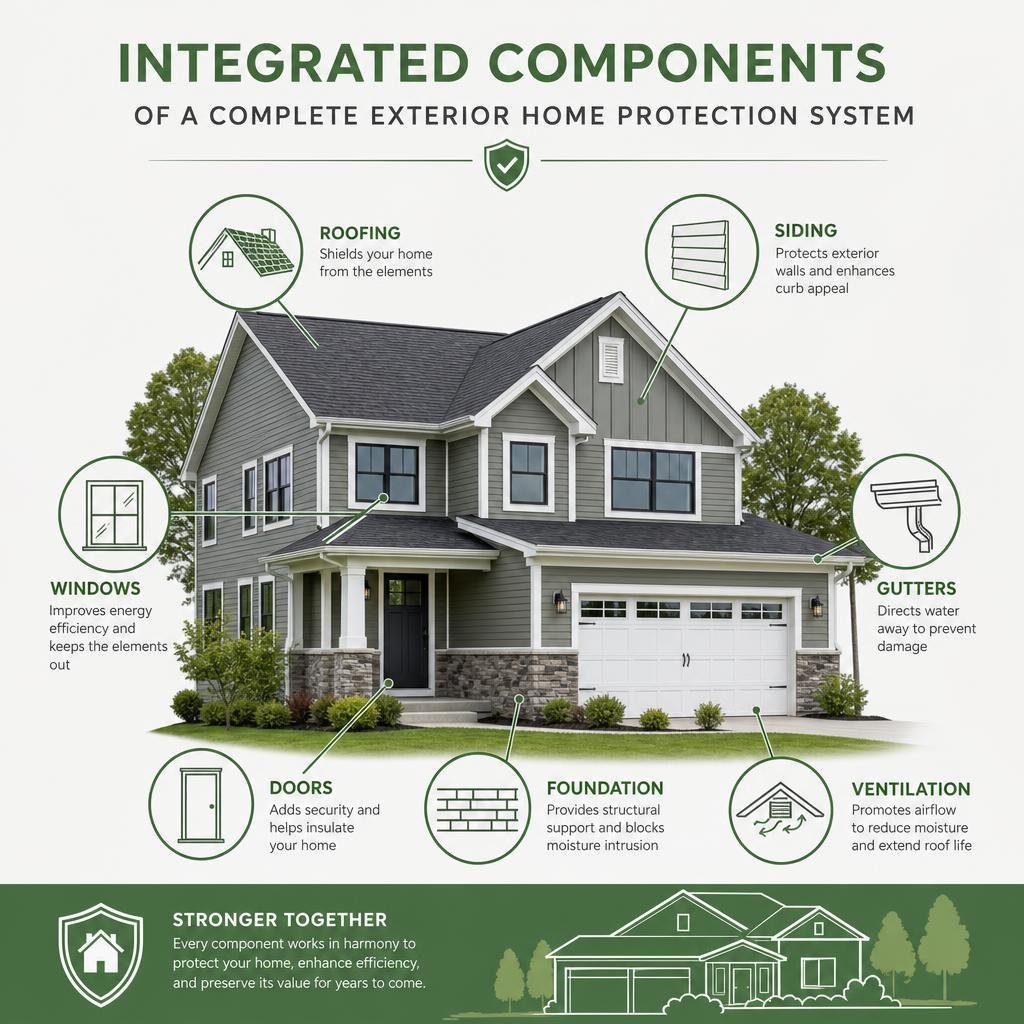
The “building envelope” refers to the physical separation between the conditioned interior and the unconditioned exterior of a building. It’s a critical concept in home construction and renovation, encompassing the roof, exterior walls (including siding, windows, and doors), and foundation. When we talk about residential roofing and exterior renovations, we’re essentially talking about fortifying this envelope. A robust building envelope is paramount for maintaining structural integrity, preventing moisture intrusion, optimizing energy efficiency, and significantly boosting your home’s curb appeal.
Proactive preventative maintenance and timely renovations are not just about aesthetics; they are vital investments that safeguard your home against deterioration. For instance, a small roof leak, if left unaddressed, can lead to extensive water damage, mold growth, and compromised structural elements like rafters and decking. Similarly, worn-out siding can allow moisture to penetrate wall cavities, leading to rot and insulation damage. By addressing these issues comprehensively, we ensure that your home remains a secure and comfortable haven for decades.
Planning Residential Roofing and Exterior Renovations for Maximum ROI
Embarking on a residential roofing or exterior renovation project is a significant undertaking, and careful planning is key to maximizing your return on investment (ROI). It’s not just about replacing old materials; it’s about making strategic choices that enhance your home’s value, performance, and aesthetic appeal.
Material Selection: The choice of materials plays a crucial role. For example, while traditional asphalt shingles are cost-effective, investing in higher-quality architectural shingles or a metal roof can offer superior longevity and a more distinct look, potentially increasing resale value. Similarly, selecting siding materials like fiber cement over vinyl might come with a higher upfront cost but offers enhanced durability and a more premium finish.
Architectural Harmony: Any new exterior element should complement your home’s existing architectural style. A modern metal roof might look out of place on a classic Victorian home, just as rustic wood shakes might clash with a contemporary design. A cohesive design ensures that renovations contribute positively to curb appeal.
Energy Savings: Modern roofing and siding materials often come with advanced insulation properties and reflective coatings that can significantly improve your home’s energy efficiency. This translates to lower heating and cooling bills, a tangible benefit that adds to your ROI over time. For instance, cool roofs can reflect sunlight and absorb less heat, reducing the load on your air conditioning system, especially in warmer climates.
Resale Value: Certain renovations consistently yield a high ROI. A new roof, for example, is often cited as one of the top home improvements for resale value, as it assures potential buyers of long-term protection. Similarly, updated siding can dramatically improve a home’s first impression. According to industry reports from early 2026, homeowners can expect to recoup a substantial portion of their investment in these areas.
Climate Adaptation: Your local climate should heavily influence your material choices. In regions with heavy snowfall, a roof designed to shed snow efficiently is critical. In areas prone to high winds or hail, impact-resistant materials are a wise investment. Understanding how different products perform under specific weather conditions is essential for long-term durability. For a comprehensive approach to home exterior upgrades, including expert advice on selecting the right materials for your region, consider consulting professionals specializing in residential roofing siding gutter solutions.
Coordinating Residential Roofing and Exterior Renovations with Siding, Gutters, and Soffits
A truly effective exterior renovation project extends beyond just the roof or just the siding; it involves a coordinated effort to upgrade all interconnected components. The roof, siding, gutters, fascia, and soffits work together as a system, forming a protective barrier against the elements. Neglecting one part can compromise the integrity of the entire system.
Fascia Boards and Soffit Ventilation: Fascia boards are the long, straight boards that run along the lower edge of the roof, directly supporting the gutters. Soffits are the undersides of the eaves, located beneath the fascia. Both play crucial roles. Fascia protects the edge of the roof decking and rafters from weather, while soffits, particularly those with vents, are vital for attic ventilation. Proper attic ventilation, facilitated by soffit vents and ridge vents, helps regulate attic temperature and moisture, preventing ice dams in winter and reducing heat buildup in summer. This extends the life of your roof and improves energy efficiency.
Seamless Gutters and Downspout Drainage: Gutters and downspouts are the unsung heroes of your home’s water management system. They collect rainwater from the roof and direct it away from your home’s foundation. Seamless gutters, custom-fabricated on-site, offer superior performance compared to sectional gutters because they have fewer joints, reducing the likelihood of leaks and clogs. Proper downspout placement and extensions are essential to ensure water drains far enough away from the foundation, preventing erosion, basement flooding, and structural damage.
Siding: Vinyl vs. Fiber Cement: Siding is your home’s primary vertical defense. Vinyl siding is a popular, cost-effective option known for its low maintenance and wide range of colors. However, fiber cement siding, while more expensive to install, offers superior durability, fire resistance, and a more premium appearance that can mimic wood or masonry. Both are designed for effective water shedding, protecting your wall sheathing from moisture.
Water Shedding and Ice Dam Prevention: The entire exterior system is designed to shed water efficiently. The roof’s slope, the overlapping nature of shingles, the drip edge, and the gutter system all work in concert. In colder climates, ice dam prevention is a critical consideration. Proper attic insulation and ventilation, along with ice and water shield underlayment on the roof, can prevent the formation of ice dams, which occur when melting snow refreezes at the eaves, causing water to back up under shingles and into the home. Coordinating these elements ensures a watertight and resilient home exterior.
Selecting the Right Residential Roofing Materials for Your Property
Choosing the right roofing material is one of the most significant decisions homeowners face during a renovation. It impacts not only the aesthetic appeal of your home but also its long-term durability, energy efficiency, and overall value. Several key factors should guide your selection process.
Pitch Assessment: The slope, or “pitch,” of your roof is a primary determinant of suitable materials. Steeply pitched roofs can accommodate a wider range of materials, including shingles, tiles, and metal. Low-slope or flat roofs, however, require specialized membrane systems designed to handle standing water without leaking.
Material Longevity: Different roofing materials offer varying lifespans. For example, asphalt shingles typically last 15-30 years, while metal roofs can last 50-70 years, and slate roofs can exceed 100 years. Your long-term plans for the home and your budget will influence how much you prioritize extreme longevity.
Weight Load: The structural capacity of your home’s framing must be considered. Materials like natural slate and concrete tiles are significantly heavier than asphalt shingles or metal. An older home might require structural reinforcement to support heavier roofing, adding to the project cost.
Climate Suitability: Your local climate dictates which materials will perform best. In areas with intense sunlight, UV-resistant materials are crucial. Regions prone to heavy snow or ice benefit from materials that shed snow easily and are less susceptible to ice dam formation. High-wind zones require materials with excellent wind uplift ratings.
Aesthetic Profiles: The visual impact of your roof is undeniable. Materials come in a vast array of colors, textures, and styles. Consider how the roofing material will complement your home’s architectural style, exterior color scheme, and the surrounding landscape. The goal is to achieve a harmonious and attractive exterior that enhances curb appeal.
Sloped Roofing Systems: Asphalt Shingles, Metal, Slate, and Wood Shake
For most residential properties with sloped roofs, a variety of materials offer distinct advantages in terms of cost, durability, and appearance.
Composite Asphalt Shingles: These are the most common and budget-friendly roofing material in the residential market. Available as 3-tab or architectural (laminated) shingles, they offer a good balance of cost-effectiveness and performance. Architectural shingles, in particular, provide a more dimensional look and often come with better wind resistance and warranties than their 3-tab counterparts. They typically last 15-30 years, depending on quality and climate.
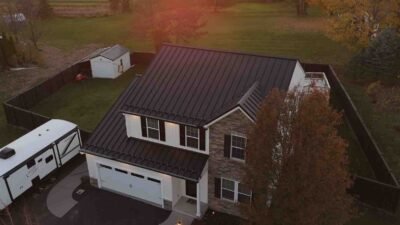
Metal Roofing: Gaining popularity, metal roofing, especially standing seam metal, offers exceptional longevity (50-70+ years), durability, and energy efficiency. It is lightweight, fire-resistant, and can withstand extreme weather conditions. While the upfront cost is higher than asphalt, its extended lifespan and low maintenance often make it a cost-effective choice over the long term. Metal roofs are also available in various colors and profiles, including those that mimic shingles or tiles.
Natural Slate Tiles: Considered a premium roofing material, natural slate offers unparalleled beauty, longevity (100+ years), and fire resistance. Each slate tile is unique, creating a distinctive and elegant roof. However, slate is very heavy, requires a robust roof structure, and is one of the most expensive options, both for materials and specialized installation.
Cedar Shakes and Shingles: Wood roofing, typically made from cedar, offers a rustic, natural aesthetic. Shakes are hand-split, giving them a more textured, rugged appearance, while shingles are sawn for a smoother finish. Wood roofs are durable but require more maintenance than other materials and have a lifespan of 20-40 years. They are also more susceptible to fire unless treated.
Fire Resistance and Wind Uplift Ratings: Regardless of material, always check its fire resistance rating (Class A, B, or C, with A being the highest) and its wind uplift rating. These ratings indicate how well the material will perform under specific hazard conditions, crucial for safety and insurance purposes.
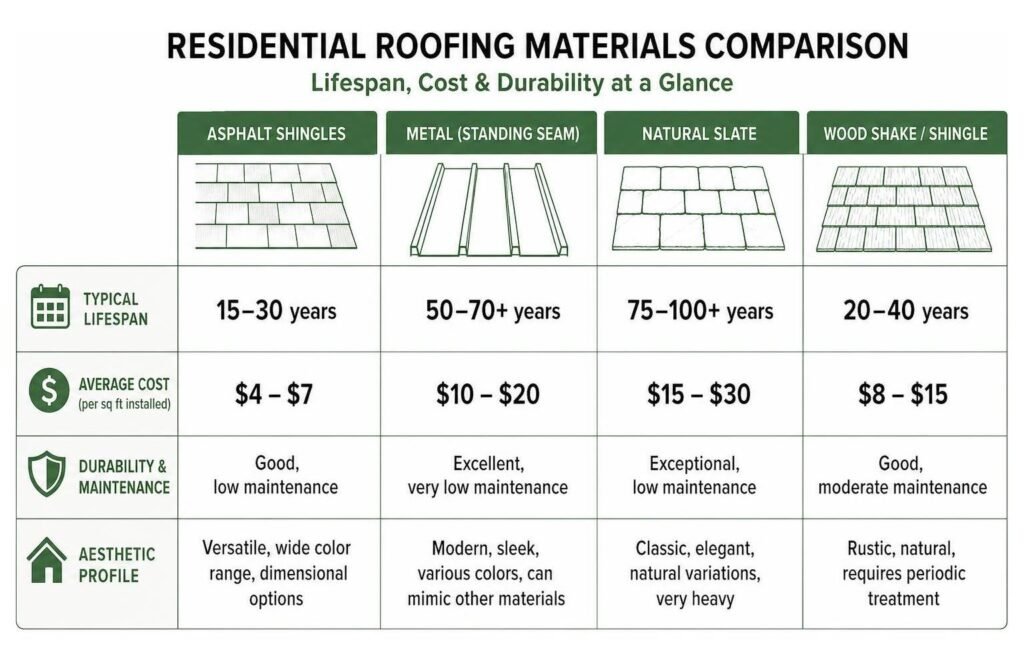
Here’s a comparison of common residential roofing materials:
| Material Type | Typical Lifespan | Average Cost (per sq ft installed) | Durability & Maintenance | Aesthetic Profile |
|---|---|---|---|---|
| Asphalt Shingles | 15-30 years | $4 – $7 | Good, low maintenance | Versatile, wide color range, dimensional options |
| Metal (Standing Seam) | 50-70+ years | $10 – $20 | Excellent, very low maintenance | Modern, sleek, various colors, can mimic other materials |
| Natural Slate | 75-100+ years | $15 – $30 | Exceptional, low maintenance | Classic, elegant, natural variations, very heavy |
| Wood Shake/Shingle | 20-40 years | $8 – $15 | Good, moderate maintenance | Rustic, natural, requires periodic treatment |
Low-Slope and Flat Roofing Solutions: TPO, EPDM, and Single-Ply Membranes
While sloped roofs dominate residential architecture, many homes feature sections with low-slope or flat roofing, such as garages, porches, additions, or even entire modern designs. These areas cannot use traditional shingles effectively because they are designed to shed water quickly. Instead, they require specialized membrane systems engineered to prevent water penetration even when water ponds for short periods.
Low-Slope Structures: A “low-slope” roof typically has a pitch of less than 2:12 (meaning it rises 2 inches for every 12 inches of horizontal run). Anything flatter is considered a “flat” roof, though even flat roofs usually have a slight slope for drainage. These roofs present unique challenges, primarily related to water management.
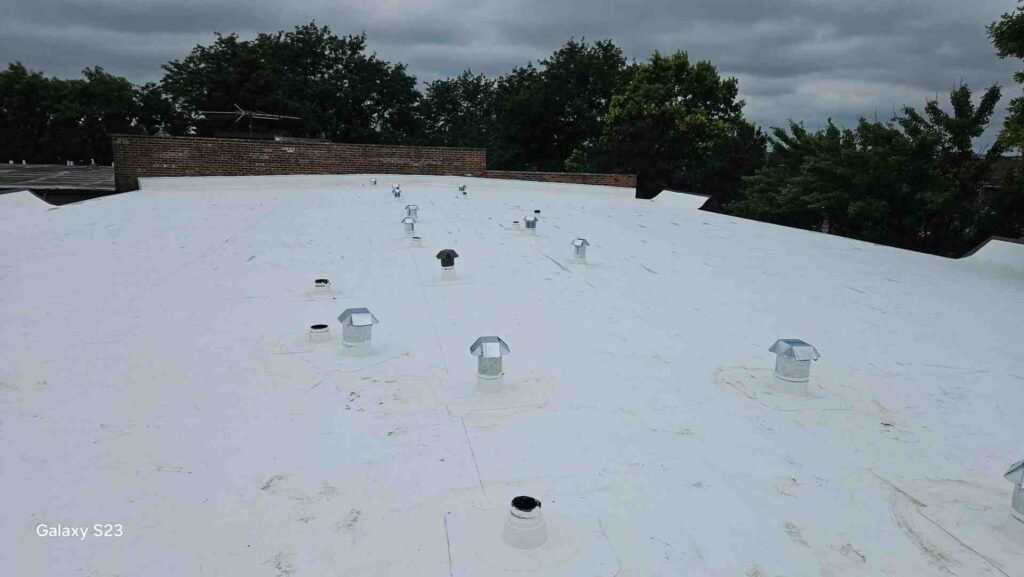
TPO (Thermoplastic Polyolefin) Membranes: TPO is a single-ply membrane that has become increasingly popular for residential and commercial low-slope applications. It is known for its durability, energy efficiency (often white or light-colored to reflect UV rays), and resistance to punctures and tears. TPO seams are heat-welded, creating a strong, monolithic barrier that is highly resistant to leaks.
EPDM (Ethylene Propylene Diene Monomer) Rubber: EPDM is a synthetic rubber roofing membrane widely used for flat and low-slope roofs. It is extremely durable, flexible, and resistant to UV radiation and extreme temperatures. Often dark-colored, EPDM is typically installed using adhesives or mechanical fasteners, with seams sealed using specialized tapes or liquid adhesives. It has a proven track record for longevity and reliability.
Single-Ply Systems: Both TPO and EPDM fall under the umbrella of “single-ply” roofing systems, meaning they consist of a single layer of flexible membrane rather than multiple layers like built-up roofs. These systems are lightweight, relatively easy to install, and offer excellent waterproofing.
Heat-Welded Seams and Ponding Water Mitigation: The key to the effectiveness of TPO and similar membranes lies in their seam technology. Heat-welding creates a molecular bond between membrane sheets, making the seams as strong as the membrane itself and virtually impervious to water. While these systems are designed to handle ponding water, proper drainage design is still crucial to prevent prolonged standing water, which can accelerate wear.
UV Resistance: Exposure to ultraviolet (UV) radiation is a major factor in material degradation. Modern single-ply membranes are engineered with excellent UV resistance, ensuring they maintain their flexibility and integrity over many years, even under intense sun exposure. Single-ply membrane is often hailed as the most waterproof material available, making it ideal for low-slope and flat residential roofs subjected to heavy rainfall.
Identifying Roof Damage, Decking Issues, and the Replacement Lifecycle
Regular inspection of your roof is essential for catching problems early and extending its lifespan. Knowing the signs of wear and tear can help you determine whether you need a minor repair or a complete replacement.
Granule Loss: For asphalt shingles, a common sign of aging is granule loss. These small, ceramic granules protect the asphalt from UV rays. If you notice a significant amount of granules in your gutters or bald spots on your shingles, it indicates that the roof is nearing the end of its protective life.
Cracked or Curled Shingles: Shingles that are cracked, brittle, or curling (either cupping upwards or clawing downwards) are compromised. This damage allows water to penetrate beneath them, leading to leaks and decking issues. These are clear indicators that your roof’s integrity is failing.
Attic Water Infiltration: Any signs of water stains, drips, or mold in your attic are immediate red flags. This indicates a leak in your roof system. Don’t ignore these signs, as water damage can quickly spread and cause extensive structural problems.
Plywood Decking Rot and Joist Reinforcement: The roof deck, typically made of plywood or OSB, provides the structural base for your roofing material. Leaks or persistent moisture can lead to plywood decking rot, which weakens the roof’s foundation. During a roof replacement, contractors will inspect the decking and replace any damaged sections. In severe cases, underlying joists might also need reinforcement or replacement, especially if water infiltration has been long-standing. We often find that inspecting and replacing damaged plywood decking beneath shingles during roof replacement is a critical step for long-term durability.
Parapet Wall Repair: For homes with flat roofs or specific architectural styles, parapet walls (extensions of the wall above the roof line) are common. These walls are vulnerable to water infiltration through their caps or flashing. Damage here can lead to leaks into the building’s interior. Repairing or rebuilding damaged parapet walls, sometimes down to the joists, is crucial to eliminate recurring exterior water infiltration.
Complete Tear-Off Process: When a roof needs replacement, a “complete tear-off” is almost always the recommended approach. This involves removing all existing roofing materials down to the bare roof deck. This allows for a thorough inspection of the decking, replacement of damaged sections, and ensures a clean, smooth surface for the new roofing system. Layering new shingles over old ones (a “re-roof”) is generally discouraged as it can hide underlying problems, void warranties, and add excessive weight.
Site Cleanup: A professional roofing project includes meticulous post-job site cleanup. This involves removing all debris, old roofing materials, and nails from your property, ensuring safety and leaving your home and yard as clean as they were before the project began.
Managing Storm Damage, Emergency Leaks, and Insurance Claims
Storms can inflict significant damage on your roof and exterior, often requiring immediate attention and a methodical approach to insurance claims.
Hail Impact: Hailstones can bruise or crack asphalt shingles, dislodge granules, and dent metal roofs. While some damage might not be immediately visible, it can compromise the roof’s protective capabilities over time.
High Wind Blow-Offs: Strong winds can lift and tear off shingles, especially if they are older or improperly installed. This exposes the underlayment and decking to the elements, leading to leaks.
Winter Ice Damming: As discussed, ice dams can cause water to back up under shingles, leading to significant leaks. This is a common trigger for emergency roof leak repairs, particularly following heavy snow or ice storms. We’ve seen instances where condo owners experienced severe leaks from snow and ice damage, requiring same-day emergency inspection and remediation.
Emergency Tarping: If your roof is severely damaged and actively leaking, immediate emergency tarping is crucial to prevent further water intrusion while you await repairs. Many roofing contractors offer this service.
Photo Documentation: After a storm, safely document all visible damage with clear photos and videos before any repairs begin. This visual evidence is invaluable when filing an insurance claim.
Adjuster Inspections: Your insurance company will send an adjuster to assess the damage. It’s highly recommended to have your chosen roofing contractor present during this inspection. They can point out damage the adjuster might miss and ensure the full scope of necessary repairs is identified.
Claim Scope Negotiation: The adjuster’s initial assessment might not cover all necessary repairs. Your contractor can help negotiate with the insurance company to ensure the claim accurately reflects the cost of a comprehensive repair or replacement, including decking, flashing, and other components that might not be immediately obvious. Understanding the claims process and having a knowledgeable contractor on your side can significantly ease the burden of storm damage recovery.
Choosing a Contractor, Financing Projects, and Ensuring Workmanship
The success of your roofing and exterior renovation project hinges significantly on the contractor you choose. This is a substantial investment, and selecting the right professional ensures quality workmanship, adherence to timelines, and a positive overall experience.
Licensing and Liability Insurance: Always verify that your contractor is properly licensed for work in your area and carries comprehensive liability insurance. Licensing ensures they meet minimum industry standards, while insurance protects you from financial responsibility in case of accidents or damage during the project. Never work with an uninsured contractor.
Manufacturer Certifications: Many reputable roofing manufacturers offer certification programs for contractors who meet specific training and installation standards. A certified contractor can often offer extended warranties on materials and labor, providing you with greater peace of mind.
Transparent Bidding: Obtain detailed, itemized bids from at least three different contractors. A transparent bid should clearly outline the scope of work, materials to be used (brand, type, color), labor costs, project timeline, and warranty information. Be wary of bids that are significantly lower than others, as they might indicate shortcuts or hidden costs.
Project Financing Plans: Major exterior renovations can be a significant expense. Many contractors offer or partner with financing companies to provide various payment options, including low-interest loans or deferred payment plans. Explore these options to find a solution that fits your budget. Utilizing online roof cost calculators and exploring financing options can help you plan your project budget effectively.
Warranty Coverage: Understand both the material warranty (from the manufacturer) and the labor warranty (from the contractor). A strong labor warranty demonstrates the contractor’s confidence in their workmanship.
Post-Installation Cleanup: As mentioned earlier, a professional contractor will ensure thorough cleanup of the job site, removing all debris and nails. This is a sign of a high-quality operation and attention to detail.
Vetting Local and Family-Owned Contractors
Choosing a local, family-owned business for your exterior renovations often comes with distinct advantages, fostering a sense of trust and community.
Local References: Ask for local references and don’t hesitate to contact them. A local contractor with a strong reputation in your community is more likely to be accountable and committed to customer satisfaction. Online reviews, like the “Excellent” rating based on 129 Google reviews for some local businesses, can also provide valuable insights into a company’s standing.
Family-Owned Business Values: Family-owned businesses often prioritize long-term relationships and reputation over short-term gains. They tend to be deeply invested in their community and uphold strong ethical standards, often translating into more personalized service and a commitment to quality.
Clear Communication Schedules: Effective communication is paramount for a smooth renovation project. A good contractor will establish clear communication schedules, providing regular updates on progress, addressing concerns promptly, and being accessible when you have questions. They should provide a written timeline for the project.
When looking for a trusted partner for your home’s exterior, consider a dedicated residential roofing contractor who understands the local climate and specific needs of your community. Such contractors are often deeply rooted in the area, offering a personalized touch and a commitment to quality that can be invaluable. For a wide array of comprehensive home exterior solutions, including everything from roofing to siding and gutters, it’s beneficial to explore the offerings of reputable providers of roofing and exterior home services.
Frequently Asked Questions About Exterior Home Upgrades
What are the earliest warning signs that a roof needs replacement rather than repair?
While minor leaks or a few missing shingles can often be repaired, several signs indicate that a full roof replacement is likely necessary. The earliest warnings include widespread granule loss, which appears as bald spots on shingles or excessive granules in gutters, indicating the asphalt is exposed to UV rays. Curled, cracked, or brittle shingles across a significant portion of the roof also suggest material fatigue beyond simple spot repairs. Furthermore, if your roof is over 20-25 years old (for asphalt shingles), even without obvious damage, it’s nearing the end of its typical lifespan, and replacement becomes a more cost-effective long-term solution than continuous repairs. Sagging in the roof deck or visible signs of water damage in the attic are also critical indicators that the roof’s structural integrity is compromised and requires a full overhaul.
How do integrated gutters and soffits protect a new roof installation?
Integrated gutters and soffits are crucial for the long-term health and performance of a new roof installation. A new roof effectively sheds water, but without a proper gutter system, that water can cascade directly down your home’s exterior walls, causing siding damage, foundation erosion, and basement flooding. Gutters collect this water and channel it safely away from the house through downspouts. Soffits, particularly those with vents, are essential for attic ventilation. Proper airflow through the attic, from soffit vents to ridge vents, prevents heat and moisture buildup. This ventilation protects the underside of your new roof decking from moisture damage, prevents ice dam formation in winter (which can cause leaks under shingles), and helps maintain a consistent attic temperature, extending the life of your new roofing materials. Together, these components form a comprehensive water management and ventilation system that safeguards your entire home.
What financing and payment options are available for major exterior renovations?
For major exterior renovations like a roof replacement or comprehensive exterior overhaul, homeowners typically have several financing and payment options. Many reputable contractors offer in-house financing plans or partner with third-party lenders to provide options such as low-interest loans, deferred payment plans, or same-as-cash financing for a specific period. Home equity loans (HELs) or home equity lines of credit (HELOCs) are popular choices, allowing you to borrow against the equity in your home, often at competitive interest rates. Personal loans can also be an option, though they may carry higher interest rates. Additionally, some homeowners utilize credit cards for smaller projects or to cover initial deposits. It’s always advisable to discuss financing options with your chosen contractor early in the planning process and to compare different lenders to find the best terms for your financial situation.
Conclusion
Protecting your home with residential roofing and exterior renovations is a holistic endeavor. It’s about creating a robust “building envelope” that shields your most valuable asset from the relentless forces of nature. By understanding the diverse range of materials available, from traditional asphalt shingles to advanced single-ply membranes, and by coordinating these efforts with siding, gutters, fascia, and soffits, homeowners can ensure lasting protection and enhanced curb appeal.
Investing in durable materials and committing to regular maintenance schedules are key to maximizing your home’s longevity and value. Furthermore, choosing a reliable, local, and transparent contractor is paramount to ensuring quality workmanship and a smooth project experience. In August 2026, as homes continue to be a central part of our lives, the importance of a well-maintained exterior cannot be overstated. By taking a proactive and informed approach to your home’s exterior, you secure not just its physical structure, but also the lasting security and comfort of your family.