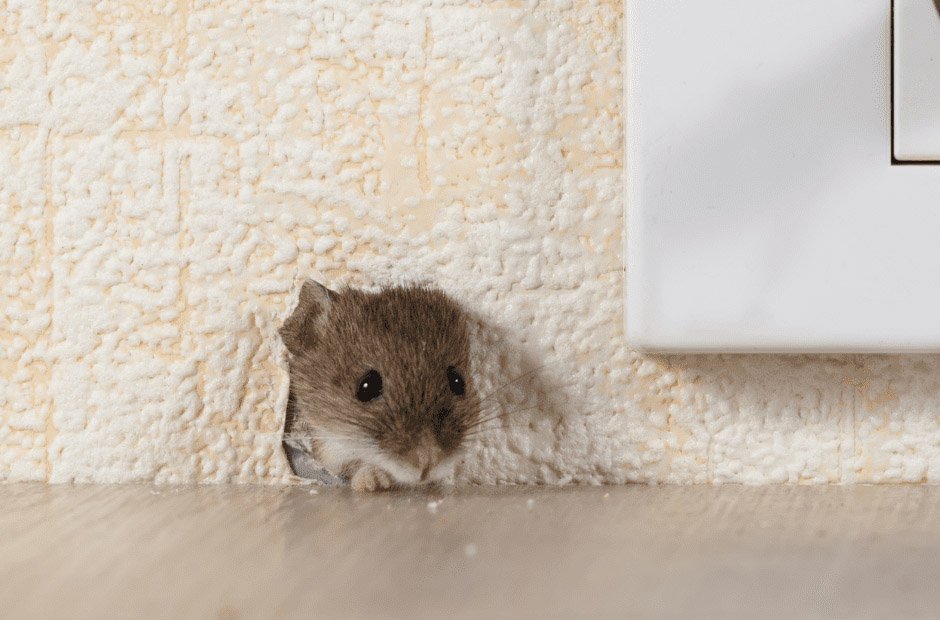
You’re sitting in a quiet room, maybe reading or watching something with the volume low, when you hear it, a faint tapping sound coming from inside the wall. It stops almost as soon as you notice it. A few minutes later, it starts again, slightly higher up, slightly to the left.
At first, the easy explanations come to mind. Maybe it’s the plumbing. Maybe the house is just settling, the way older homes do. But when the tapping keeps coming back at odd hours, in the same general spot, it usually points to something else entirely: movement inside the hidden spaces of your walls.
Why Rodents Make Tapping Sounds
Rodents create a surprising range of small sounds as they go about their daily activity inside wall cavities. The tapping or clicking you hear isn’t random, it’s the result of specific behaviours happening just out of sight.
Mice and rats tap as they move along narrow ledges and timber framing, scratch surfaces with their claws while climbing, gnaw on wood or wiring with their constantly growing teeth, and drag nesting materials like shredded paper or insulation through tight spaces. Each of these actions produces a slightly different sound, but together they create the irregular tapping pattern that homeowners often describe.
Why You Hear It More at Night
There’s a reason the tapping seems louder and more frequent after dark. Rodents are largely nocturnal, which means they become most active once the house quiets down and human movement stops. During the day, normal household noise masks their activity almost completely.
At night, even the smallest sounds inside the walls become impossible to ignore. The problem is usually most noticeable in bedrooms, quiet hallways, and rooms near kitchens or pantries, anywhere food sources are nearby and human movement is minimal once the lights are off.
Where Rodents Usually Hide
Rodents are remarkably skilled at staying out of sight. They prefer dark, undisturbed spaces where they can move and nest without being noticed, which is why you often hear them long before you ever see one.
The most common hiding spots include wall cavities between rooms, roof spaces and attics, the gaps behind kitchen cupboards, the area underneath floorboards, and the cavities around pipes, vents, and electrical wiring. These spaces are connected throughout most homes, allowing rodents to travel from one part of the house to another without ever crossing an open room.
Other Signs That Confirm Rodent Activity
The tapping is usually the first clue, but several other signs help confirm what’s going on. Once you start looking, the evidence tends to add up quickly.
Watch for small dark droppings in pantries, cupboards, or along skirting boards. Gnaw marks on packaging, timber, or plastic are another strong indicator. An unusual musty or ammonia-like smell often develops in areas where rodents have been nesting for some time. You may also notice chewed food packaging, shredded paper or fabric tucked into corners, and scratching sounds coming from the ceiling above you.
Why Ignoring the Sound Can Be Risky
A tapping noise inside the wall is easy to dismiss, but ignoring it can lead to real problems. Rodents don’t just take up residence quietly, they cause damage as they go.
They chew through electrical wiring, which creates a genuine fire risk inside the walls. They damage insulation by tearing it apart for nesting material, reducing its effectiveness. They contaminate stored food, packaging, and stored items with droppings and urine. And they can spread bacteria and disease through the surfaces they travel across, including kitchen benches and pantry shelves. A small noise really can be the first warning of a much larger issue developing behind the scenes.
Why DIY Traps May Not Solve It
The natural first response is to set a few traps and hope the problem sorts itself out. Sometimes this catches one or two rodents, but it rarely solves the underlying issue.
Traps placed in open areas like the kitchen floor or the back of a cupboard often miss the rodents that are travelling inside walls and ceiling cavities. Without identifying the entry points they’re using to get into the home, and without locating the nests where they’re breeding, the activity continues regardless of how many traps you set. New rodents simply keep arriving through the same gaps the original ones used.
When Rodent Control Becomes Necessary
If the tapping continues for more than a few nights, or if other signs like droppings or gnaw marks start showing up, the problem has usually moved beyond what DIY methods can handle. At that stage, professional Rodent Control becomes the practical next step.
A proper service focuses on three things: identifying every entry point rodents are using to get into the home, locating the nesting areas inside walls, roof spaces, or subfloors, and applying treatment that stops the current infestation while preventing rodents from returning. Without all three steps, the problem tends to come back within weeks or months, no matter how thorough the initial clean-up was.
What Homeowners Can Check First
There are several useful checks you can do yourself before the situation escalates. Start by listening carefully over a few quiet evenings and noting where the sounds are loudest and when they happen most often. This helps narrow down where the activity is concentrated.
Inspect pantry areas for chewed packaging or droppings. Check the gaps around pipes that come through walls, especially under sinks and behind washing machines. Look closely along skirting boards for small holes or worn patches. Examine the corners of cupboards and storage areas where dust patterns might reveal recent movement. These checks won’t solve the problem on their own, but they give you a much clearer picture of what’s actually happening.
The Sound Is Usually the First Clue
A tapping noise inside the wall may seem like a small, easily ignored thing, but more often than not, it means something is moving in a space you can’t see. The longer that activity continues, the more damage and contamination tend to follow.
Acting early makes the difference between a quick, contained fix and a much larger infestation that’s worked its way through multiple parts of the home. The sound is the warning. Paying attention to it and dealing with it before it spreads is what keeps a minor disturbance from becoming a serious problem.