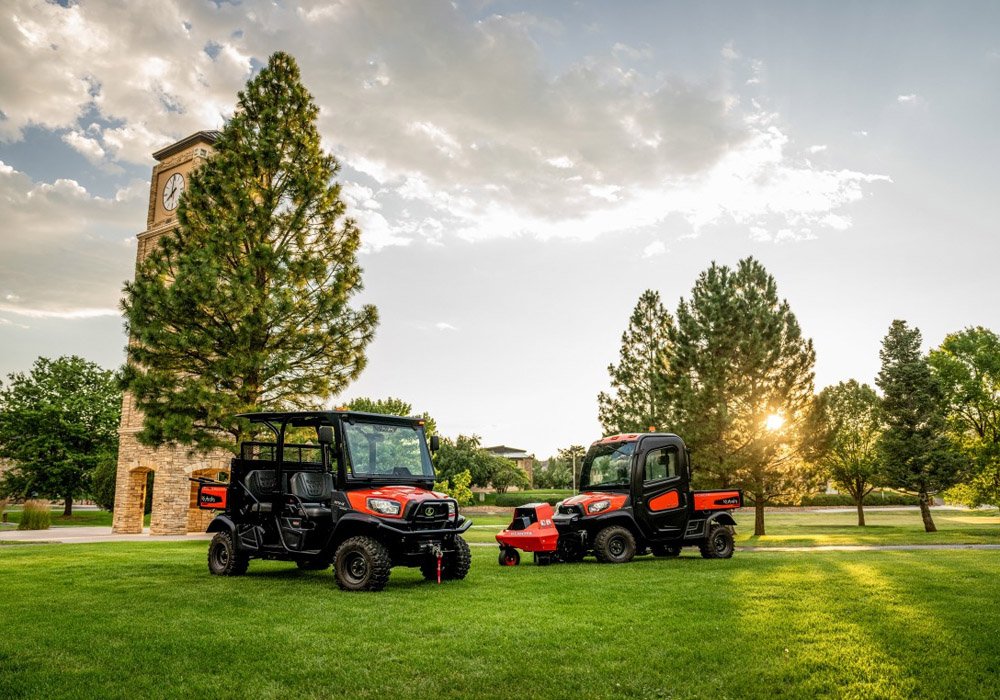
A quad bike that won’t start on lambing morning doesn’t fail because of bad luck – it fails because of what didn’t get done the week before. The difference between a machine that runs reliably through mud, dust, fertiliser, and steep ground for years, and one that lets you down at the worst possible moment, almost always comes down to the operator, not the equipment. Even the best quad on the market will break down if it’s neglected.
Reliability isn’t something you buy off the showroom floor – it’s something you build through consistent daily, weekly, and monthly maintenance.
Build Your Fluid Management Schedule Around Actual Operating Hours
Most manufacturers publish service intervals based on recreational use. Farm work is different. A quad bike hauling feed, pulling a sprayer, or covering rough ground across a full working week accumulates stress far faster than a weekend trail machine.
For engine oil, the standard recreational interval of 100 hours is a starting point, not a target. Under genuine agricultural duty – heavy towing, sustained low-speed crawling, repeated creek crossings – dropping that to every 50-75 hours is a better approach. Use the oil viscosity specified in your machine’s manual and don’t substitute based on what’s in the shed.
Differential gear oil deserves equal attention. Front and rear gearboxes are sealed, so it’s easy to forget them, but water and mud contamination after deep water crossings will break down the lubricant faster than the service interval assumes. After any significant immersion – a flooded gateway, a river ford – check and change the diff oil regardless of hours logged. The cost of a differential rebuild makes the cost of routine fluid changes look trivial.
Keep The Air Filter Clean Or Accept Engine Wear
A farm quad ingests air laden with fine crop dust and soil particles at dry harvest time. These micro-abrasives go right through a worn or improperly re-oiled air filter and effectively grind the cylinder walls and piston rings. The damage is cumulative and irreversible.
Foam air filters, like the dual-stage type fitted to most utility quads, have a particular cleaning procedure. Wash the outer foam in warm soapy water, squeeze (don’t wring) it dry and then make sure it’s thoroughly air dry before applying filter oil. If you apply oil to a damp filter, you are effectively sealing moisture into the engine side of the filter. Once dry, apply a thin even coating of a specifically formulated filter oil and work the oil in by hand until the foam is an even orange color with no patches of unoiled foam.
In extremely dusty conditions, every second day of heavy use isn’t an excessive cleaning routine. A clogged filter not only starves the engine of air, but it can also cause it to run over-rich, and that increases carbon deposits and long-term engine wear.
Protect The CVT Belt Before It Fails
One of the easiest to forget and costly repairs to make on a utility quad, the CVT belt transfers the engine’s force to its wheels and tires while consistently spinning through a clutch housing that can get quite hot from the action. This makes the belt one of the most dangerous wear parts on the quad in terms of potential repair costs and lost work time.
Watch for two primary failure modes: glazing and cracking. Glazing results from the belt getting too hot – typically from continuous heavy towing while in too high of a gear. The belt’s surface becomes heat hardened and loses its tackiness, causing slippage which generates more heat. It’s a quick death spiral from there. Cracking presents itself on the belt’s inner edge and shows that the belt’s material has begun to degrade from age or heat cycles.
A quick inspection every 50 hours of the belt’s condition can tell you when it’s time to replace it. Remove the CVT cover, then flex the belt over its whole length checking for signs of glazing, cracking, or excessive narrowing at the edges. A nearly narrowed belt will have sunk lower in the drive clutch and may be slipping while still looking good.
Prevention is easy too: keep it in low range when towing heavy loads or climbing steep terrain. If you’re in high range, the belt is going to be slipping the entire time you’re under a load and no amount of cool outside air is going to help dissipate the resulting heat.
Grease The Chassis On A Schedule, Not When It Squeaks
Waiting for a noise before you grease simply allows for wear on a joint or spline that’s already begun (especially if you’re using it in manure!). Every A-arm pivot, ball joint, tie rod end, and driveshaft CV joint on a utility quad has a grease fitting – a small Zerk fitting that accepts a grease gun nozzle – and all of them need regular greasing.
On the farm, it’s best to pump marine-grade grease into each fitting until the old, discoloured grease purges from the seal. The purging action physically removes contaminated grease that carries grit, moisture, and corrosive material from slurry or fertilizer contact. Marine-grade grease is specified here because it has superior water resistance to standard chassis grease which is highly relevant to a machine that’s likely spent in wet conditions.
For machines used in these conditions, weekly lubrication of the most exposed points is not excessive. A-arms, in particular, take constant impact and flex and shed lubricant faster than joints that move through a smaller range. When it comes to choosing a platform that simplifies this kind of routine servicing, CFMOTO quad bikes are designed with accessible grease points and durable CVT systems that make weekly maintenance practical rather than time-consuming. Getting into the habit of greasing before a long working day takes five minutes and prevents joint replacement jobs that take five hours.
Tire Pressure On Farm Quads Is More Precise Than Most People Think
The pressure in utility quad tires is remarkably low compared with highway trucks or cars – typically between 4 and 7 PSI, depending on load, terrain, and the manufacturer’s recommended pressure. That’s a narrow band, and the consequences of getting it wrong are very real. Maintaining low-pressure tire inflation is critical as a variance of just 1.5 PSI across an axle can reduce vehicle stability by up to 20% and significantly compromise load-carrying capacity on sloped farming terrain.
Check tire pressure before the first run of the day when tires are still cold. A tire that looks fine visually may be 2 PSI low, which at these operating pressures is a significant departure from spec. Run too low and there’s a risk of the tire bead unseating from the rim during a sharp maneuver or under a heavy load – a roadside repair that soon becomes complicated if you’re not equipped for it.
Also, look at tread wear patterns. Uneven wear across the width of the tire – heavier on one side of the tread blocks – often indicates suspension misalignment or a bent A-arm from an impact. The tire wear is the first visible symptom of a suspension problem that’s affecting handling and putting strains on other components.
Electrical Systems And Corrosion Management
Fertilizer dust and slurry are highly corrosive materials. Moist fertilizer quickly attacks and rusts bare metal and electrical connections, and farm quads put in plenty of work with both. Battery terminals, wiring harness connectors, and connectors associated with winches and trailer hitches are also exposed.
Clean battery terminals whenever you see white or greenish deposit build-up – a wire brush will remove the scale and a thin smear of dielectric grease after cleaning will ensure the next cycle of oxidation won’t occur. Do the same for any exposed wiring connector that gets regular mud or chemical exposure. Dielectric grease doesn’t conduct electricity, but it does keep moisture out of the connector housing and the corrosion which causes intermittent faults at bay.
Inspect the wiring that runs near the exhaust and near any moving suspension components. Vibration and heat will degrade the insulation over time. A chafed wire causing an intermittent electrical fault is next to impossible to track down after the fact, and very easy to catch during a routine check.
Check the spark arrester in the exhaust once a year. On farms with dry grass or stubble, a blocked or failing spark arrester is a fire risk. It’s a very simple part to check; remove it, knock out the carbon deposits, and reinstall.
Brakes Wear Faster In Agricultural Conditions
Brake pads exposed to grit wear unevenly and calipers may stick in a partly engaged position – neither situation is immediately apparent but equally, there’s not much more to wearing brakes than using them until they wear out. And unless some kind of unusual drama plays out (such as a stone wedged in the caliper preventing sufficient braking), they don’t suddenly become any less effective than they’ve slowly become.
Nor is brake maintenance simply a matter of changing the pads regularly. Brake fluid absorbs moisture and, since the advent of hydraulic systems, there’s nothing that’s maintenance-free, just things that require rather little maintenance. Most owners’ manuals still suggest an annual hydraulic system flush – and other than ensuring pads and discs last as long as they should, it helps avoid brake fade.
Winterization Done Properly Prevents Spring Failures
Storing a quad for an extended period unprepared will cause problems several weeks after you’ve needed the machine again. Even at low concentration, ethanol-blended fuel absorbs moisture in an unsealed tank; it degrades in as little as 30 days of storage, leaving sticky varnish deposits in fuel injectors or carburetor jets.
Stabilize the fuel if the quad will stand idle for more than a month. In the case of carburetor-fed quads, you’ll need to stall the engine after adding stabilizer to make sure the treated petrol reaches the carburetor bowl. For fuel-injected models, it’s unnecessary: the stabilizer in the tank is all that’s required.
Ideally, connect the quad’s battery to a smart trickle charger or battery tender over the months of inactivity. It’s not just a case of having to recharge a flat battery; one that’s been allowed to self-discharge over several months will have sulfated, decreasing its capacity perhaps permanently. The trickle charger constantly monitors the battery and tops it up at the correct voltage.
Finally, don’t put the quad away dirty. Especially check the underside, where slurry or fertiliser residue can accumulate. Mud left for months on a machine traps moisture against the metal and eventually works its way into steering-rack and suspension seals.
Maintenance isn’t optional on a farm quad. It’s a working asset, and the cost of being without it during a critical operation (say, harvest, lambing, or the daily feeding round) is a real operational cost. A half-hour weekly checkover and a diligent fluid and filter regime will iron out 90% of breakdowns before they have a chance to happen.