Key Takeaways
- High-quality marine hardware is essential for ensuring safety and enhancing boat performance.
- Materials like 316 stainless steel and bronze offer superior corrosion resistance in marine environments.
- Proper installation and regular maintenance of hardware components are crucial for longevity and reliability.
Understanding Marine Hardware Materials
When it comes to equipping your vessel, the right marine hardware can make all the difference in both safety and durability. Marine environments impose demanding conditions: non-stop exposure to saltwater, intense sunlight, and mechanical stresses. Choosing durable, corrosion-resistant hardware is a primary concern for every boat owner. From hinges and cleats to rails and latches, selecting the proper gear is as vital as your choice of marine paint supplies, both contributing to your boat’s appearance and longevity.
While aesthetics matter, reliability and safety always come first. Saltwater, in particular, accelerates the breakdown of metals and fasteners that are not properly designed for marine use, potentially compromising your vessel. Besides, ultraviolet rays from the sun can further degrade less durable materials, so understanding your options is the first step in making the smartest investment.
It is also worth noting that marine hardware needs to withstand shifting loads and vibrations from waves or wind. Durability and secure installations go hand in hand with regular upkeep, helping to prevent failures that might otherwise damage your boat or endanger those on board. Even the cleanest new hardware needs care and careful installation. Regular checks reduce your exposure to corrosion and breakage, while high-quality materials ensure each fitting and fastener holds strong through every outing. Taking a proactive approach ensures reliability and simplifies future repairs or upgrades.
Stainless Steel: The Boater’s Choice
316 Stainless Steel vs. 304 Stainless Steel
Stainless steel is the gold standard for marine hardware, but not all grades are fit for the sea. 316 stainless steel contains molybdenum, giving it higher resistance to pitting and crevice corrosion than the more common 304 stainless steel. This added protection is critical for items exposed to persistent salt spray, such as deck cleats, railings, and mounting hardware. For full details on marine fastener selection, reference the BoatUS guide to marine fasteners.
Bronze and Brass Hardware
Bronze has a long-standing tradition in marine applications, especially for underwater applications such as through-hulls and seacocks. Bronze naturally resists corrosion in water and withstands shock loads from rough seas or abusive docking. Brass, though less resistant to long-term salt exposure, is still used for some fittings, but care should be taken to monitor for dezincification, which can weaken the material. Both metals may require more upkeep to maintain their appearance, but they stand up well when strength and corrosion resistance are key requirements.
Key Components of Marine Hardware
The different pieces of hardware aboard your vessel serve a range of structural and safety needs. Knowing what goes where will help you make informed purchases and ensure each component is doing its job.
Deck Fittings
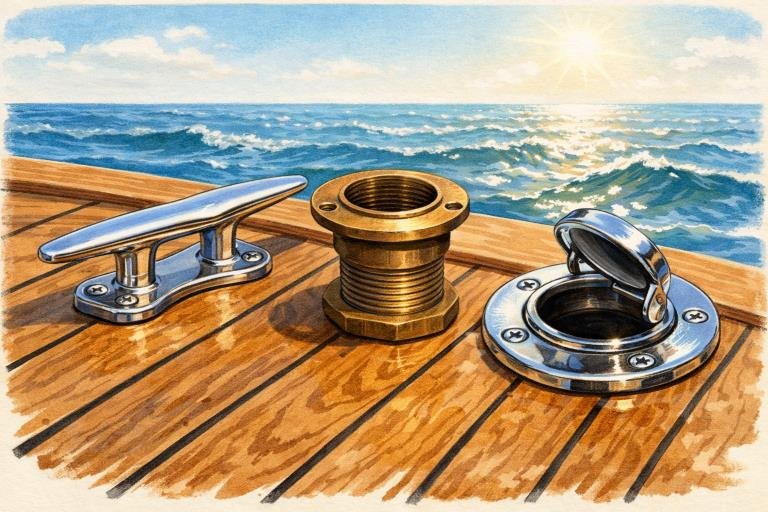
Deck fittings include cleats for tying off lines, chocks for line guidance, and pad eyes for anchor points. These crucial components must be robust, as they often withstand the forces of mooring, towing, or anchoring. Corrosion resistance is paramount in these high-stress zones. Review industry recommendations for deck hardware at Go2Marine’s deck fittings guide.
Fasteners: The Unsung Heroes
Bolts, screws, washers, and nuts are the fasteners binding your vessel together. Matching fastener materials to the components they attach to is essential for minimizing the risk of galvanic corrosion, which can result from contact between dissimilar metals. As a rule, opt for 316 stainless steel or bronze fasteners, and inspect regularly to ensure their integrity and function remain unimpaired.
Installation Best Practices
No matter the quality of your hardware, proper installation is crucial for safety and reliability. Mistakes during installation, such as insufficient sealing or improper load distribution, can lead to expensive damage and unnecessary risk.
Through-Bolting for Strength
For major hardware such as cleats and pad eyes, through-bolting is a best practice. This technique involves running bolts completely through the deck and using washers and nuts beneath the deck. It spreads the load over a wider area, reducing the risk of hardware pulling loose or damaging the deck material.
Sealing and Isolation
Water intrusion is a constant threat to your boat’s structure, especially through drilled holes. All penetrations should be thoroughly sealed with marine-grade sealant to prevent leaks and core rot. Additionally, isolating different metals with nylon or neoprene washers prevents galvanic corrosion, extending the life of your hardware and the surrounding structure. Further details on marine corrosion can be found in resources like the Yachting Magazine corrosion guide.
Maintenance Tips for Longevity and Safety
Regular inspection and maintenance routines extend the lifespan of your hardware and contribute significantly to safety on board. Here are some tried and true methods:
- Rinse all hardware with fresh water after saltwater exposure to remove residues and minimize corrosion risks.
- Inspect each fitting for signs of corrosion, pitting, or mechanical wear, particularly after long voyages or heavy weather.
- Apply lubricants specifically formulated for marine environments to hinges, moving joints, and latches to keep them moving smoothly and protected from salt buildup.
- Replace worn or damaged hardware promptly to avoid cascading failures that could affect the boat’s structural integrity.
Conclusion
Reliable, high-quality marine hardware is the cornerstone of boat safety, durability, and overall performance on the water. Choosing the right materials, such as marine-grade stainless steel or corrosion-resistant alloys, ensures your vessel can withstand harsh saltwater conditions and long-term exposure to the elements. Proper installation techniques are equally important, as even the best hardware can fail if not fitted correctly or secured with the appropriate fasteners and sealants. Routine inspection and maintenance help identify early signs of wear, corrosion, or loosening before they become serious issues. By paying close attention to every stage, from selecting materials to final installation, you significantly reduce the risk of equipment failure. This careful approach not only protects your investment but also ensures the safety of everyone on board. Ultimately, consistent upkeep delivers lasting durability, security, and peace of mind for years of enjoyable boating.