

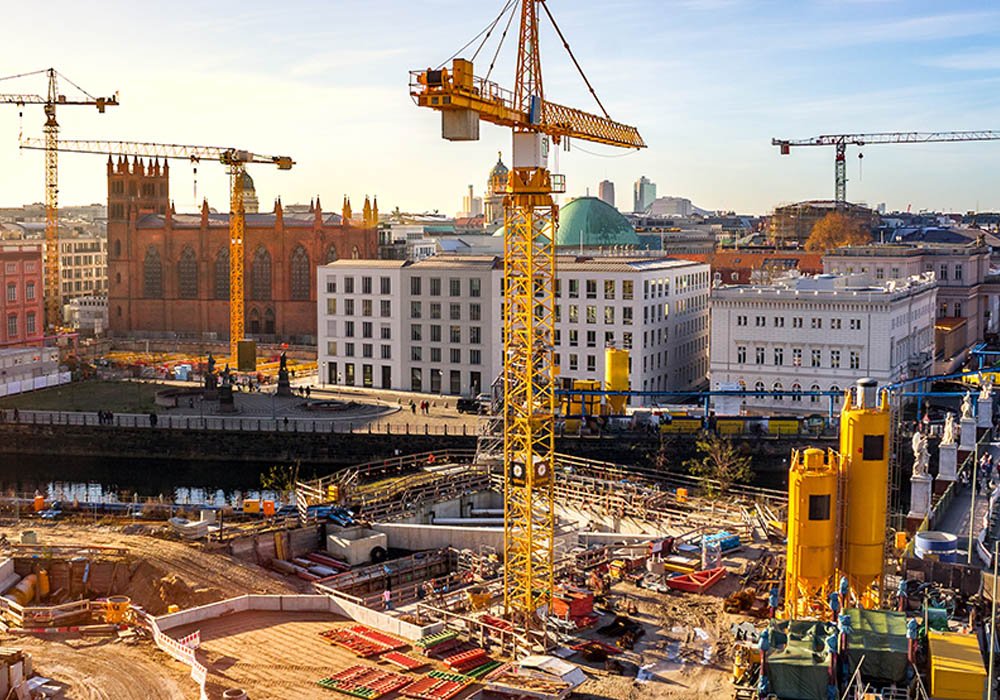
Wet vs. Dry Utilities: The Subsurface Blueprint of Modern Cities
Beneath the bustling streets and towering structures of our cities lies a complex network of pipes, conduits, and cables – the essential arteries that sustain urban life. Understanding these underground utility systems is fundamental to effective urban planning and construction. These systems are broadly categorized into “wet” and “dry” utilities, each serving distinct but equally vital functions.
Wet utilities are those infrastructure components designed to manage the flow of liquids. This category primarily includes:
- Water Mains:Delivering potable water from treatment plants to homes and businesses, crucial for public health and daily life.
- Sanitary Sewers:Collecting wastewater from residential, commercial, and industrial sources, transporting it to treatment facilities to prevent contamination.
- Stormwater Drainage:Managing rainwater runoff to prevent flooding, conveying it away from developed areas, often into natural waterways or retention systems.
In contrast, dry utilities are responsible for transmitting energy and data. These include:
- Electrical Grids:Distributing electricity from power generation sources to consumers, powering everything from streetlights to entire districts.
- Telecommunications:Encompassing fiber optic cables, copper lines, and other conduits that enable internet, phone, and data services.
- Gas Pipelines:Delivering natural gas for heating, cooking, and industrial processes.
The key difference lies in their function: wet utilities handle fluids, while dry utilities transmit power and information. While their operational principles differ, their successful integration and coordinated planning are paramount for a functional city. For a deeper dive into the intricacies of these essential underground utility systems, exploring their design, installation, and maintenance is crucial.
How Underground Utility Systems Shape Urban Infrastructure and Utility Construction
The placement and capacity of these subterranean networks profoundly influence a city’s visible form, its zoning regulations, and its overall development potential. Far from being mere afterthoughts, wet and dry utilities quietly dictate the very fabric of urban environments.
Consider how urban form is shaped: the availability of water and sewer lines determines where residential and commercial zones can be established and how densely populated they can become. Without adequate water supply and wastewater removal, large-scale development is impossible. Similarly, the presence of robust electrical grids and telecommunications infrastructure is a prerequisite for modern commercial hubs and data centers.
Zoning laws often implicitly or explicitly consider utility access. Areas designated for high-density residential or industrial use require significantly more robust utility infrastructure than low-density suburban zones. Planners must assess existing utility capacities before approving new developments, leading to strategic decisions about where growth can occur.
Development capacity is directly tied to utility headroom. A city might have ample land, but if its water treatment plants are at maximum capacity or its sewer lines cannot handle additional flow, new construction will be constrained. This necessitates forward-thinking spatial planning that anticipates future population growth and economic expansion.
Elevation constraints and flow line efficiency are particularly critical for wet utilities. Gravity plays a significant role in sanitary sewer and stormwater systems, meaning pipe routing and depths must account for topography. In flatter areas, pumping stations become necessary, adding to infrastructure complexity and cost. For dry utilities, efficient utility routing minimizes signal loss and power resistance, often influencing the most direct paths for cables and conduits.
These invisible networks determine not only where buildings are placed but also how they are accessed, maintained, and scaled over time. Future-focused infrastructure must be engineered for flexibility to adapt to increased rainfall, population spikes, and regulatory shifts simultaneously.
Key Challenges in Urban Infrastructure and Utility Construction
Constructing and maintaining utilities in dense urban environments presents a unique set of formidable challenges. Unlike greenfield developments, urban projects must navigate a labyrinth of existing infrastructure, active communities, and stringent regulations.
One of the most significant hurdles is working within confined corridors. Urban areas are characterized by narrow streets, densely packed buildings, and a spaghetti-like tangle of existing underground utilities. This leaves minimal space for excavation, equipment, and material staging. The risk of damaging existing water lines, gas mains, or fiber optic cables during construction is exceptionally high, making precision and careful planning paramount.
Aging infrastructure is another pervasive issue. Many urban utility systems were installed decades, even a century, ago. These older pipes and cables are often made of materials that are less durable than modern alternatives, prone to leaks, breaks, and failures. Replacing or upgrading them is essential but complex, as their exact locations and conditions are not always well-documented. An undersized culvert or aging sewer main, for instance, can cause localized flooding, roadway failures, or environmental contamination during heavy rain events, highlighting the urgent need for modernization.
Managing traffic and minimizing disruption to daily life are constant concerns. Urban construction inevitably impacts vehicular flow, public transit, and pedestrian access. This leads to strict work-hour restrictions, often limiting construction to off-peak hours or night shifts to mitigate congestion and noise. These restrictions can significantly extend project timelines and increase labor costs.
Furthermore, utility construction is governed by a multitude of regulations and standards. Municipal compliance requires adherence to local ordinances regarding everything from excavation depths to restoration requirements. Noise mitigation strategies are crucial, especially during night work, to avoid disturbing residents. Dust control measures are also essential for air quality and public health.
Safety remains a top priority. The industry benchmarks for safety, such as the national TRIR benchmark of 2.4 (Total Recordable Incident Rate, BLS, 2024), highlight the inherent risks. Top contractors not only meet but exceed these safety standards through rigorous training, advanced equipment, and a culture of proactive risk management.
Caption: Hydro excavation allows precise and safe exposure of utilities in congested urban areas, minimizing disruption.
Trenchless Construction Methods for High-Density Environments
To overcome the challenges of working in dense urban environments, modern utility construction increasingly relies on trenchless construction methods. These techniques minimize surface disruption, reduce traffic impacts, and protect existing infrastructure, making them indispensable for urban projects.
One of the most widely used methods is Horizontal Directional Drilling (HDD). HDD involves drilling a pilot bore along a predetermined path, then enlarging it with a reamer, and finally pulling the new pipe or conduit through the enlarged bore. This method allows for the installation of pipelines under roads, rivers, buildings, and other obstacles without extensive open-cut excavation. It’s particularly effective for installing water mains, gas lines, and fiber optic conduits in areas where surface disruption is unacceptable.
Tunneling is another trenchless technique, often used for larger diameter pipes or longer distances, especially for sewer or stormwater lines. Microtunneling, a smaller-scale version, uses a remotely controlled pipe jacking system to install pipes accurately to line and grade.
Hydro excavation, also known as non-destructive digging, uses pressurized water and a vacuum system to precisely and safely excavate soil. This method is invaluable for exposing existing utilities without damaging them, making it ideal for delicate utility crossings or locating unknown lines. It’s a key component of utility mapping efforts, helping to create accurate records of subsurface infrastructure.
Before deploying any trenchless method, comprehensive utility mapping and ground-penetrating radar (GPR) surveys are essential. GPR uses radar pulses to image the subsurface, identifying buried utilities, geological features, and potential obstructions. This advanced surveying helps in precise planning, reducing the risk of unforeseen conflicts and costly delays.
By minimizing the need for large, open trenches, these methods significantly reduce traffic congestion, noise, dust, and environmental impact. They are critical tools for ensuring that urban development can proceed with minimal inconvenience to residents and businesses, while protecting the integrity of the city’s complex underground networks.
Coordinated Planning: Joint Trenching and Environmental Preservation
We have explored how advanced construction techniques are vital, but effective urban infrastructure development also demands comprehensive, coordinated planning. Joint trenching is a prime example of such planning, offering significant benefits in cost reduction, minimized disruption, and environmental protection.
Joint trenching involves placing multiple utilities (such as electrical, gas, telecommunications, and cable television lines) within a single, shared trench. This contrasts with traditional methods where each utility company digs its own separate trench. The advantages are numerous:
- Reduced Costs:Fewer excavations mean lower labor, equipment, and restoration costs.
- Minimized Disruption:Only one trench needs to be dug, reducing the impact on traffic, businesses, and residents.
- Accelerated Timelines:Coordinated installation can speed up project completion.
- Environmental Benefits:Less excavation reduces soil disturbance, protects existing landscaping, and minimizes the overall construction footprint.
Successful joint trenching relies heavily on pre-construction collaboration between municipalities, developers, and all utility companies involved. Engaging in early contractor involvement (ECI) allows experienced contractors to provide valuable input during the design phase, identifying potential conflicts and optimizing trench layouts. This proactive approach is crucial for reducing change orders during construction and accelerating project timelines.
Beyond efficiency, coordinated planning is vital for environmental preservation, particularly the protection of urban trees and natural resources. Trees, with their expansive root systems, are highly vulnerable to damage from excavation. Strategies for tree root protection include:
- Utility mappingto identify root zones of significant trees.
- Establishing a Critical Protection Zone (CPZ)around trees, where excavation is restricted or carefully managed.
- Implementing context-sensitive designprinciples that balance infrastructure needs with ecological considerations.
- Using precise techniques like root pruningwith handsaws (rather than heavy machinery) when roots must be cut, followed by immediate covering to prevent dehydration.
By integrating these planning and construction strategies, cities can build modern, efficient utility networks while safeguarding their green infrastructure, contributing to healthier and more livable urban environments.
Sustainable Materials in Modern Urban Infrastructure and Utility Construction
The choice of materials in urban infrastructure and utility construction is increasingly influenced by sustainability, durability, and lifecycle costs. Modern projects are moving towards materials that not only perform reliably but also contribute to environmental goals, especially in challenging environments like Australia.
For example, when considering urban lighting solutions, the shift towards energy-efficient and durable materials is evident. Aluminium Poles are gaining popularity due to their inherent corrosion resistance, especially important in coastal areas or regions with aggressive soil conditions. Beyond their longevity, aluminium poles are also 100% recyclable materials, significantly reducing the carbon footprint associated with their production and disposal. This aligns with a broader trend of selecting materials that offer a strong lifecycle value rather than just low upfront costs.
Similarly, LED Street & Area Lighting represents a significant leap in sustainability for dry utilities. LED technology drastically reduces energy consumption compared to traditional lighting, leading to substantial operational savings and lower greenhouse gas emissions. When paired with smart controls (dimming, motion sensors), the efficiency gains are even greater. This focus on long-term ROI and Total Cost of Ownership (TCO) highlights how investing in quality, sustainable materials can “stop blowing the budget” on energy and maintenance. The adage “cheap lights cost more long-term” rings true when considering the energy waste, frequent replacements, and environmental impact of inferior products.
In wet utilities, materials like ductile iron, corrugated plastic, and reinforced concrete pipe are chosen for their durability, resistance to corrosion, and ability to withstand high pressures and variable ground conditions. These materials ensure the long-term resilience of water and sewer systems, minimizing leaks and failures.
The integration of such sustainable materials is not merely an environmental choice; it’s an economic imperative. In harsh Australian environments, where extreme weather and unique soil conditions prevail, the resilience and longevity of infrastructure are paramount. By prioritizing recyclable, energy-efficient, and corrosion-resistant materials, we contribute to building infrastructure that is both robust and environmentally responsible for generations to come.
Grid Modernisation: Stormwater Resilience, Renewable Integration, and Emergency Response
Modern urban infrastructure is undergoing a significant transformation, driven by the need for greater resilience against climate change impacts, the integration of diverse energy sources, and the imperative for rapid response during emergencies. This holistic approach to grid modernization is reshaping how cities manage everything from water to electricity.
Stormwater management is a critical component of urban resilience, especially as extreme weather events become more frequent. Cities are increasingly vulnerable to flooding, which can cause extensive damage to property, disrupt services, and pose public health risks. To protect against these hazards, innovative design standards are being implemented. These include the use of large underground vaults and retention ponds to temporarily store excess runoff, reducing the load on traditional drainage systems. Stormwater conveyance systems are designed with greater capacity and redundancy, often integrating green infrastructure like permeable pavements and bioswales to naturally absorb and filter water. The goal is to build systems that ensure long-term resilience against unpredictable weather patterns.
Caption: Advanced stormwater retention vaults are key to protecting urban areas from flooding and ensuring long-term resilience.
The energy landscape is also evolving rapidly with the integration of distributed energy resources (DER) and battery energy storage systems (BESS). A projected 217 GW increase in U.S. distributed energy resource capacity through 2028 (NPL Construction) highlights this trend. DERs, such as rooftop solar, local wind farms, and combined heat and power plants, generate electricity closer to the point of consumption, reducing transmission losses and enhancing grid reliability. BESS units store excess energy, providing backup power, stabilizing the grid, and facilitating the greater adoption of intermittent renewable sources. This integration requires sophisticated data center connectivity and smart grid technologies to manage energy flow efficiently.
Emergency storm restoration and rapid mobilization are becoming non-negotiable capabilities for utility contractors. With the average annual number of power outages caused by adverse weather having increased by almost 80% since 2011, the ability to respond quickly to power and gas outages is vital. Utility contractors play a crucial role, often having pre-positioned assets and highly trained crews ready to deploy within hours of an event. Their expertise in assessing damage, clearing debris, and repairing critical infrastructure is essential for restoring services and minimizing the economic and social impact of outages. Companies like Centuri, with over 9,600 employees and more than 13,000 fleet assets across North America, exemplify the scale and readiness required for such rapid response.
This table illustrates the transition from traditional, centralized utility networks to more decentralized, intelligent, and resilient modern systems:
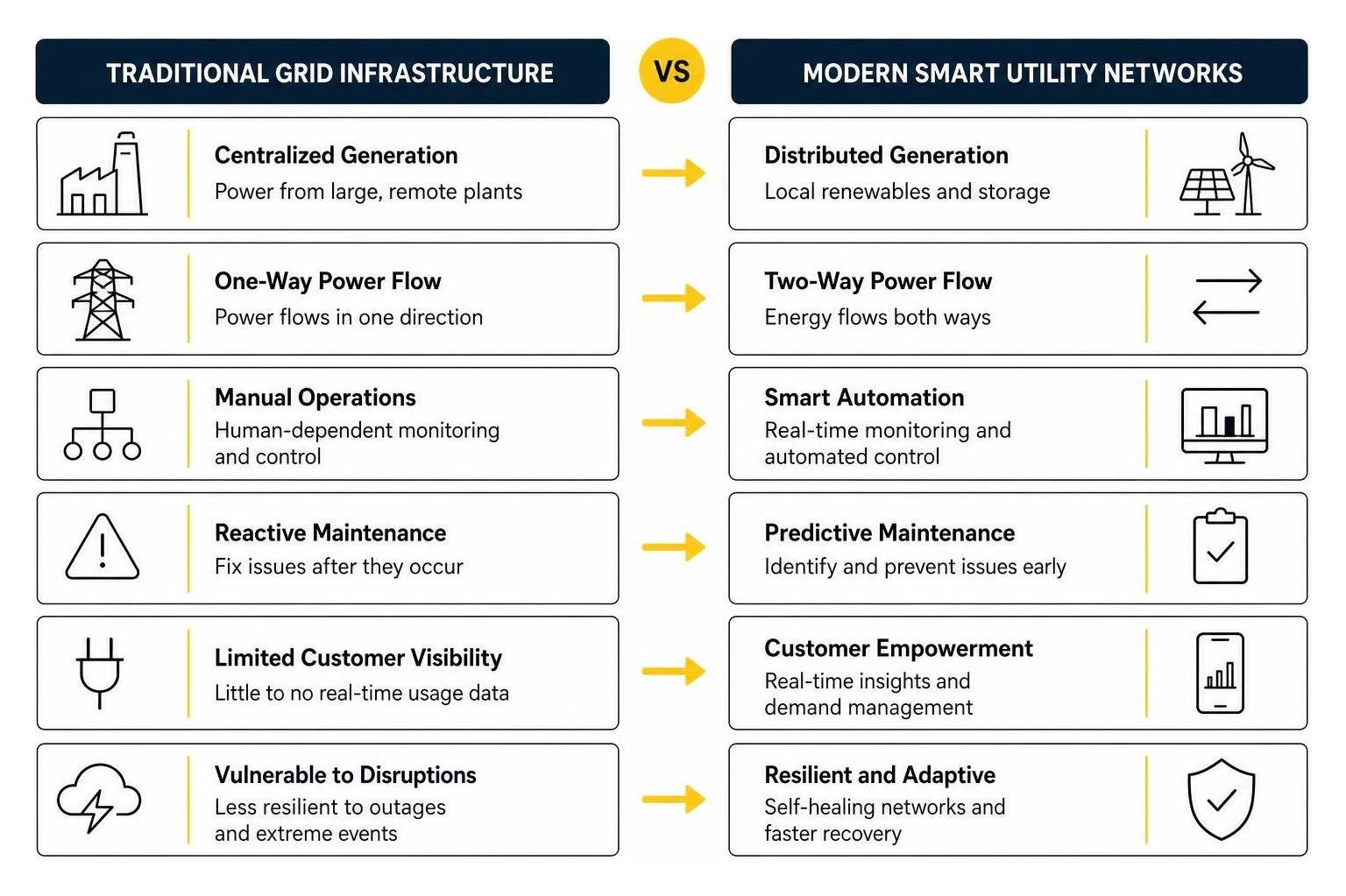
Caption: Key differences between traditional and modern utility networks, highlighting the shift towards resilience and intelligence.
Frequently Asked Questions about Urban Utility Infrastructure
Navigating the complexities of urban planning and utility maintenance often brings up common questions. Here, we address some of the most frequent inquiries regarding urban infrastructure and utility construction.
What is the difference between wet and dry utilities?
As discussed earlier, wet utilities are underground systems designed to manage liquids. This includes potable water lines, sanitary sewer systems, and stormwater drainage systems. They are critical for public health, sanitation, and flood control. Dry utilities, on the other hand, are infrastructure components that transmit energy and data. This category encompasses electrical grids, telecommunications networks (fiber optic, cable, internet), and natural gas pipelines. While distinct in function, both types of systems are interdependent and foundational to urban functionality.
How does joint trenching protect urban trees and natural resources?
Joint trenching is a coordinated construction method where multiple dry utilities (e.g., electric, gas, fiber optic, cable TV) are installed within a single shared trench. This approach significantly reduces the overall excavation footprint compared to digging separate trenches for each utility. By minimizing the disturbed area, joint trenching helps in root preservation of urban trees, reducing the risk of damage to their critical root zones. It also allows for more efficient use of shared easements and minimizes disruption to surrounding natural landscapes, contributing to broader environmental protection goals. This method is a key strategy for balancing infrastructure development with ecological considerations.
Why is trenchless technology preferred in dense city centers?
Trenchless technology, such as Horizontal Directional Drilling (HDD), microtunneling, and hydro excavation, is highly preferred in dense city centers primarily because it dramatically reduces surface disruption. In urban environments, open-cut trenching can cause severe traffic congestion, block pedestrian access, disrupt businesses, and generate significant noise and dust. Trenchless methods allow for the installation or replacement of pipes and conduits with minimal excavation, often requiring only small entry and exit pits. This minimizes impact on traffic flow, reduces construction timelines, and lowers restoration costs. While initial investment might be higher for some trenchless methods, the long-term cost-benefit analysis often favors them due to reduced community impact, faster project completion, and avoidance of costly surface restoration.
Building Smarter, More Resilient Cities
As we’ve explored, urban infrastructure and utility construction are far more intricate than what meets the eye. From the foundational distinctions between wet and dry utilities to the innovative trenchless methods minimizing disruption, and the critical role of coordinated planning and sustainable materials, every aspect contributes to the functionality and resilience of our cities. The journey towards truly smart and sustainable urban environments requires continuous collaboration between municipalities, developers, and utility providers, ensuring that what lies beneath our cities is as robust and forward-thinking as the skylines they support.
By embracing advanced technologies, prioritizing safety, and committing to environmental stewardship, we can build infrastructure that not only meets the demands of today but also anticipates the challenges of tomorrow. Let’s continue to build smarter, more resilient cities—together.
To learn more about how sustainable materials and energy-efficient systems can enhance your next urban development project, explore our comprehensive range of urban lighting solutions.
Recommended Internal Links:
- The Future of Smart City Lighting
- Designing Resilient Urban Water Systems
- Innovations in Underground Utility Mapping
- Sustainable Infrastructure: A Guide to Green Building Practices
- The Role of Renewable Energy in Urban Development


