You might be feeling a mix of hope and worry right now. Maybe you have a missing tooth that makes you hide your smile. Maybe you are tired of a loose denture that never feels secure. Albuquerque periodontal and implant specialists can help. You have probably heard that dental implants can feel like “getting your own tooth back,” yet the process sounds long, medical, and a little scary.end
If that is where you are, you are not alone. Many people hesitate for months or even years because they simply do not understand what really happens during the 4 steps involved in the dental implant process. The unknown is often more frightening than the treatment itself.
Here is the short version. Dental implants usually follow four main stages. First, careful planning and evaluation. Second, placing the implant in the bone. Third, allowing time for healing and bone bonding. Fourth, placing the final crown or restoration so you can chew and smile with confidence. Each stage has a clear purpose, and when you understand those steps, the whole journey feels far less overwhelming.
So, where does that leave you? You do not need to know every technical detail, yet you do deserve a clear, calm explanation of what to expect, what might be hard, and how a periodontist and implant dentist helps you through it.
Why does the implant process feel so stressful in the first place?
Think about what has been on your mind. You might worry about pain, cost, time off work, or the idea of “screws in the jaw.” You might wonder if you are too old, if your bone is strong enough, or if the implant could fail. All of that is normal. Tooth loss is personal. It affects how you eat, speak, and see yourself in the mirror.
The problem is that most people only hear fragments. A friend says, “It took almost a year.” Someone else says, “It was easy.” Online forums share every worst case scenario. Because of this, you are left with tension and confusion. You know that implants are considered a strong option to replace teeth, but you are not sure what is fact and what is fear.
To make it more complicated, there are emotional and financial layers. You might feel guilty for not taking care of a tooth sooner. You might feel embarrassed about how your smile looks now. You might also be anxious about spending money and then wondering, “What if it does not work for me?”
So how do you move from this place of doubt to a plan that feels realistic and safe?
Step 1: How does the planning phase with a periodontist and implant dentist work?
The first stage has nothing to do with drills or surgery. It is about understanding your mouth and your goals. A periodontist and implant dentist will usually start with a consultation. You talk about your medical history, medications, and what bothers you the most. You also talk about what you want. For example, do you want to replace one front tooth, several back teeth, or secure a denture so it no longer moves?
From there, you can expect a clinical exam and imaging. This often includes X rays and sometimes a 3D scan of your jaw. These pictures show the amount and quality of bone in the area where the implant might go. If the bone is thin or has shrunk after tooth loss, your dentist may recommend bone grafting to build it up. That can sound intimidating, yet it is simply a way to create a safer foundation.
This planning stage is where you should ask every question that is on your mind. How many visits will this take. What are the options if you do not choose implants. What type of anesthesia will be used. A good treatment plan is not just a chart. It is a shared roadmap that you understand and agree with.
Step 2: What actually happens when the implant is placed?
Once the plan is set, the next step is the implant placement itself. This is the part many people fear, yet it is often described as easier than having a tooth removed.
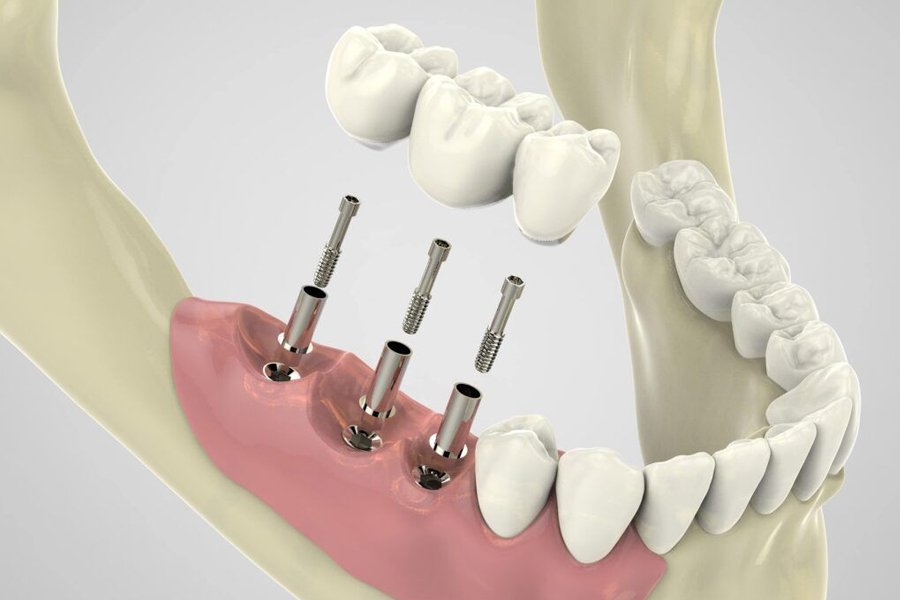
On the day of surgery, the area is numbed with local anesthesia. Some patients also choose sedation if they feel very anxious. The periodontist makes a small opening in the gum and prepares a space in the bone for the implant. The implant is a small titanium post that goes into this prepared area. After it is placed, the gum is usually closed over or around it to protect the site while it heals.
Most people feel pressure and vibration rather than sharp pain during the procedure. Afterward, it is common to have some soreness and mild swelling for a few days. This is usually managed with routine pain medication and careful home care. You are given clear instructions on how to clean the area and what foods to avoid while it heals.
Hearing that, you might be wondering about safety and long term outcomes. The U.S. Food and Drug Administration offers a helpful overview of benefits, risks, and expectations for dental implants and what you should know, which can be useful to read before or after your consultation.
Step 3: Why is healing and bone bonding so important?
This is the quiet stage that many people underestimate. After the implant is placed, your body needs time to heal. Over several weeks to a few months, the bone grows around and bonds to the implant. This process is what makes implants feel strong and secure when you chew.
During this time, you may wear a temporary tooth or modified denture so that you are not left with a visible space. Your periodontist and implant dentist will guide you on what you can and cannot chew on that area. Protecting the site is critical, because too much pressure too soon can interfere with healing.
This waiting period can feel frustrating, especially if you are eager for your final crown. Yet it is the foundation of long term success. Good home care, not smoking, and following instructions closely all improve the chances that your implant heals properly. Regular checks during this phase allow your provider to catch and address any early problems.
Step 4: How does the final crown or restoration complete the process?
Once the implant has integrated with the bone, the last stage begins. The gum is shaped and a small connector called an abutment is attached to the implant. Then a custom crown or other restoration is made to match your bite and the color of your natural teeth.
This is the moment many patients describe as life changing. You can bite into food with confidence. You can speak without worrying that something will move or fall out. You can smile without feeling that your missing tooth is the first thing people see.
This stage also includes education on how to care for your implant long term. Implants can last many years, but they need regular cleaning and checkups, just like natural teeth. The Columbia University College of Dental Medicine provides a clear explanation of what dental implants are and how they are maintained, which can help you understand this final phase.
How do dental implants compare to other options like bridges or dentures?
It can help to see how the dental implant process steps compare with other ways of replacing teeth. This is not about choosing what is “best” for everyone. It is about what fits your mouth, your health, your budget, and your patience for treatment time.
| Option | What it involves | Treatment time | Impact on nearby teeth | Stability when chewing |
| Single Dental Implant | Implant in bone with a crown on top | Several months from start to finish | Usually no need to grind down neighboring teeth | Feels closest to a natural tooth for many patients |
| Fixed Dental Bridge | Crown on teeth next to the gap with a false tooth in between | Often a few weeks | Requires reshaping healthy teeth to support the bridge | Stable, but relies on the health of the supporting teeth |
| Removable Partial or Full Denture | Removable appliance that clips to teeth or rests on gums | Usually weeks to a couple of months | No drilling on most remaining teeth, but may place pressure on them | Can move during eating or speaking, especially over time |
Seeing these differences, you can understand why many people choose dental implant treatment even though it takes longer at the start. They trade a longer process now for more stability and comfort later.
What can you do right now to move forward with clarity?
- Write down your fears and questions before any consultation
Take a few quiet minutes to list what troubles you. Pain. Cost. Time. Medical conditions. Previous bad dental experiences. Bring that list to your appointment. It is much easier to get clear answers when your concerns are written down, instead of trying to remember them in the chair.
- Ask specifically about your personal 4 step plan
Ask the periodontist and implant dentist to describe your treatment in four simple stages. Evaluation. Placement. Healing. Final tooth. Ask how long each stage will take in your situation, what could delay it, and what you will feel during each part. A plan that is tailored to you is far more reassuring than a generic timeline.
- Clarify costs and payment before you start
Money stress can quietly overshadow every other part of care. Ask for a written estimate that breaks down each visit. Ask what is included and what is not. If you have dental insurance, ask the office to help you understand what might be covered. If cost is a concern, ask about alternative options and phased treatment so you can plan in a way that feels realistic.
Where do you go from here?
Feeling nervous about dental implants does not mean you are weak. It means you understand that this is an important decision that affects your body, your appearance, and your daily comfort. You are allowed to take your time, to ask questions, and to seek a provider who listens and explains each step.
Now that you understand the 4 steps involved in the dental implant process, you can approach your next conversation with more calm and confidence. You know that it is not one big mysterious procedure, but a series of clear stages that your care team can guide you through.
You deserve to eat without fear, to speak without embarrassment, and to smile without hiding. When you are ready, reach out to a qualified periodontist and implant dentist, bring your questions, and start turning that mix of worry and hope into a plan that fits your life.